
The plan is a relationship test, but not the one you think
You may be asking whether he would protect you in an emergency. That question matters. But it can pull you toward a dramatic answer: he is brave, he is calm, he is the kind of man who would carry you out of a burning building. The more useful question is quieter. Can he sit beside you on an ordinary evening and build a plan that gives both of you a job?
A real plan contains unromantic details. Who calls the out-of-area contact if local lines fail? Where do you meet if you’re separated? Which route do you take? Who keeps a paper copy? What happens if one of you has a mobility, medication, sensory, language, or caregiving need? These questions turn devotion into practice. They also show you whether he notices the life you actually live, rather than the simpler woman he imagined dating.
The American Red Cross recommends discussing likely emergencies, assigning responsibilities, and practicing the plan. It also suggests two meeting places, an out-of-area contact, written information, and an evacuation route. Those basics give you a clean relationship experiment. You aren’t asking him to predict the future. You’re asking him to help make a shared response less chaotic. [The Red Cross’s emergency planning guidance](https://www.redcross.org/get-help/how-to-prepare-for-emergencies/make-a-plan.html) supports that practical frame.
Here’s the distinction to hold onto. A man can be loving during a crisis and still be impossible to plan with. He may rush in when something breaks, then disappear when the follow-up requires patience. Another man may not perform courage loudly, but he will write down the contact number, check the batteries, learn the route, and ask what would help you stay regulated. The second pattern is more useful for a life together.
Imagine Maria asks the man she’s dating to make a one-page apartment emergency plan. She suggests a meeting place outside the building and another across the neighborhood. He says, ‘You’re overthinking,’ then tells her not to worry because he’s good in emergencies. That answer sounds reassuring until you notice what it avoids. He hasn’t learned her needs, chosen a role, or agreed to practice. His confidence is a mood. A plan is a behavior.
This is why your first assessment should stay concrete. Ask for a small plan, not a declaration of eternal loyalty. Notice whether he treats the task as shared property. Does he improve it? Does he make room for your judgment? Does he remember it without being managed? The answer begins there, before any chart enters the room.
A useful plan also reveals how he handles uncertainty. You can’t list every event that might happen, and you shouldn’t try. Choose a few likely situations, decide what matters first, and leave room for judgment. If he needs perfect information before he will act, that may become its own problem. If he acts without checking anything, that may become another. Partnership lives between paralysis and command. It asks, ‘What do we know? What do we need to find out? What can we do now?’
This experiment has a boundary. It can show whether he shares preparation, remembers what matters to you, and accepts a change in the arrangement. It can’t certify that he’ll make every good decision in a crisis. No single evening can do that. What it can do is expose the role he expects you to play before the stakes are higher. If he becomes offended that you asked, bring him back to the task: ‘This isn’t a verdict about your character. I want both of us to know what we’re doing.’ His response to that reset is evidence, too.
Yes, you can assess this before you share a home, finances, or a crisis. Ask him to build a small, real plan with you: who you contact, where you meet, what each of you carries, and how you’ll decide when circumstances change. Then watch the work. A man ready for partnership will ask questions, name his part, respect your access and medical needs, and return to the plan later. He won’t make you the planner while he plays rescuer. In synastry, Saturn can describe the bond’s capacity for duty and structure; Mercury shows how you coordinate; the Moon shows what safety requires; Jupiter and Saturn together can show whether hope and caution can work as a team. These symbols add a language for the pattern. They don’t erase his choices. Give him one modest planning task, set a date to review it, and let his follow-through answer the first part of your question.
Sources: Disaster Preparedness Plan: Make a Plan | American Red Cross; Family Emergency Communication Plan | Ready.gov
What he does with the first conversation tells you a great deal
Choose a calm moment. Not during an argument. Not when one of you is rushing to work. Say what you want plainly: ‘I want us to make a simple emergency plan so neither of us has to guess if something goes wrong. Can we do that together this week?’ Then stop talking. Give him room to answer.
You’re listening for more than agreement. Agreement is easy. You want curiosity. A workable partner asks what emergencies concern you, what support you’d need, and which responsibilities feel realistic for each of you. He may not know every answer. That’s fine. He should be willing to find out, and he should treat your answers as information rather than criticism.
Compare these two responses. ‘Sure, babe. You handle the details. I’ll take care of you.’ The sentence is affectionate, but it quietly assigns you the invisible work while giving him the heroic role. Now compare it with: ‘Let’s list the situations first. You know more about your medication and access needs, and I’ll research the building exit and keep the paper copies. We can swap tasks if that stops working.’ The second response has less sparkle. It has more partnership.
Watch what happens when the plan benefits you more than him. Perhaps you need a quieter meeting place, a spare key held by someone you trust, or a text-first communication rule. A man who can build a life with you won’t demand that your needs look symmetrical before he respects them. Fairness is not identical effort in every moment. It is shared responsibility for the whole picture.
He also needs to tolerate revision. The Red Cross asks households to account for separation, evacuation, changing locations, and the different needs of household members. Ready.gov’s communication-plan material emphasizes collecting contact details, sharing copies, and practicing the plan. That sequence matters for dating. A man who says yes once but resists every update is offering compliance, not cooperation. [Ready.gov’s family communication plan](https://www.ready.gov/sites/default/files/2025-06/family-communication-plan_fillable-card.pdf) shows how specific the information can become.
A strong first conversation ends with one next step. Put the plan on the calendar, decide who drafts the first page, and set a review date. Don’t turn the meeting into an exam with hidden answers. Give the task a shape you can both see, then let the work speak.
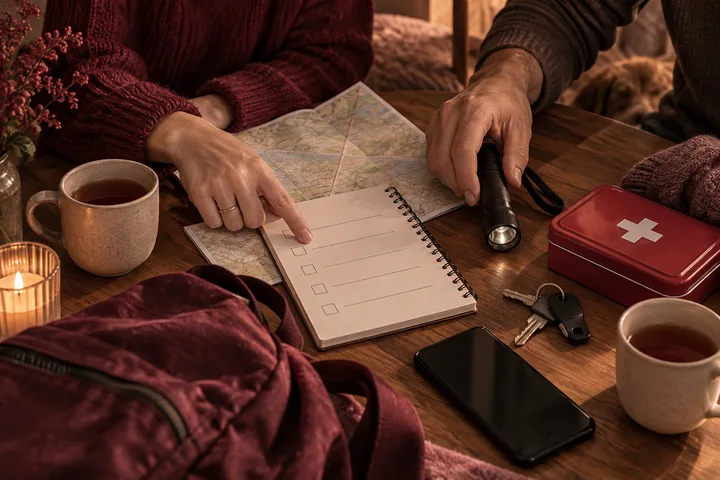
Make the first meeting almost boring on purpose. Write down two names, two places, one route, and one way to check in. Ask what each person would grab if they had five minutes to leave. If he says you should handle the details, hand back one defined job: research the out-of-area contact, check the exit, or make the paper card. A willing partner may need direction. He shouldn’t need chasing.
Afterward, separate awkwardness from refusal. He may be clumsy because the subject is new. That’s different from mocking the need, treating your access requirements as an inconvenience, or agreeing only to end the conversation. Write down what he volunteered, what he questioned, and what he actually did next. You’re not building a case against him. You’re keeping the warm tone of the conversation from erasing its practical result.
Sources: Family Emergency Communication Plan | Ready.gov; What Do You Need In a Survival Kit? | American Red Cross
The astrology of shared duty starts with Saturn, not a soulmate label
In synastry, Saturn is the clearest symbol for the work that gives a bond shape over time. It speaks to limits, responsibility, endurance, and the obligations people accept when affection becomes a life. That makes Saturn relevant to an emergency plan. But Saturn isn’t a stamp that says ‘safe man’ or ‘bad man.’ It describes a pressure point and a capacity for structure. You still read how the people use it.
Astrology.com describes positive Saturn interplay as a source of responsibility, purpose, and functional structure in a partnership. Cafe Astrology’s Saturn-in-synastry treatment likewise connects Saturn contacts with commitment, safety, and long-term bonds, while warning that the same symbolism can harden into criticism, control, or fear of change. That is the honest range. Duty can steady love. Duty can also become a reason one person polices the other.
Suppose his Saturn contacts your Moon. You may feel that he can anchor you when life turns frightening. He may take your vulnerability seriously. Yet you may also feel watched, corrected, or subtly ashamed of needing comfort. For an emergency plan, the healthy expression sounds like, ‘Tell me what helps you think clearly, and we’ll include it.’ The unhealthy expression sounds like, ‘You panic, so I’ll decide everything.’ Same planet. Different relationship.
Suppose his Saturn contacts your Mercury. He may bring patience, sequencing, and realism to conversations. You may appreciate that he remembers details and thinks about consequences. But if he treats every question as a challenge to his authority, planning becomes a courtroom. A plan needs facts and decisions. It also needs room for you to say, ‘This part doesn’t work for me.’
The aspect matters, but its condition and the wider chart matter too. A trine or sextile may make practical cooperation easier. A square or opposition may force disagreements about speed, risk, money, or control into the open. That doesn’t automatically make the bond weak. A difficult Saturn contact can become useful when both people can name the fear underneath the conflict and revise the rule together.
The calculation scope must stay precise. A real synastry reading would compare both complete natal charts, using accurate birth dates, times, and places, then consider the planets, angles, houses, and aspects in context. This article has not calculated your charts, so it cannot assign a Saturn contact to you and him. It can give you a better question to bring to the chart: where does shared duty become dependable structure, and where might it become control?
That question keeps astrology close to life. You’re not asking whether Saturn guarantees a crisis-free relationship. You’re asking what kind of responsibility the bond invites, then checking whether his conduct can carry it.
Saturn also asks about timing. Does he make a commitment before he understands the weight of it? Does he keep a promise after the initial excitement fades? Does he know when a limit protects the relationship and when it merely protects his comfort? These are Saturn questions you can answer through time. One conversation gives you a clue. Repeated ordinary choices give you a pattern.
The planet’s symbolism becomes especially important when a woman has been trained to confuse endurance with love. You may feel proud of being the one who can carry more. You may call his dependence a bond, or his criticism a sign that he takes you seriously. Stop and separate devotion from burden. Shared duty leaves both people more capable. A relationship in which one person bears the plan while the other claims authority is not strong because it is difficult. It is simply unequal. Read Saturn through consent. A useful boundary is specific, mutual, and open to review. A controlling rule is imposed, defended as protection, and used to shrink the other person’s choices. Saturn at its best makes commitment inhabitable. It doesn’t turn the relationship into a locked room.
Sources: Saturn in Synastry | Cafe Astrology; What’s Your Sign? An Intro to Synastry Charts and Astrological Compatibility | Astrology.com
Mercury, the Moon, and Jupiter show how the plan will feel in practice
Saturn gives the plan bones. Other chart factors show how you will communicate, soothe one another, and balance caution with hope. Start with Mercury. In an emergency, communication isn’t decoration. It’s the bridge between two people who may be separated, frightened, or working with incomplete information.
Mercury in synastry can describe how quickly you understand each other, how directly you speak, and whether one person’s reasoning feels welcome to the other. Ask the practical version of that question. When you disagree about the route, the meeting place, or the level of preparation, can you keep exchanging information? Or does he make you prove that your concern deserves airtime? A plan built around one person’s unquestioned interpretation will fail the first time reality changes it.
Now consider the Moon. The Moon speaks to safety, habit, emotional response, and the conditions that let someone settle. A plan that ignores the Moon may look efficient on paper and feel unusable in the body. Maybe you need instructions written in advance because stress scrambles your speech. Maybe he needs a few minutes of quiet before making a decision. Maybe one of you needs reassurance before moving into action. Those details aren’t indulgences. They’re part of the shared method.
Astrology.com’s synastry overview treats the Sun and Moon as a significant pairing for support and emotional understanding. That symbolism can help you ask whether his idea of care reaches your actual nervous system, not just his preferred performance of care. If your Moon needs calm and his instinct is command, neither person is automatically wrong. But you need a protocol that protects both of you from turning fear into a fight.
Jupiter adds the question of scale. Jupiter wants possibility, faith, movement, and a future larger than the current problem. In an emergency plan, that energy can keep you from freezing. It can also overpromise. Jupiter-Saturn contacts are often read as a meeting between expansion and restraint. Cafe Astrology describes supportive Jupiter-Saturn aspects as helpful for thinking things through, solving problems, and making realistic plans together. That is exactly the balance you want: hope with a route, generosity with a limit.
Consider an example. You want a modest three-day kit and two meeting places. He wants to buy expensive equipment for every imaginable disaster. You’re not seeing a sign of deeper devotion in his spending. You’re seeing a Jupiter-Saturn conversation. Can he hear the budget? Can you hear the reason he wants more margin? The compatible answer is not whoever wins. It’s a plan you can afford, carry, review, and actually use.
These symbols give you categories for reflection. They do not let you skip the conversation. If the chart suggests strong Saturn but his Mercury shuts you down, believe the lived pattern. If the chart looks easy but he refuses every shared task, believe that pattern too. Astrology can sharpen your sight. It cannot do the seeing for you.
Mercury also matters after the plan is made. In a crisis, information changes. A road closes. A contact stops answering. One person learns something the other doesn’t. The compatible couple can update without treating the update as betrayal. Ask how you’ll say, ‘The old plan no longer works.’ Ask whether he can receive a correction without becoming defensive. A shared plan is a living conversation, not a test that one person passes once.
The Moon adds another practical question: what does each of you do when frightened? One person may become very quiet. Another may talk quickly and generate ten solutions. One may seek touch. Another may need physical space. Synastry can help you explore those patterns, but you can learn them directly by asking after a difficult day. ‘When you’re overwhelmed, what helps you come back?’ His answer matters. So does whether he remembers yours when the moment arrives.
Sources: What’s Your Sign? An Intro to Synastry Charts and Astrological Compatibility | Astrology.com; Synastry: Jupiter-Saturn Aspects | Cafe Astrology
A worked comparison: steady preparation or impressive rescue?
The easiest way to assess a man’s planning capacity is to compare two forms of care that often look similar at first. One is steady preparation. The other is impressive rescue. Both can feel protective. Only one reliably shares the future with you.
Imagine Maria has been dating Daniel for six months. Daniel is warm, attentive, and proud of being calm under pressure. When Maria mentions that she wants an emergency plan, he laughs and says his family never needed one. A month later, a storm knocks out power in their area. Daniel drives to buy supplies and spends the night helping a neighbor. Maria feels moved. She also notices that he never asked what she needed, never checked whether she could travel safely, and never made a way for them to communicate if separated.
Now imagine a different version. Before the storm season, Daniel and Maria list three likely problems. Maria explains that she needs medication kept at a known temperature and that phone calls can become difficult when she is overwhelmed. Daniel asks questions. They choose a contact outside the area, write down numbers, store a small kit, and test the route to a second meeting place. Daniel doesn’t make a speech. He remembers the details and reviews them after they learn more.
The first Daniel may be generous. He may even be admirable in a crisis. But his care arrives as a performance he controls. Maria has to fit inside it. The second Daniel makes room for her knowledge and changes his behavior before a crisis forces him to. That is the stronger compatibility signal.
In a chart comparison, you might examine Saturn contacts to the personal planets or angles, Mercury contacts that describe exchange, Moon links that speak to emotional safety, and Jupiter-Saturn connections that can balance vision with limits. You might also study house overlays for the areas of life where one person activates the other’s sense of home, duty, resources, or partnership. A planet falling in a partner’s house is a lens, not a verdict. The whole natal chart comes first, then the synastry, then the behavior.
A strong Saturn connection can make a bond feel binding and familiar. It may help two people stay present when the romance becomes work. It can also create a fear that change will weaken the bond, which may show up as criticism or possessiveness. A strong Mercury connection can keep the plan alive through questions and updates. It can also become endless debate if neither person can decide. A Moon connection can bring comfort. It can also make each person’s fear contagious. Interpretation must keep both sides visible.
Your comparison should end with observable evidence. Who initiated the review? Who carried the paper copy? Who learned the access need? Who admitted a gap? Who adjusted without demanding praise? The chart can help you name the pattern. His actions tell you whether he is practicing the higher expression of it.
Try the comparison in four moments. First, ask for the plan. Second, watch how he divides the first task. Third, introduce one change, such as a different meeting place or a new medication detail. Fourth, wait for the review without reminding him more than once. This sequence separates charm from capacity. Charm appears in the first answer. Capacity appears when the task becomes less novel, the details belong partly to you, and the plan needs revision. If he stays curious through all four moments, you’re seeing a usable form of care rather than a single reassuring scene.
The comparison also protects you from chemistry’s favorite trick: making an isolated act stand in for a whole character. A dramatic rescue can be sincere and still be insufficient evidence. So can a beautiful synastry reading. Look for repetition across smaller situations. Does he replace the item he borrowed? Does he tell you when plans change? Does he bring up the thing you said mattered last week? Reliability is built from these small returns. An emergency plan simply makes the pattern easier to see because the roles are written down.
If the first version exposes a mismatch, don’t rush to repair it for him. Let the information stay visible. You can say, ‘I noticed I ended up doing the research and keeping the notes. I need a partner who will own part of this. Are you willing to take the contact-card task and bring it back by Friday?’ A clear request gives him a fair chance. His answer and action give you a fair basis for deciding.

Sources: Saturn in Synastry | Cafe Astrology; What’s Your Sign? An Intro to Synastry Charts and Astrological Compatibility | Astrology.com; Synastry: Jupiter-Saturn Aspects | Cafe Astrology
The meaningful exception: different planning styles can still belong together
A man who dislikes detailed planning isn’t automatically incapable of partnership. Some people think best through action. Some have grown up in families where preparation felt like fear. Some are used to responding to the emergencies in front of them and haven’t learned the quiet value of a written plan. A difference in style can be workable. Refusal to share responsibility is not.
This is the exception worth protecting. He may begin with a loose approach, but he can listen, choose one small task, and return to it. He may say, ‘I don’t naturally think this way, but I understand why it matters to you. Let’s make the first version simple.’ That response shows flexibility. It gives you something to build on.
The concern rises when his preference becomes a rule for both of you. ‘I don’t do plans’ means you must absorb the uncertainty. ‘If something happens, we’ll figure it out’ can sound relaxed while leaving all the mental rehearsal in your hands. A relationship doesn’t need identical temperaments. It does need a shared floor of care.
Astrologically, this is where a difficult aspect can become more revealing than an easy one. A square may expose different speeds or risk tolerances. A quincunx may require adjustment that neither person finds natural. The question is not whether the symbols are frictionless. It is whether the friction produces learning. Cafe Astrology’s treatment of Jupiter and Saturn describes the tension between optimism and caution as a possible source of conflict and growth. That gives you a useful interpretive standard: does the difference help you make a wiser plan, or does it turn one of you into the permanent adult?
You also need a boundary around safety. If he mocks your access needs, uses emergency talk to control where you go, threatens you, keeps you dependent on him, or insists that his judgment outranks your own, stop treating that as a planning-style difference. You don’t need a synastry explanation for coercion. You need distance, support, and a plan that protects your freedom.
For the ordinary mismatch, offer a bounded experiment. Ask him to choose one likely scenario. Give yourselves twenty minutes. Make three decisions. Review the plan in two weeks. If he participates and improves, keep learning each other. If he agrees only after repeated pressure, then leaves you to finish the work, treat that as information. You’re not grading his personality. You’re deciding how much of your future you can safely place in his hands.
The strongest exception still proves the rule. He doesn’t have to plan like you. He has to be willing to plan with you.
There’s another version of the exception: he may have a genuine reason to avoid certain emergency roles. He may have a health limitation, a trauma history, limited transport, or a family duty that changes what he can promise. That doesn’t make him a bad partner. It means the plan must tell the truth. He can take the communication role instead of the driving role. You can choose a third person for a task neither of you can safely do. Mutuality adjusts to capacity; it doesn’t pretend capacity is identical.
What you must not do is turn compassion into permanent exemption. If his limitation means you carry every decision, purchase, reminder, and consequence, then you need an honest conversation about whether the relationship has room for your life too. A good man can say, ‘I can’t do that part, but I can do this part.’ He can help design the support around the limitation. He doesn’t ask you to erase your own needs because his are louder. That distinction matters before commitment deepens and before you share a future.
Sources: Saturn in Synastry | Cafe Astrology; What’s Your Sign? An Intro to Synastry Charts and Astrological Compatibility | Astrology.com
Build the first plan, then let the decision become visible
Start small enough that neither of you can hide behind overwhelm. Choose one situation that could happen where you live: a power outage, a fire, a severe storm, a medical problem, or an unexpected separation. The Red Cross advises households to consider local risks, decide whether they would shelter or evacuate, choose meeting places, name an out-of-area contact, and practice the route. Use those elements as your first shared page.
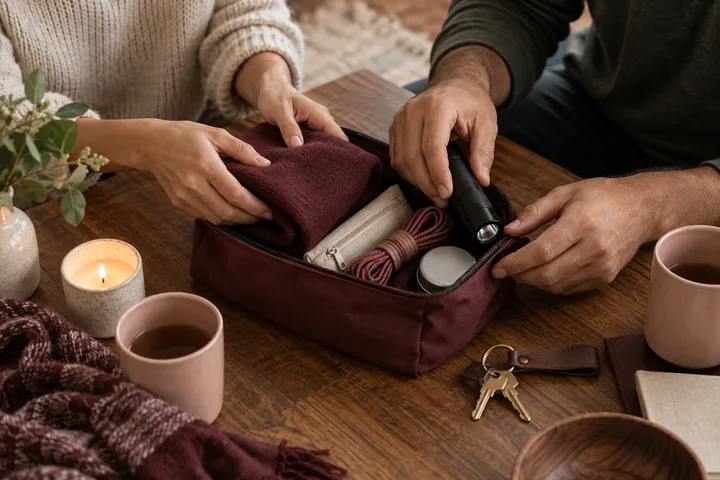
Give each person a job. You might name the information and access needs. He might check the building exit and alternate route. Then switch or combine the tasks so one person doesn’t become the permanent keeper of the relationship’s invisible files. Add a paper contact card and any supplies that truly fit your household. The Red Cross recommends basics such as water, food, light, batteries, first aid items, medications, documents, chargers, cash, and maps, with additions for individual medical, pet, child, and mobility needs.
Set a review date. A plan is not a relic. Numbers change. Work locations change. Health needs change. Relationships with family and friends change. Set the review for two weeks after the first draft, then test one part of it. Can he find the card without asking you? Does he remember the agreed check-in method? Will he change a detail when new information makes the old one poor? Revision is where a promise becomes a habit.
Use this reading grid after the review. Green means he owned a task, completed it, explained gaps, and adjusted with you. Yellow means he participated but needed reminders or left one important detail vague. Red means he mocked the need, made himself the sole authority, or left the work with you while keeping the protector role. Yellow calls for one more bounded experiment. Red calls for distance and a clearer boundary.
A Dating Clarity Report can help you organize this kind of decision around his consistency, intentions, and your boundaries. Use it to name the pattern and choose the conversation you need. It can support your judgment. It cannot outsource it, and it should never ask you to ignore what you already know.
If you have accurate birth details for both of you, synastry can add a second layer. Compare the complete natal charts first. Then examine Saturn’s contacts, Mercury and Moon links, Jupiter-Saturn themes, and relevant house overlays in context. Ask what the symbolism describes about duty, communication, safety, and shared growth. Don’t ask the chart to excuse a man who won’t participate.
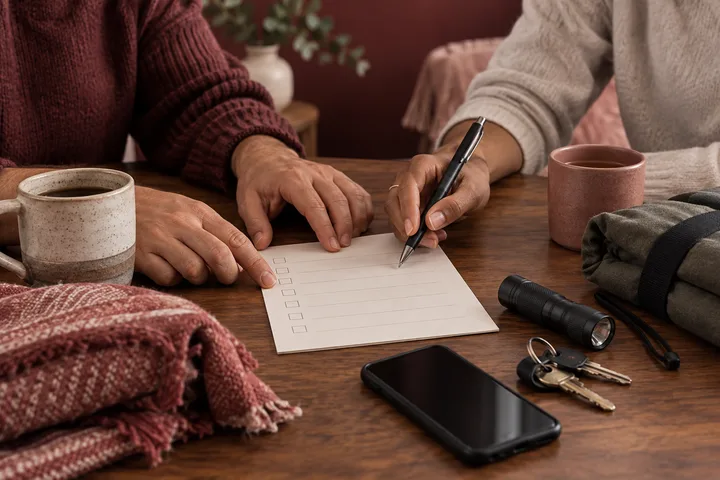
Make the request this week. Give him one clear task and a date. At the review, write four lines: he owned, I owned, we changed, I still need. Don’t soften the record because the date afterward was romantic. Don’t make it harsher because the first attempt was awkward. Read the pattern. An imperfect plan can improve when both people stay engaged. A plan carried by your optimism will keep asking you to translate neglect into potential.
If he participates, thank him for the specific work without turning basic partnership into a favor. If he doesn’t, say what you observed, name what you need, and decide what access he has to your future. The chart question may remain interesting. The dating question is sharper: can I trust this man to meet reality with me? Your next small experiment can answer more than another hour of guessing.
You can also ask whether the plan makes room for people beyond the couple. A partner may have children, aging relatives, roommates, pets, or friends who become part of an emergency response. This isn’t a request to take responsibility for everyone he knows. It’s a request to understand the shape of the life you would enter. Who else has a key? Who would he call first? What responsibility does he already carry, and what would he expect from you? Clear answers help you choose your level of involvement before affection quietly assigns it to you. You’re allowed to say, ‘I care about your family, but I can’t be the default responder.’ His respect for that limit belongs in your decision too.
That is the value of the exercise. It brings the future down to a size you can examine. You don’t need to decide whether he is your forever person tonight. You need to see whether he can meet one clear request with honesty, effort, and respect. Then decide what deserves another chance, what needs a boundary, and what you won’t carry again.
Keep the result private and clear if you need to. You don’t owe him a flattering interpretation of his effort, or yourself a romantic explanation for his absence. Write the facts. Name the feeling. Choose the next boundary. Compatibility becomes visible when two people can touch a problem, test a response, and improve the arrangement. If he does that with you, continue slowly. If he won’t, believe the answer before a crisis makes it expensive.
Sources: Disaster Preparedness Plan: Make a Plan | American Red Cross; What Do You Need In a Survival Kit? | American Red Cross; Synastry: Jupiter-Saturn Aspects | Cafe Astrology
A little more clarity
Can synastry prove that a man will protect me in an emergency?
No. Synastry can describe themes around duty, communication, emotional safety, and shared goals, especially through Saturn, Mercury, the Moon, and Jupiter. It can help you reflect on why a bond feels steady or strained. It can’t prove what he’ll do. Ask for a small plan, assign a shared task, and watch whether he follows through, respects your needs, and revises the plan with you.
What if he says he’s calm in emergencies but won’t make a plan?
Treat calmness and preparation as different qualities. He may handle sudden action well, but a relationship also needs communication, supplies, routes, contacts, and review. Ask him to build one modest plan with you. If he participates once and returns to it, his style may simply be more action-led. If he dismisses the task and leaves you to carry it, his confidence isn’t shared responsibility.
How do I avoid becoming his unpaid emergency manager?
Name the work openly. Split research, purchases, contact information, practice, and updates. Put the next task on his calendar and let him own it. Don’t rescue the experiment by finishing everything yourself. If he expects you to plan, remind, store, explain, and soothe while he claims the protector role, step back and reconsider the investment. Partnership means both people carry the plan.
Sources & further reading
- Disaster Preparedness Plan: Make a Plan | American Red Cross
Supports the practical planning steps of discussing risks, assigning responsibilities, choosing meeting places, documenting contacts, evacuating, and practicing.
- Family Emergency Communication Plan | Ready.gov
Supports the need to record household contacts, medical information, workplace and caregiver details in a shared emergency communication plan.
- What Do You Need In a Survival Kit? | American Red Cross
Supports the examples of water, food, light, batteries, first aid, medications, documents, chargers, cash, maps, and personal supplies.
- Saturn in Synastry | Cafe Astrology
Supports the interpretive range of Saturn contacts as commitment, safety, endurance, restriction, criticism, control, and responsibility in synastry.
- What’s Your Sign? An Intro to Synastry Charts and Astrological Compatibility | Astrology.com
Supports the article’s framing of synastry, Moon themes of safety, Saturn themes of responsibility, and the role of chart aspects and orbs.
- Synastry: Jupiter-Saturn Aspects | Cafe Astrology
Supports the comparison of Jupiter’s vision with Saturn’s caution and the reading of supportive aspects as help for realistic shared plans.
Dating Clarity Report
Six observations about the man you are dating. A clear view of the patterns, plus a conversation for your next decision.
Get my dating clarity report