
The assumption to test is that easy speech means easy intimacy
A smooth first date can fool you. He speaks quickly. You laugh at the same moment. The conversation never stalls. You go home thinking, finally, someone who gets me.
But a relationship isn't built only in the bright, fluent moments. It is built when the restaurant is loud, when a word won't come, when a text lands badly, or when one of you needs the other person to repeat something without turning it into a performance. Communication differences make that visible early. That's useful information.
The common assumption is that a man with hearing loss, a speech difference, aphasia, a stutter, or an auditory processing difference must either be too difficult to date or unusually deep because he has learned to communicate in another way. Both ideas miss the woman standing in front of the decision. His difference isn't a character test. It doesn't tell you whether he is kind, available, faithful, or ready for a relationship. His conduct around the difference does.
So discuss the mechanics before you build a story around them. What helps him follow a conversation? Does he prefer face-to-face talk, text, captions, a quieter room, extra time, or a clear subject before details? What does he do when he misses something? Does he ask, or does he nod and hope? What happens when you need to slow down? What happens when you are the one who feels misunderstood?
These questions aren't an audition. They're a way to see the relationship in real conditions. ASHA recommends asking an adult how they prefer to communicate, reducing distractions, allowing time, and avoiding assumptions about intelligence or capability. NIDCD's hearing-loss guidance likewise recommends facing the speaker, reducing background noise, and choosing a quieter place. The point is simple: access belongs in the design of the date, not in the category of personal failure. That is the standard you can carry into dating.
Astrology supports that view. Mercury can describe how a person takes in information, chooses words, and moves through conversation. The Moon describes what makes speech feel safe enough to receive. A strong Mercury contact may make talking easy, but relationship astrology also asks whether emotional material can be held, not merely discussed. Cafe Astrology's synastry material makes this useful distinction: Mercury contacts can stimulate conversation while still leaving deeper emotional or embodied understanding underdeveloped. The chart can name the pattern, but it cannot do the listening for you.
Your first decision is therefore not, Can I handle his communication difference? Ask instead, Can we create a form of closeness that respects both of us? If the answer depends on you becoming his interpreter, nurse, scheduler, and emotional shock absorber, the relationship has already given you an answer.
Some men will tell you what they need on the first date. Others will wait. They may have spent years watching people become impatient, speak to them like children, finish their sentences, or pretend to understand. Disclosure can feel risky. So your job isn't to force a confession. It is to make a direct question safe to answer.
Try this: What makes conversation easier for you, especially in a new place? It leaves room for hearing, speech, language, attention, fatigue, accent, anxiety, or processing speed without assigning him a label. If he offers a specific need, take it seriously. Ask what you can do. Then do that ordinary thing without making him thank you for it.
You can also talk about setting. A candlelit bar may look romantic and function like a wall. A crowded room may flood someone who needs time to sort speech from competing sound. A video call may help because the face stays visible, or it may make things harder because of poor audio and delay. Text may give a person time to shape language, or it may create new confusion around tone. There is no universal best method. There is a best method for the person and the moment.
ASHA's guidance for adults with speech or language disorders recommends getting attention first, using adult language, slowing down, giving time, and using writing, gestures, or pictures when helpful. It also says not to pretend you understand. That last point matters in dating. A false nod buys ten quiet seconds and creates an argument later. A clean question protects both of you.
Ask about fatigue, too. Communication may change after work, in a noisy place, during illness, or late at night. If you only accept the version of him who can keep up with your preferred pace, you aren't accepting the whole man. But if every plan must orbit his limits and your limits disappear, that isn't care either. Mutuality means both people can name the conditions under which they stay present.
Imagine Maria is dating Daniel. He tells her that restaurants with hard floors and loud music make it difficult to separate his voice from the room. Maria wants to be considerate, but she doesn't want every date to become a special project. They try a quiet café, then a walk, then dinner at a place with a booth. Daniel chooses the table and checks in. Maria says when she wants more eye contact and when she needs a pause. The accommodation becomes shared knowledge, not a secret favor. That is the kind of ordinary teamwork you can build on.
In a chart, I would treat Mercury's sign and house as the style of communication, then look at its condition and contacts rather than stopping at a sign keyword. The third house can show the everyday channel, while the sixth may point to routines and practical adjustments. A chart with Mercury-Saturn themes may describe careful speech, delay, fear of being judged, or the patience to construct reliable language. The same symbolism can manifest as avoidance or as discipline. You still need to see which one he practices.
Yes, a relationship can grow when hearing, speech, or processing differences affect dating. The real question isn't whether conversation looks effortless. It's whether both of you can make communication workable, respectful, and mutual. Ask him what helps him hear, understand, speak, or find words. Ask which settings drain him. Agree on how you'll repair a missed message, a confusing text, or a hard conversation. Then watch what happens when the plan becomes inconvenient. A good partner doesn't make you guess, mock the accommodation, or leave all the adapting to you. He tells you what he needs, stays curious about your needs, and returns to the conversation after a breakdown. In astrology, Mercury describes the style and movement of communication, while the Moon shows emotional reception; Saturn can describe patience, fear, duty, or the work required to build trust. Those symbols can help you name a pattern. His repeated choices tell you whether he can meet you inside it. Get my dating clarity report when you want a sharper view of his consistency, intentions, pace, and your boundaries.
Sources: Tips for Communicating With Adults Who Have a Speech or Language Disorder; Age-Related Hearing Loss (Presbycusis); Central Auditory Processing Disorder; Love, Relationship Astrology: Mercury in Synastry; Synastry: Moon-Mercury Aspects Between Two Charts
Ask how he repairs a missed message
Misunderstanding is not the crisis. Refusing to repair it is.
Every couple misses something. One person hears a different word. A sentence arrives too fast. A text loses its tone. A name, date, or plan slips through because the brain is working harder than the other person can see. A compatible man doesn't need perfect access to every word. He needs a way back.
Ask him, When you miss part of what someone says, what helps you get back into the conversation? Then answer the question for yourself. Maybe you want him to say, I missed the last part. Please repeat it. Maybe you prefer him to summarize what he heard before asking for the missing piece. Maybe you need important plans in writing. Agree on language that doesn't sound like blame.
The repair should be specific. Not, Never mind. Not, You don't listen. Try, I heard the time as eight, but I want to check. Or, I caught the feeling, not the details. Can you send me the address? Or, I need ten seconds before I answer. A repair turns a vague injury into a solvable problem.
ASHA's clinical guidance for speech differences includes asking precise clarification questions, restating what you did understand, and using gestures or another form of communication when needed. For aphasia, NIDCD encourages short sentences, written key words, natural adult conversation, plenty of time, and valuing the person's opinion. These practices protect dignity because they keep the person inside the exchange instead of treating him as a problem to be managed.
Watch the emotional layer. Does he thank you for clarifying, or accuse you of being difficult? Does he correct the misunderstanding and stay connected, or punish you with silence? Does he let you repair your own missed meaning, or does he store every error as proof that you can't be trusted? Communication style matters. So does the use of power inside the style.
Astrologically, Moon-Mercury contacts can show how feeling and language meet. Harmonious contacts may make it easier to translate emotion into words. Challenging contacts may create a familiar loop: one person wants tenderness while the other supplies analysis, or one person hears criticism where the other meant precision. Cafe Astrology's interpretation of Moon-Mercury aspects points to sympathetic listening and clear communication as the work that keeps small differences from becoming personal attacks. That work still has to happen in ordinary moments.
The question for you is not whether he ever misunderstands. It is whether the two of you have a repair culture. Without one, you will spend your relationship proving what you meant. With one, you can move forward even when the first version of the message fails.
Texting deserves its own conversation. Written words can help someone who needs time to process, remember, or shape a sentence. They can also hide tone, remove facial cues, and turn a small uncertainty into a long night of guessing. Ask which subjects belong in text and which need a call or an in-person talk. Agree that neither of you will use a string of vague messages to avoid a clear answer. A channel is a tool. It isn't a substitute for courage.
Sources: Tips for Communicating With Adults Who Have a Speech or Language Disorder; Central Auditory Processing Disorder; Aphasia; Synastry: Moon-Mercury Aspects Between Two Charts
Separate a communication need from a communication excuse
A real difference can explain why a conversation needs another route. It doesn't excuse contempt, dishonesty, or disappearing whenever the subject gets serious.
This is where many women get trapped. They learn his needs and start doing all the work. They repeat every plan, soften every request, translate every mood, and wait for him to become ready. When he snaps, they blame the noise. When he vanishes, they blame processing time. Compassion slowly turns into self-abandonment.
Keep the distinction clean. A communication need might sound like, I understand better when I can see your face. An excuse sounds like, You should know what I meant. A need might be, I need written details for times and addresses. An excuse sounds like, I forgot, so you can't be upset. A need might be, Give me a moment to find the word. An excuse sounds like, You aren't allowed to ask what I think.
The test is mutual effort. He can ask you to face him, and you can ask him to confirm the plan. He can need time, and you can need an answer by tomorrow. He can prefer text for complex information, and you can still ask for a phone call when the emotional stakes rise. The accommodation works when it expands access for both people. It fails when it narrows your right to clarity.
A man may have a communication disability, a temporary injury, an acquired language problem, a stutter, or a processing difference. You don't need to diagnose him to decide how he treats you. NIDCD describes communication partner training as an important part of aphasia care, and ASHA frames goals around the individual's participation, autonomy, needs, and everyday settings. That gives you a strong relationship standard: he remains an adult participant in his own life, and you remain one in yours. The distinction belongs in your decision, not in a diagnosis.
Consider an example. Leah's boyfriend says he needs extra time before discussing conflict. That can be reasonable. They agree to pause and return to the issue by seven the next evening. When seven arrives, he has prepared notes and starts the talk. The pause supported repair. If he used the same request to postpone every difficult subject with no return, the issue would no longer be processing time. It would be avoidance.
Astrology can help you notice why the pattern feels charged. Saturn touching Mercury may make communication feel heavy, delayed, judged, or serious. It can also support commitment to careful words and durable agreements. Neptune touching Mercury may invite sensitivity, imagination, and ambiguity. It can help two people sense each other, but it can also blur what was actually promised. Read the symbol as a question about the pattern. Then compare it with his calendar, his follow-through, and the words he uses when you ask for something plain.
You don't have to decide whether his reason is legitimate in some universal court. Decide whether the relationship gives you enough truth, time, and respect to stay well inside it.
Also ask who carries the public explanation. If a server speaks to you instead of him, do you both want to correct that? If friends joke about his speech or hearing, will he tell them to stop? Will you support him without taking over? These moments show whether he protects his own dignity and whether you can stand beside him without becoming his spokesperson. A relationship should make room for assistance, not require one person to disappear behind it.

Sources: Central Auditory Processing Disorder; Aphasia; Love, Relationship Astrology: Mercury in Synastry
Talk about conflict before conflict chooses the rules
Many couples discuss communication only after a fight. By then, each person has a case. You can do better while the relationship is still calm.
Ask what conflict looks like when one of you is overloaded. Does he need silence, a written message, a walk, or a single question at a time? What will tell you that the pause is real rather than a punishment? How long can the pause last before you need a check-in? Which subjects must happen face to face? Which details can wait for text?
Make the agreement short enough to remember. If either person says, I need a reset, the other person doesn't chase. The person asking for the reset names a return time. If a return time becomes impossible, he sends a new one. No insults. No mocking the way the other person speaks, hears, reads, or processes. No rewriting the argument later to make the other person sound irrational.
Then discuss intimacy. Communication differences can affect flirting, consent, sexual health, and the ability to say stop. Never treat a nod, silence, or delayed response as enthusiastic agreement. Ask clearly. Make room for a different form of answer. If he can't communicate a boundary in the moment, agree beforehand on a reliable signal and check in without pressure. The goal isn't to make desire clinical. It is to make both people free inside it.
ASHA's adult communication guidance favors reducing distractions, giving time, checking understanding, and using more than one channel when needed. NIDCD's aphasia guidance similarly stresses inclusion, patience, and valuing the person's opinion. In a relationship, those principles become a conflict plan. You don't speak louder when what you need is clarity. You don't demand speed when the subject deserves care. You don't surrender your own needs to prove that you are supportive.
A chart comparison can add another layer. Look at Mercury-Mercury for shared language and argument habits. Look at Mercury-Moon for the handoff between words and feelings. Look at Mercury-Saturn for seriousness, inhibition, criticism, responsibility, and the ability to keep a promise made in conversation. Mars contacts can show how quickly disagreement becomes action. None of these contacts gives permission for cruelty. They show where the couple may need a conscious method.
If he agrees to a conflict plan and uses it when annoyed, that's evidence. If he agrees while calm and mocks it when angry, that's evidence too. The chart may describe the weather. His behavior tells you whether he brings an umbrella.
Pay attention to the recovery after the conflict, not just the final apology. Does the next conversation feel safer because something changed? Does he remember the phrase you chose together? Do you feel more able to speak, or more careful because you learned that honesty costs too much? A relationship can survive awkward repairs. It won't thrive on repeated damage followed by warm explanations.
Sources: Tips for Communicating With Adults Who Have a Speech or Language Disorder; Central Auditory Processing Disorder; Aphasia; Love, Relationship Astrology: Mercury in Synastry; Synastry: Moon-Mercury Aspects Between Two Charts
Let the first few dates reveal the shape of shared effort
You don't need a five-year promise to learn how he handles difference. Use the next three dates as information.
On the first, choose a setting that lets both of you stay present. Notice whether he can name what would help without making you guess. Notice whether you can ask a question without sounding like a prosecutor. Keep the plan simple.
On the second, try a different channel. Send the address in writing. Have a short phone call. Sit across from each other. If he uses captions, a device, a notebook, or another aid, let that be ordinary. Don't make him perform gratitude. Notice whether he also checks what makes the date workable for you.
On the third, discuss a small disagreement. It can be about timing, money, noise, or a changed plan. Don't manufacture drama. You only need a real point of friction. Say what you need in one clean sentence. Then watch the sequence: Does he understand? If not, does he ask? Does he take responsibility for his part? Does he offer a repair? Does he come back later?
This is more useful than asking whether you have chemistry. Chemistry answers whether the room feels charged. Compatibility asks what happens after the charge meets a need. ASHA's material on central auditory processing differences emphasizes that communication can vary across home, work, and community settings, and that strategies may include environmental changes, visual support, written information, and planned breaks. A man who knows his own pattern can help you test real life instead of selling you a fantasy of effortless understanding.
Imagine Maria again. Daniel is warm and articulate at home, but he struggles in a crowded bar. At first he hides it. Maria sees him agree to plans he hasn't heard and later blame her for changing them. She asks for a system: quiet places for important talks, written details, and a direct phrase when he misses something. Daniel feels embarrassed, then practices. He starts asking for the booth himself. He also asks Maria whether the quieter dates feel too limiting and suggests a daytime museum. That matters. He isn't merely accepting her care. He is helping build a life that works for both.
If the chart shows a strong Mercury-Moon bond, let that encourage honest emotional language. If it shows difficult Mercury contacts, don't announce failure. Ask whether the pair can learn a better rhythm. Cafe Astrology's reading of challenging Mercury contacts allows for deep, growth-oriented attachment when people move beyond surface ease. The useful question is whether both people are willing to move.
Three dates won't reveal everything. They can reveal the direction. Is effort becoming shared, or are you becoming the system?
Keep a private note after each date. Write down what was difficult, what he did, what you did, and how you felt the next morning. Don't turn it into a scorecard. Use it to protect your memory from the powerful glow of attraction. If you repeatedly leave confused, tense, or responsible for making the connection work, that feeling belongs in the decision. If you leave steadier because both of you adjusted, that belongs there too.
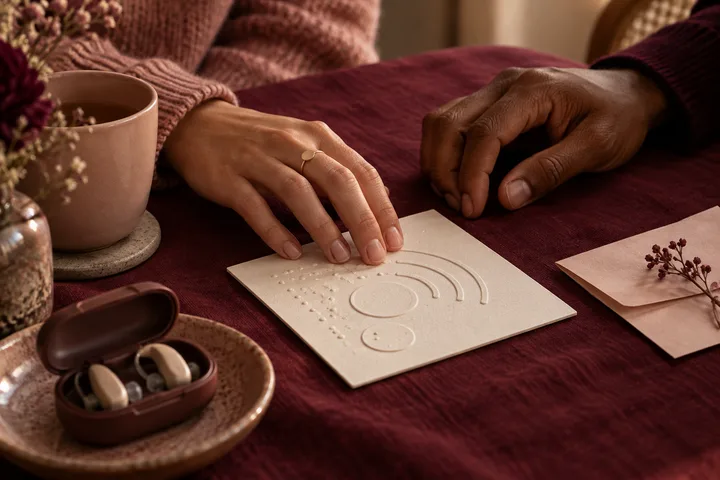
Sources: Central Auditory Processing Disorder; Love, Relationship Astrology: Mercury in Synastry; Synastry: Moon-Mercury Aspects Between Two Charts
Use astrology to name the pattern, not to overrule your experience
Astrology belongs in the reading after you understand the lived question. Start with what actually happens between you. Then let the chart show the deeper arrangement around it.
For communication, begin with Mercury. Note each person's Mercury sign, house, and close aspects. A Mercury in an earth sign may favor concrete detail and a slower answer. A Mercury in an air sign may move through ideas quickly and need room to connect them. Fire may speak from conviction and instinct. Water may communicate through mood, memory, and implication. These are tendencies, not verdicts.
Then bring in the Moon. A person may understand every word and still feel unheard. Moon contacts show the emotional atmosphere around language. A Moon-Mercury conjunction or trine can support easy sharing. A square or opposition can create a lively bond with repeated translation work. The question isn't which aspect wins. It is whether the couple can hear the feeling underneath the sentence without erasing the sentence itself.
Saturn deserves attention when communication feels slow, guarded, formal, or burdened. In its mature expression, Saturn helps people make agreements, repeat what matters, and stay when the conversation takes effort. In its harsher expression, it can make one partner feel corrected, silenced, or tested. Read the difference through behavior. Does the man use structure to create safety, or control to avoid vulnerability?
The third house can describe everyday exchange, while the seventh house shows the partnership field and the sixth can point toward routines, service, and the practical work of making a shared life function. If birth times are known and reliable, house contacts can add context. If they aren't, don't pretend to know the house story. Use the chart inputs you actually have. A synastry reading can still work with dates and places, but its scope changes when angles and houses cannot be trusted.
Cafe Astrology's Mercury-in-synastry guidance offers a useful warning within the astrological tradition: strong Mercury contacts may create a feeling of understanding while emotional, spiritual, or embodied connection remains thin. Its Moon-Mercury material adds that sympathetic listening and clear communication matter when the contact becomes prickly. These sources support a layered reading rather than a one-aspect answer.
A worked comparison makes the method clearer. Suppose his Mercury touches your Moon harmoniously, but his Mercury also meets your Saturn in a hard aspect. You may feel that he understands your private world, yet freezes or becomes defensive when the topic turns practical. The answer isn't soulmate or doomed. It is a ranked question. First, can he stay kind while receiving correction? Second, can you ask for clarity without parenting him? Third, can both of you turn the difficult contact into a repeatable agreement?
Astrology can give language to the pattern. It cannot make you live with a pattern that keeps harming you.
This is also why a chart should never be used to explain away a boundary. If the reading suggests that he struggles to speak under pressure, you can offer a calmer route. You cannot conclude that his silence means hidden devotion, or that your hurt is the price of a fated bond. Let astrology deepen observation. Let the relationship prove its capacity for care.
Sources: Love, Relationship Astrology: Mercury in Synastry; Synastry: Moon-Mercury Aspects Between Two Charts
The strongest exception is a difference he refuses to own
A communication difference itself isn't a reason to leave. A refusal to participate in the solution can be.
This is the exception that changes the recommendation. Some relationships need patience, repetition, access changes, and a longer path to mutual understanding. They can be tender and strong. But no chart contact, diagnosis, or romantic feeling can compensate for a man who uses his difficulty as a shield against accountability.
He may say you should already know what he means. He may call every clarification an attack. He may demand that you repeat yourself forever while refusing to write down one important detail. He may disclose a need only after you fail to meet it, then use your confusion as proof that you don't care. He may expect you to handle appointments, social explanations, family questions, and emotional repairs while he stays passive. That isn't a communication style. It's an unequal relationship.
The strongest exception also applies in the other direction. You can become the controlling partner while telling yourself you're helping. You can correct his speech, finish his sentences, speak for him, or explain him to other people without asking. You can turn every missed word into a lesson. You can demand that he communicate in the channel that reassures you, even when another channel gives him a fuller voice. Respect has two doors. Both need to stay open.
NIDCD's guidance on aphasia tells communication partners to include the person in conversation, ask for and value their opinion, encourage any form of communication, avoid correcting speech, and allow time. ASHA's guidance likewise says not to make assumptions and to ask the person what support works. These are not decorative manners. They protect agency.
In astrology, even a beautiful Moon-Mercury contact can become a loop of over-reading. You think you sense him, so you stop asking. He thinks you should know, so he stops explaining. The bond feels psychic while the practical facts go missing. A difficult Mercury-Saturn contact can create the opposite lesson: say it plainly, write it down, return to it, and let consistency become trust. The mature expression matters more than the romantic label.
Your decision point is firm. If he is willing to learn, you can decide whether the pace and work suit your life. If he refuses shared effort, step back. You aren't rejecting his body, voice, brain, or history. You're refusing a relationship in which your needs become the price of his comfort.

Sources: Tips for Communicating With Adults Who Have a Speech or Language Disorder; Central Auditory Processing Disorder; Aphasia; Synastry: Moon-Mercury Aspects Between Two Charts
Make one clear agreement, then judge the pattern
You don't need to solve every future communication problem tonight. You need one honest conversation and a way to observe what follows.
Start with the moment that matters most. Say, I like you, and I want to understand how we can communicate well. When we are in a noisy place, what helps you? When either of us misses a message, what should we say? If you need time, how will we come back to the subject? I also need my concerns to receive a clear answer. Can we agree on that?
Keep your own needs in the sentence. You may need plans confirmed in writing, a partner who doesn't interrupt, time to process before answering, or a calm return after conflict. Name the need without turning it into an accusation. Then ask what he can reliably offer. Reliability is the hinge.
After the conversation, choose a small test. Meet somewhere with the right level of quiet. Confirm one plan in writing. Use the repair phrase once. Notice the result. Did the agreement reduce strain? Did he remember it without being managed? Did you respect his preferred channel? Did both of you have more room to be yourselves?
If the answer is yes, keep going slowly. Let the relationship earn more access. If the answer is mixed, adjust one thing and watch again. If the answer is no, believe the pattern before you explain it away. A man can be attractive, wounded, spiritually meaningful, and still wrong for the life you need.
The astrological reading can sharpen the next question. With precise birth dates, places, and reliable times, compare Mercury, Moon, Saturn, the third house, the sixth house, and the partnership angles where available. Record the actual contacts before interpreting them. Don't let a general sign description outrank your lived evidence. A chart can show where patience, sensitivity, defensiveness, or discipline may enter the bond. Your decision rests on whether those themes become care in practice.
Get my dating clarity report if you want help sorting six concrete observations about his consistency, intentions, pace, needs, and boundaries. Bring the question you keep circling. The useful report won't decide your life for you. It will help you see what his choices are already saying.
Then choose. Stay and build a shared method if he participates and the relationship leaves room for your life. Slow the pace if goodwill is present but the system isn't working yet. Leave if respect, clarity, or mutual effort keeps disappearing. Love needs a voice, but it also needs a return address.
Don't make the decision at the peak of either hope or frustration. Give yourself a quiet hour after the talk. Notice whether your body feels relieved because the issue has a shape, or tight because you had to argue for basic consideration. Notice whether you can imagine asking for more next month. A workable relationship doesn't remove every difficulty. It gives you enough safety to bring the next truth into the room.
Before you invest further, ask yourself three final questions. Do I feel free to say what I need? Does he take an active role in making understanding possible? When communication breaks, do we repair the bond or make one person pay for the break? Your answers don't need to sound romantic. They need to be true. They need to leave room for your future self, too.
Sources: Tips for Communicating With Adults Who Have a Speech or Language Disorder; Age-Related Hearing Loss (Presbycusis); Central Auditory Processing Disorder; Aphasia; Love, Relationship Astrology: Mercury in Synastry
A little more clarity
What should I ask a man whose hearing or processing difference affects dating?
Ask what helps him communicate in different settings, which situations drain him, and how he prefers to repair a missed message. Then tell him what you need too. The best conversation produces a shared plan, not a list of rules you alone must remember.
Can astrology show whether communication differences will ruin a relationship?
No single chart contact gives that verdict. Mercury, Moon, Saturn, the third house, and relevant synastry contacts can describe communication style, emotional reception, patience, and recurring friction. Read those symbols beside his actual consistency, accountability, and willingness to adapt.
How do I know whether I'm supporting him or doing all the work?
Look for shared effort over time. He should be able to name useful accommodations, participate in repairs, and respect your needs without making you feel cruel for having them. If you manage every setting, repeat every plan, and absorb every consequence, the relationship has stopped being mutual.
Sources & further reading
- Tips for Communicating With Adults Who Have a Speech or Language Disorder
Supports adult communication-partner practices such as asking preferences, allowing time, reducing distractions, and using clarification rather than assumptions.
- Age-Related Hearing Loss (Presbycusis)
Supports facing the speaker, reducing background noise, and choosing quieter seating as practical hearing accommodations.
- Central Auditory Processing Disorder
Supports person-centered communication goals, environmental modifications, compensatory strategies, written supports, and adjustments across everyday settings.
- Aphasia
Supports communication-partner training, inclusion, short sentences, written key words, patience, and valuing the person's opinion.
- Love, Relationship Astrology: Mercury in Synastry
Supports interpreting Mercury synastry as conversation and mental exchange while checking whether deeper emotional and embodied understanding is also present.
- Synastry: Moon-Mercury Aspects Between Two Charts
Supports reading Moon-Mercury contacts through emotional expression, sympathetic listening, clear communication, and the risk of rational-versus-sensitive friction.
Dating Clarity Report
Six observations about the man you are dating. A clear view of the patterns, plus a conversation for your next decision.
Get my dating clarity report