
Imagine the date that has to change
Imagine Maria has been seeing Daniel for six weeks. He’s thoughtful. He remembers small details. He brings coffee exactly the way she likes it, and when he looks at her, she feels the dangerous little lift of hope. This Friday, they’re meant to drive two hours for a concert.
On Thursday night, Maria’s pain rises. Not dramatically. Not in a way that makes a good story. Her joints ache, her sleep has been poor, and the thought of sitting in traffic, standing in a crowded venue, and driving home at midnight makes her body tense before the evening has even begun. She sends Daniel a message. She can’t do the concert. She’s sorry. Could they have dinner near her home instead, or choose another night?
His answer tells her more than the concert ever could. He might say, ‘Of course. What would feel manageable?’ He might be disappointed and still kind. He might ask whether she wants company or rest, then make a new plan without turning her pain into a debt. Or he might go quiet, make her comfort him, accuse her of not trying, or keep saying she’s too fragile for a real relationship. Those are not equal reactions. They reveal different kinds of men.
This is the question underneath chronic pain and dating compatibility: can the relationship keep its warmth when life stops being convenient? Persistent pain can affect daily activity, sleep, mood, work, and intimacy, while its intensity can change. A date can be possible on Tuesday and impossible on Friday without either fact being a lie. Your task isn’t to prove that you’re easy to love. It’s to notice whether he can meet the real shape of your life.
Maria doesn’t need a soulmate verdict. She needs information. Does Daniel believe her? Can he adapt? Does he keep his own life while making room for hers? Can they talk about sex, travel, money, household effort, and cancelled plans before those subjects turn into quiet resentment? The answer lives in repeated behavior. Astrology can help you name the pattern. It cannot replace watching it unfold.
She also needs to know whether Daniel can enjoy an ordinary life with her. A relationship built only around heroic accommodations will exhaust both people. Maybe they cook together, watch a film, sit in the park for twenty minutes, or meet friends online. The activity can be small and still carry romance. What matters is whether they keep discovering pleasure instead of treating pain as the end of the story.
The same principle protects him from an unfair role. Maria can’t ask Daniel to guess her capacity, cancel his whole life, or prove his love through constant availability. She can ask for respect, honesty, and a willingness to plan with the information she gives him. He can ask for clarity and reciprocity. Good compatibility leaves both people visible. The Arthritis Movement makes the same dating-stage point in plainer terms: you don’t owe a new partner your whole medical history at once, but you do get to choose plans that fit your energy and notice whether he listens and adapts.
Sources: Chronic pain and intimacy, Cambridge University Hospitals NHS; Managing relationships, setbacks and planning for the future, Leeds Community Healthcare; The Association Between Partner Reactions to Chronic Pain and Pain-Related Outcomes, PubMed; Dating with Arthritis: Navigating Relationships as a Young Adult, The Arthritis Movement
Compatibility begins with the plan after the plan
A man’s first reaction matters. His second reaction matters more. Anyone can perform concern for one evening. Compatibility shows up in what happens after the original plan disappears.
Look for a man who treats flexibility as part of dating, not as a special favor he grants you. He doesn’t need to understand every medical detail. He does need to understand the practical truth: pain may limit how long you sit, stand, drive, walk, touch, sleep, or stay social. He can ask clear questions without making you explain your entire history to earn a change of plan.
A useful response sounds ordinary. ‘Do you want me to come to you, or would rest help more?’ ‘Would a shorter visit work?’ ‘Should we keep the evening quiet?’ ‘If we cancel, do you want to choose a new day now or wait?’ These questions protect both people. They make care specific. They also leave you in charge of your body.
A poor response hides inside romance. He may insist that love means pushing through. He may call your limit a lack of desire. He may turn your flare into a test you have failed. He may offer to manage your body when you asked only for understanding. Control can wear a caring face. If he pressures you to take risks, ignores your no, or makes you responsible for keeping him happy, stop reading the behavior as devotion.
A 2026 systematic review of partner responses to persistent pain found that punishing and overly solicitous responses were linked with worse pain-related outcomes, while empathy and support for autonomy showed more promising associations. The point for dating isn’t to turn a review into a scorecard. It’s to notice the difference between care that gives you room and care that makes you feel managed. A relationship may have to negotiate shared routines, energy, transport, rest, household work, and intimacy. That negotiation doesn’t make the bond less romantic. It makes the bond real.
Try this small test before you deepen the relationship. Cancel or change one low-stakes plan honestly. Don’t stage a test. Don’t hide your needs to see whether he guesses. Tell him what changed and offer one alternative if you have the energy. Then watch. Does he respond with curiosity? Does he sulk? Does he make a new plan and follow through? His answer is not a final judgment, but it is valuable evidence.
You can also notice what happens when the plan changes for him. If his train is delayed, his work runs late, or his friend cancels, does he show himself the same patience he expects from you? A man may sound understanding when your pain affects his evening, yet become demanding when his own schedule changes. Equality doesn’t mean identical needs. It means both people get to be human.
A flexible relationship still needs shape. Put dates on the calendar. Confirm the day. Decide whether a cancellation means a new invitation or an open-ended maybe. Keep small rituals that survive a flare, such as a morning message, a short call, or tea on the sofa. These modest acts stop uncertainty from swallowing the whole bond. You’re not asking him to live around pain every minute. You’re asking him to help build a relationship that can bend without breaking.
Dating compatibility with chronic pain doesn’t mean finding a man who never feels inconvenienced. It means finding out whether he can stay warm, flexible, and reliable when the plan changes. A good match won’t make your body audition for care. He’ll ask what would work today, accept a no without sulking, and help create another way to be together. Chronic pain can make energy, intimacy, travel, and timing unpredictable, so the relationship needs a plan for ordinary days and flare days. Watch what he does after the cancellation, not just how sweet he is when everything goes smoothly. In synastry, you can study the Moon, Venus, Mars, Saturn, the sixth and seventh houses, and contacts to the angles for patterns around care, desire, duty, and daily life. But no placement excuses pressure or neglect. Your next step is simple: tell him what support looks like, make one flexible plan, and see whether his actions become steadier. That is the evidence you need before you invest more.
Sources: Managing relationships, setbacks and planning for the future, Leeds Community Healthcare; 10 ways to ease pain, NHS; The Association Between Partner Reactions to Chronic Pain and Pain-Related Outcomes, PubMed
The care test is not the same as a rescue fantasy
Chronic pain can bring care into a relationship early. He may drive. He may carry things. He may cook when you’re tired. Those gestures can feel intimate, especially if you’ve spent years doing too much alone. Receive the kindness. Then ask whether he can care without taking over.
A healthy partner supports your choices. He asks before helping. He learns the difference between ‘I need company,’ ‘I need practical help,’ and ‘I need to be left alone.’ He doesn’t collect favors and present them later as proof that you owe him access, sex, gratitude, or obedience. He doesn’t turn into your manager, nurse, or judge.
You also don’t want to build the relationship around his rescue identity. If he needs you to remain helpless so he can feel essential, the arrangement will tighten around both of you. Keep your own clinicians, friends, routines, money, and decisions. Let partnership add support without replacing your agency. The best care gives you more room to live. It doesn’t make your world smaller.
There is a quieter version of rescue that can be harder to spot. He may insist on choosing every restaurant, route, and activity because he says he knows what is best for you. He may speak about your limits before you have spoken for yourself. Ask whether his help leaves you more capable or more dependent. Real tenderness can tolerate your preferences, your privacy, and your right to change your mind.
You can make care easier to give by naming the form you want. ‘Please bring food, but don’t ask me to host.’ ‘I want you beside me, not a solution.’ ‘I can tell you what my doctor has advised, but I’m not looking for medical advice from you.’ Clear requests protect affection. They also reveal whether he wants to know you or only wants a role in your life.
The Leeds Community Healthcare pain service recommends talking with family and friends about limitations, changing roles, setting goals, and making a plan for setbacks. That advice translates well to dating. You can tell him what a flare usually changes, what remains possible, and what kind of help is actually useful. You can also decide what belongs to you. He can bring dinner. He doesn’t need to monitor your medication or speak for you.
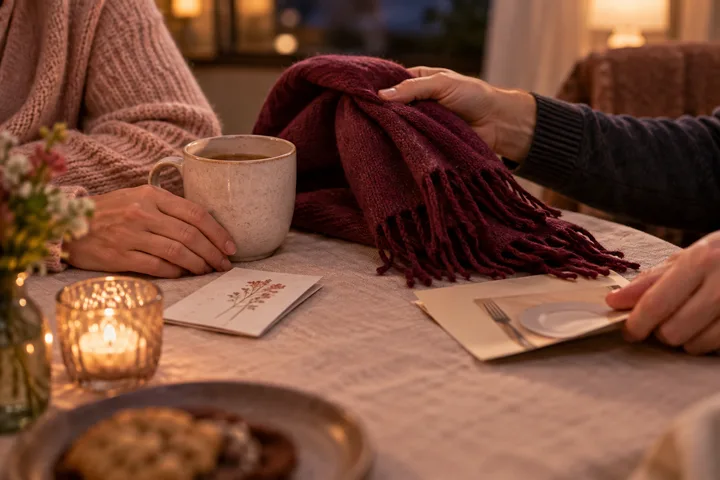
Imagine Maria tells Daniel, ‘When my pain is high, I can still talk, but I can’t host or make decisions about dinner. Please give me two simple options, and don’t take it personally if I choose sleep.’ Daniel listens. The next time it happens, he remembers. That memory is a form of care. It shows that her needs exist in his mind even when she isn’t actively explaining them.
Now imagine he says yes in the moment but forgets every time, then complains that she is difficult. The problem isn’t that he failed a perfect caregiving exam. The problem is that he accepted information without letting it change his behavior. Compatibility requires learning. You shouldn’t have to teach the same boundary from the beginning after every flare.
Sources: Chronic pain and intimacy, Cambridge University Hospitals NHS; The Association Between Partner Reactions to Chronic Pain and Pain-Related Outcomes, PubMed
What should you discuss before you invest more?
You don’t need to disclose every private detail on a first date. You do need enough honesty for a man to understand what dating with you may involve. The timing depends on trust, safety, and your comfort. The standard is simple: don’t let fear of being rejected force you into a relationship built on missing information.
Start with the practical layer. What kinds of plans are usually easier? How much notice helps? What happens when you cancel? Do you prefer a brief check-in or quiet? Can you travel? What does a comfortable physical setting look like? You can answer in broad terms. ‘My pain varies, and I may need to change plans’ is already a meaningful beginning.
Then discuss intimacy. Pain can affect desire, movement, arousal, touch, and stamina. It can change what feels good from one day to the next. Stanford’s Division of Pain Medicine notes that many couples benefit when they stop treating spontaneity as the only form of intimacy and plan for comfort instead. A good man doesn’t treat sex as a performance review. He asks what you want, pays attention to your body, and understands that stopping is allowed. You can build closeness through touch, conversation, rest, humor, and other forms of pleasure. The point is mutual presence, not pushing through.
Talk about the future when the relationship earns that conversation. If you live together, who handles errands on a flare day? How will you divide chores when capacity changes? What happens if a trip becomes impossible? How will you protect each person’s friendships and private time? Chronic illness can change roles and routines inside a couple. Naming that early prevents one woman from becoming the invisible project manager of both people’s lives.
Ask him questions that reveal character, not just opinions. ‘What do you usually do when plans fall apart?’ ‘How do you handle disappointment?’ ‘What would you need from me if I couldn’t join an activity?’ ‘How would you want us to divide practical work?’ Listen for specifics. A man who says, ‘We’ll figure it out,’ may be sincere, but you still need to hear how he imagines figuring it out.
Listen for whether he can hold two truths at once. He can miss the concert and care about you. You can feel guilty and still need rest. He can want a more active life and still refuse to shame you for your capacity. Mature compatibility has room for disappointment without turning disappointment into punishment. If every honest limit creates a courtroom, you’ll spend more energy defending yourself than living.
Notice whether he asks about your joy, too. A chronic-pain conversation can become so focused on what you can’t do that the relationship forgets what you love. Tell him about the music, food, places, jokes, books, and ordinary pleasures that still make you feel like yourself. A supportive partner learns the whole landscape. He doesn’t reduce you to a symptom or a schedule.
Then answer the same questions for yourself. What can you offer without abandoning your body? What are you unwilling to negotiate? What kind of flexibility feels loving, and what kind feels like self-erasure? Compatibility isn’t a one-sided search for a patient man. It’s a shared design problem. Your needs count. His needs count. Neither person gets to turn need into a weapon.
Sources: Chronic pain and intimacy, Cambridge University Hospitals NHS; 10 ways to ease pain, NHS; Chronic Pain and Sex: Why Intimacy Changes, and What Can Help, Stanford Pain News
How synastry can show the relationship’s pressure points
Once you have both accurate birth dates, birth times, and birth places, synastry can show how two charts meet. Without a birth time, house overlays and angles become uncertain. Without complete data, don’t pretend to see a precise sixth-house or Descendant story. State the inputs and the calculation scope plainly. A serious reading respects the chart it actually has.
For this question, begin with the Moon. The Moon speaks to emotional safety, instinct, habits, and the way each person responds when life becomes tender. A supportive Moon contact can describe an easier rhythm of noticing and soothing. A tense contact may show that one person needs quiet while the other seeks immediate reassurance. Neither pattern is a sentence. It tells you where awareness and skill matter.
Then study Venus and Mars. Venus describes affection, pleasure, receptivity, and the ways love becomes tangible. Mars brings desire, action, heat, and the way a person moves toward what they want. Their contacts can help you understand attraction and how the couple handles initiative. If Mars keeps pushing while Venus needs comfort, the reading should lead to a conversation about pace and consent, not a dramatic prediction that passion will save you.
Saturn deserves special care here. Saturn can bring patience, responsibility, endurance, and the willingness to build slowly. It can also feel heavy. A Saturn contact to the Moon, Venus, Mars, Sun, or relationship angles may describe duty, fear, criticism, or a bond that asks for maturity. The question is how the Saturn person uses weight. Does he become dependable? Does he make every need feel like a burden? The same symbol can grow into commitment or resentment through choice.
The sixth house is relevant because it concerns daily work, routines, health practices, and the tasks that keep life running. The seventh house concerns partnership and the person we meet across from us. A partner’s planets in your sixth house may bring daily life into focus. Planets in your seventh may make him feel strongly connected to your picture of partnership. An overlay doesn’t prove that he’ll care for you. It shows where his presence activates themes in your chart.
The fourth house can add the question of rest and home. The eighth can bring shared vulnerability, dependence, and the exchange of resources. The twelfth can describe private burdens, hidden fears, or experiences that are hard to name. Read these houses with the planets and their aspects. Don’t turn one placement into a diagnosis. Your body is not a symbolic object for him to interpret without your consent.
Traditional relationship astrology also gives weight to the Sun and Moon, Venus and Mars, the seventh house and its ruler. Conjunctions, trines, and sextiles may ease connection. Squares and oppositions may create friction that demands work. Let the chart organize your questions: where do you seek comfort, where does desire move too fast, and where might duty become heavy? That keeps the reading useful without turning one aspect into a verdict.
Sources: Synastry: Planet Overlays in Houses (Transposed Houses), Cafe Astrology; What Is Synastry? Classical Relationship Astrology, Sira Nur Uysal; 10 ways to ease pain, NHS
Read difficult aspects as work, not as a sentence
A hard synastry aspect can describe a real relationship challenge. That doesn’t make it bad. Some couples grow through tension because they learn how to name the problem and respond differently. Other couples use a difficult aspect to excuse cruelty. The chart doesn’t make that choice for them.
Consider Saturn touching your Moon. You may feel that he steadies you, or you may feel watched and judged when you’re vulnerable. If he listens, keeps promises, and respects your need for rest, Saturn can become a structure that protects the relationship. If he calls your pain dramatic, demands proof, or uses practical help to control you, Saturn has taken the shape of restriction. The symbol becomes clear through conduct.
Consider Mars touching your Moon or Venus. There may be heat, urgency, and a strong physical pull. There may also be impatience. You need a partner who can let desire slow down without turning the slowdown into rejection. He must be able to hear ‘not tonight’ and remain loving. That is not a special compatibility bonus. It’s a foundation.
Consider Neptune touching personal planets. This can heighten tenderness, imagination, and the feeling that you understand each other without words. It can also blur facts. You may fill in gaps with hope. He may fall in love with the version of you who never cancels, never needs care, and always says yes. Bring the relationship back to plain questions. What did he promise? What did he do? What happens when reality interrupts the dream?
Consider Uranus touching Venus, Mars, or the relationship angles. The bond may feel alive, surprising, and liberating. It may also struggle with regularity. If one of you needs dependable check-ins and the other treats spontaneity as freedom, chronic pain can make the gap sharper. You’ll need a flexible structure, not vague permission to disappear.
These interpretations are not labels for either person. They’re questions for the relationship. Ask, ‘Where does this pattern help us?’ Then ask, ‘Where does it hurt me?’ A beautiful aspect doesn’t erase a difficult conversation, and a difficult aspect may point to a skill the couple can practice. The useful reading names the pressure point, gives it language, and suggests what to discuss next.
Use the chart to compare experiences, not to assign blame. If his Saturn lands in your sixth house, ask how his presence affects your routines and workload. If your Moon touches his Mars, ask how comfort and urgency meet between you. If one person’s planets activate the other’s seventh house, explore what partnership means to each of you. The overlay tells you where to look. Your conversation tells you what the pattern becomes.
Birth time matters most when you’re reading houses and angles. A difference of minutes can shift an angle or change a cusp, especially when a planet sits near the boundary. If the time is unknown, work with what remains secure: sign placements, close planet-to-planet aspects, and the emotional facts you can name together. A narrower reading can be more honest and more useful than a confident story built on an uncertain house.
You can also compare the charts in both directions. His planets may activate your sixth house, while yours activate his seventh or fourth. That difference matters. One person may experience the connection through tasks and daily adjustments; the other may experience it as partnership or home. Neither experience is automatically more important. Ask what each person is carrying, and whether the exchange feels mutual.
Keep the interpretation close to the question you actually came with. If you’re deciding whether to invest, don’t spend the whole reading on attraction. Study how the bond handles ordinary time. Look at communication, reliability, rest, sex, work, and repair. Synastry becomes useful when it gives language to the place where your hope meets the life you would have to live.
Sources: Synastry: Planet Overlays in Houses (Transposed Houses), Cafe Astrology; What Is Synastry? Classical Relationship Astrology, Sira Nur Uysal
The strongest exception: when pain isn’t the real problem
Sometimes chronic pain is not what breaks the connection. His attitude is. If he is patient during a flare but unreliable in every other part of dating, don’t give him extra credit for one tender evening. If he plans accessible dates but avoids defining the relationship, the accessible date doesn’t answer the commitment question. Pain can explain a changed plan. It cannot explain a pattern of dishonesty, pressure, contempt, or neglect.
The reverse is also true. A kind, consistent man may still discover that the relationship’s practical demands exceed what he can offer. He may not be able to travel often, provide physical care, or share a home with the level of uncertainty involved. That doesn’t make him cruel. The honest conversation is kinder than a promise he cannot keep.
This is where agency matters. You’re not looking for a man who has infinite capacity. You’re looking for a man who knows his capacity and tells the truth about it. He can say, ‘I care about you, but I can’t be the person who drives to every appointment.’ You can say, ‘I need a partner who can join me in building a flexible home life.’ The match may strengthen through that clarity, or it may end before either person becomes resentful.
Watch for the difference between accommodation and self-abandonment. Accommodation means changing a plan so both people can participate. Self-abandonment means hiding symptoms, skipping care, forcing intimacy, or pretending you can live at his pace because you’re afraid he’ll leave. The first creates room. The second charges your body for the relationship.
Watch for the difference between patience and indefinite waiting, too. If he says he understands but never takes a practical step, his words are not enough. If you keep explaining the same need and he keeps asking for more time, the relationship may be asking you to invest in potential instead of a man who is present now.
Astrology can reveal why the connection feels binding, tender, or difficult to release. That insight can help you name the attachment, the hope, or the fear underneath a decision. It can also show why a relationship asks for patience. But the meaning you find in the chart still has to become a choice you can live with.
Your body may also know the answer before your mind accepts it. After time with him, do you feel calmer, respected, and able to recover? Or do you feel braced for the next complaint? Chronic pain already asks you to spend attention on symptoms, choices, and recovery. A relationship that adds constant emotional danger is not a neutral burden. You’re allowed to count the cost.
Don’t confuse being wanted with being well met. A man can desire you and still expect access on his terms. He can admire your strength and still resent the care your life requires. The match you’re looking for has a different signature: affection that survives limits, desire that respects pace, and practical effort that doesn’t arrive with a hidden invoice.
Sources: Managing relationships, setbacks and planning for the future, Leeds Community Healthcare; Beyond the Individual: Couple-Centered Health and Wellness Coaching, CDC Preventing Chronic Disease; Synastry: Planet Overlays in Houses (Transposed Houses), Cafe Astrology
Make one flexible plan, then make your decision
You don’t need to decide the whole future after one cancelled date. You do need to stop floating in guesswork. Give the relationship one clear chance to become more concrete.
First, tell him the truth in one clean paragraph. ‘My pain can change my capacity without changing how I feel about you. When that happens, I need us to adjust the plan without guilt. I can usually offer a shorter visit, a phone call, or a new date, but sometimes I need rest. Can you work with that?’ The wording can be yours. The clarity matters.
If you’re afraid that this conversation will scare him away, let that fear speak plainly without letting it drive. The man who leaves because you named a basic need has given you painful but useful information. The man who stays should not receive a medal for hearing you. He should show you, over time, that he can build with the information he received. Words open the door. Repetition proves the habit.
Give him a way to tell you his truth, too. Maybe he needs regular social plans, physical affection, or advance notice when a weekend changes. Maybe he has caregiving limits from his own history. Ask him to name them. You can’t consent to a shared future that exists only inside your description of what you need. The goal is not to make him endlessly flexible. It’s to see whether your real needs and his real capacity can meet without either person pretending.
Second, make a plan with options. Choose an outing with a shorter version, an easy exit, and a home alternative. Decide how you’ll communicate if your body changes course. Keep transport and money simple. A plan with room in it is not a lesser date. It’s a date designed for two real people.
Third, watch the next four or five interactions without turning them into a spreadsheet. Does he remember? Does he initiate? Can he be disappointed without punishing you? Does he still bring fun, flirtation, and his own point of view? Does he make room for your pain without making it the only thing you discuss? You need both care and a relationship.
A pattern has texture. Notice the small things: whether he checks the venue for seating, whether he accepts a shorter visit without making it feel like a consolation prize, whether he suggests something you can enjoy instead of asking you to plan everything. Notice the repair after a hard evening. Does he say what he felt, hear what you needed, and return with a better plan? That is how trust gets built in ordinary time.
Don’t judge only the successful alternative. Judge the emotional price of reaching it. If he agrees to dinner at your home but reminds you all night that he wanted the concert, the plan technically changed while the pressure stayed. If he suggests a quiet lunch and enjoys it with you, he has changed the experience, not merely the location. Compatibility lives in that difference.
Fourth, choose the path that matches what you have learned. Keep dating if the relationship has room for honest limits and shared pleasure. Slow down if affection is present but the practical fit remains unclear. Step back if he pressures, mocks, or controls you. A chart can add meaning to the choice, but it doesn’t need to make the choice for you.
If you keep dating, set a private review point in a few weeks. Ask yourself whether the arrangement feels more spacious, whether you’re lowering your needs to preserve it, and whether you can say no without paying an emotional price. You’re checking the fit, not grading him.
If you step back, you don’t have to prove that pain was the reason. A mismatch is enough. You can care for him and choose a life that asks less of your body. You can also leave because the way he responds makes you feel small. A relationship doesn’t need a dramatic betrayal to be wrong for you. Sometimes the clearest answer is that the daily arrangement would cost too much.
You’re allowed to choose a relationship that leaves energy for desire, laughter, work, friends, and the life you were already building before he arrived. Romance should add warmth to that life, not make you negotiate against your body every week.
A Dating Clarity Report can help you sort those observations into six direct questions about his consistency, intentions, pace, needs, and boundaries. The report won’t decide for you. It can help you stop confusing chemistry with evidence and hope with a plan. Get my dating clarity report when you’re ready to look at the whole pattern.
Before you call it a future, answer three questions. Can you rest without apologizing? Can he name his own limits without making you the villain? Can you both change course and still return to closeness? If the answer is yes, make the next plan. If it’s no, believe the cost before attachment asks you to pay more.
The right man won’t require your body to become predictable before he becomes kind. He’ll have limits. So will you. Your decision is not whether pain makes love impossible. It’s whether this particular relationship can make room for two honest lives.
Sources: Chronic pain and intimacy, Cambridge University Hospitals NHS; Managing relationships, setbacks and planning for the future, Leeds Community Healthcare; Beyond the Individual: Couple-Centered Health and Wellness Coaching, CDC Preventing Chronic Disease; Synastry: Planet Overlays in Houses (Transposed Houses), Cafe Astrology
A little more clarity
Can chronic pain make two people incompatible even when they love each other?
Yes. Love can be real while capacity, pace, travel, intimacy, or daily expectations remain mismatched. Look for honest negotiation and repeated follow-through. A caring man can still say what he can’t offer, and you can decide whether that life works for you. Don’t call every limit a lack of love, but don’t call every sacrifice compatibility either.
Which synastry placements matter when chronic pain changes dating plans?
Start with the Moon for emotional response, Venus and Mars for affection and desire, Saturn for duty and endurance, and the sixth and seventh houses for daily life and partnership. Check the aspects and the condition of the relevant planets. Use accurate birth dates, times, and places for house work. Read the chart as a pattern to discuss, then judge the relationship through his actual choices.
Sources & further reading
- Chronic pain and intimacy, Cambridge University Hospitals NHS
Supports the discussion of pain, fatigue, self-esteem, changing roles, intimacy, and communication between partners.
- Managing relationships, setbacks and planning for the future, Leeds Community Healthcare
Supports practical relationship planning, communicating limitations, changing roles, pacing, and preparing for flare-related setbacks.
- Beyond the Individual: Couple-Centered Health and Wellness Coaching, CDC Preventing Chronic Disease
Supports the view that chronic conditions affect shared routines, roles, expectations, communication, and practical couple life.
- 10 ways to ease pain, NHS
Supports pacing, maintaining social contact, shorter visits, rest, and practical self-management around persistent pain.
- Synastry: Planet Overlays in Houses (Transposed Houses), Cafe Astrology
Supports synastry house overlays as a way to connect a partner's planets with daily routines, health matters, and other life areas.
- What Is Synastry? Classical Relationship Astrology, Sira Nur Uysal
Supports the traditional focus on Venus, Mars, the Sun and Moon, the seventh house, rulers, aspects, and house placements.
- The Association Between Partner Reactions to Chronic Pain and Pain-Related Outcomes, PubMed
Supports distinguishing punishing or overprotective partner responses from empathy and autonomy-supportive care.
- Chronic Pain and Sex: Why Intimacy Changes, and What Can Help, Stanford Pain News
Supports planning intimacy, discussing comfort, and treating changing desire and pain as relationship topics.
- Dating with Arthritis: Navigating Relationships as a Young Adult, The Arthritis Movement
Supports gradual disclosure, choosing dates around energy, adapting plans, and judging whether a partner listens and learns.
Dating Clarity Report
Six observations about the man you are dating. A clear view of the patterns, plus a conversation for your next decision.
Get my dating clarity report