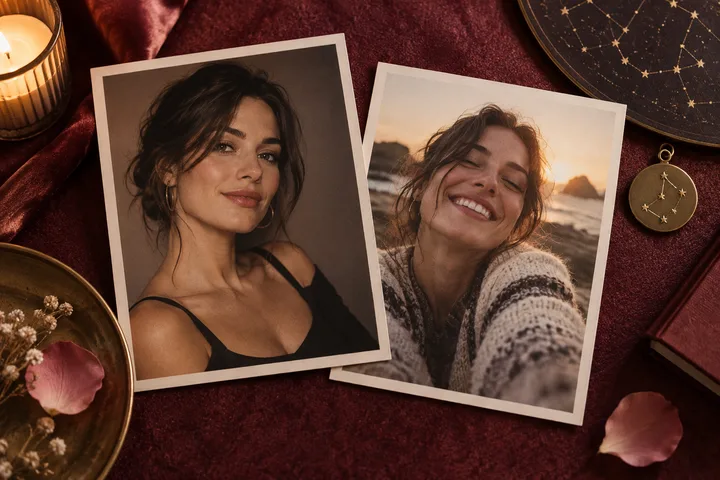
What does a dating photo need to show?
A dating photo has two jobs: let someone see your current face, and give a glimpse of how it might feel to meet you. It does not need to prove that you are spontaneous, adventurous, endlessly cheerful, or living a more glamorous life than you are. It needs to make a fair introduction.
That standard helps clear up a false choice. Professional means someone used photography skill, equipment, or direction. Candid means the image catches a person in an unposed or apparently unplanned moment. Those labels answer different questions. A photographer can make a candid-feeling image, and a friend can take a stiff portrait. A phone snapshot can be accurate or misleading; so can a polished portrait.
A useful test has two parts. First, recognizability: would someone who meets you soon recognize the person in the picture? Look at age, hair, facial features, body shape, and the way the photo is framed. Second, self-representation: does the image show an expression, setting, or way of being that you want a date to encounter? You might prefer a quiet portrait to a party scene. You might want the photo to show your humor or your love of walking. The point is that the choice belongs to you.
Research on online dating self-presentation helps explain why the balance matters. In “Managing Impressions Online,” 34 active members of one large dating service took part in telephone interviews in 2003. The interviews found that participants tried to balance appealing self-presentation with accurate claims, in part because an in-person meeting could follow. The sample was self-selected, heterosexual, and limited to users in California on one service; it explains a tension, but cannot tell us how often a modern app user will prefer any photo style. The useful point is narrower: a profile should invite interest without setting up a jarring first meeting.
A qualitative analysis of 524 mobile dating profile pictures found eight recurring forms of self-presentation. The researchers examined how pictures work in an app setting where strangers make quick judgments; they did not rank picture types by success or test photographer fees. Their analysis is useful because it treats a profile image as a chosen presentation, not a transparent window into a whole person. A photo always selects a moment. The question is whether that moment feels fair to you.
Imagine Maria has a charming candid photo from a friend’s birthday, but it was taken three years ago and her hair and appearance have changed. A crisp portrait taken last week may represent her better, even if she knew the camera was there. Now imagine she has a current candid where she looks relaxed and clear. A studio session would add polish, but it might not add anything she needs. In both cases, current likeness matters more than whether the photographer was paid.
This is also where a profile image should stop carrying more responsibility than it can bear. A warm smile does not guarantee a warm relationship. A serious expression does not reveal a person’s intentions. The picture helps a stranger decide whether to look closer. Your judgment of a man belongs to what happens as you get to know him: whether he follows through, listens, respects your pace, and speaks plainly about what he wants. Keep the photo decision in its lane.
Use candid pictures if they are current, clear, and feel like you. Pay for professional photos only when you need the photographer’s skill or direction to make accurate images you could not get another way, and the fee fits your budget. Research suggests viewers can respond warmly to candid-looking images, but it does not show that hiring a photographer leads to more dates or a more compatible partner. A polished portrait can still be genuine; an old or unclear candid can still give the wrong impression. Compare each option by two questions: would someone recognize you when you meet, and does the image show a way of being you want to share? If your camera roll fails that test, ask a friend to take new photos first. Book a professional when that attempt leaves a real gap.
Sources: Managing Impressions Online: Self-Presentation Processes in the Online Dating Environment; The Virtues and Downsides of Online Dating
Do candid photos have an advantage?
Sometimes, in first impressions. Research has found that people looking at candid rather than posed photos may feel more interested in the person pictured. That finding gives you a reason to value ease and natural expression. It does not show that a candid snapshot always wins, or that hiring a photographer is a poor investment.
In “A Candid Advantage? The Social Benefits of Candid Photos,” five studies examined how viewers respond to candid and posed images. In an online-dating task, 66 participants imagined browsing potential partners on OkCupid and rated their stated interest in dating a set of 30 photos. Their average interest ratings were higher for the candid images than for posed images. The participants were evaluating pictures in a simulated task, not going on dates, and the comparison was candid versus posed, not paid versus unpaid.
A follow-up used matched photos of the same people. Among 92 participants, a candid image led to higher ratings of interest in getting to know the person than a posed image, and viewers also rated the person as more genuine. The researchers’ mediation analysis suggested perceived genuineness helped account for the interest difference. That is a claim about the observer’s impression. It cannot establish that the person was more honest, more compatible, or more ready for a relationship.
The distinction is subtle but practical. An image may feel genuine because it looks relaxed, not because it was taken without planning. A photographer can talk with you while you walk, prompt you to turn toward a friend, or catch a laugh between posed frames. You knew the camera was there, yet the image can still show an expression you recognize as your own. A candid photo can also be planned: your friend may know where the light falls and ask you to repeat a moment. The production story does not settle the impression by itself.
The studies also show why a rigid ‘never pose’ rule misses the point. In the paper’s photo-selection tasks, participants often chose posed images for their own profiles even while observers in earlier tasks showed greater interest in candid images. Posters and viewers may value different things. The authors suggest that posters appreciate control over how they appear, while observers may read candid images as a more genuine glimpse. Both reactions make sense. You have a right to choose a photo that feels good to you, while recognizing that an overly arranged portrait may feel less open to a viewer.
What should you take from this if you already have several options? Compare the expressions and the feeling each picture gives, rather than rejecting a frame because it came from a photo session. Does your face look at ease? Does the pose feel like one you might naturally make? Is the image clear enough to see you? If one candid answers yes and the professional portrait answers no, use the candid. If the portrait feels more like you, the research does not require you to discard it.
The strongest limit is the gap between a first impression and the outcome you care about. A viewer’s rating of interest is not a date, and a date is not evidence of a lasting fit. The study gives a plausible reason to prefer photos that seem warm and unforced. It does not offer a return-on-investment calculation for photography. If you pay, pay for skill that helps you get a truthful, relaxed image, not for a promise that the word ‘professional’ will make someone choose you.
Sources: A Candid Advantage? The Social Benefits of Candid Photos; Managing Impressions Online: Self-Presentation Processes in the Online Dating Environment
What can a first photo do, and what can it not tell someone?
A strong first photo can help someone notice you and form an initial impression. It cannot answer whether you want the same kind of relationship, whether he will treat you with care, or whether the two of you can build a life that feels good. A photo deserves attention. It should not become a stand-in for the rest of dating.
A 2022 experimental study of multimodal dating profiles examined how people viewed pictures and text together. Participants saw profiles with pictures varied by attractiveness and profile text varied by language errors. The researchers found that picture attractiveness affected ratings of physical, social, and romantic attraction. They also found that viewers spent meaningful attention on text; picture attractiveness did not simply determine whether profile text was read. In their eye-tracking results, viewers moved between image and text, and the viewing pattern was broadly similar across picture-attractiveness conditions.
That study used experimental profile materials and impression ratings. It did not compare a paid shoot with a friend’s photos, and it did not follow people into relationships. Still, it supports a measured point: an image can shape early judgments, while words and other information remain part of how a profile is read. You do not need to make one photo carry your whole personality. Let it introduce you, then let the rest of the profile say what matters to you.
A Pew Research Center survey of U.S. adults fielded in October 2019 asked online dating users what profile information they considered important. Seventy-one percent said it was very important that profiles include photos; 63% said the same about the type of relationship someone was looking for. These are reported preferences, not evidence that paying for images improves outcomes. But the contrast is useful: people value pictures and clarity about intentions. A sharp image can invite attention; it cannot substitute for saying what kind of connection you want.
If the decision feels charged, remember why. Dating apps can make a person feel as if each image is a verdict on her desirability. It is easy to start buying more polish in the hope of controlling who appears, how many people respond, and whether the next connection works out. None of the evidence reviewed here shows that a paid session controls those things. At most, thoughtful pictures help you present yourself clearly and give a potential date a more accurate first impression.
That is a worthwhile job. It is also a bounded one. You may care about attracting someone who appreciates your face and presence. You may want to avoid a first meeting where either person feels surprised by the difference between the profile and the person in front of them. Those aims make current, recognizably you photos valuable. They do not make professional photography compulsory.
Nor should you read a man’s character from the production style of his profile images. A highly polished picture alone does not prove vanity or deception; a casual snapshot alone does not prove sincerity. Notice what he says and does. Does he make plans and keep them? Does he respond to a boundary without punishing you for it? Is he clear about what he wants? Those are the signals that help you decide whether he is right for you. Your photo can start a conversation, but it cannot do that discernment on your behalf.
Sources: What People Look at in Multimodal Online Dating Profiles: How Pictorial and Textual Cues Affect Impression Formation; The Virtues and Downsides of Online Dating
When does polish stop looking like you?
Polish becomes a problem when it changes the expectation of who will arrive. A flattering angle, clear light, or thoughtful outfit does not make a photograph dishonest. An old image, heavy retouching, or styling that bears little resemblance to your current appearance can make a first meeting harder. The useful question is not ‘Does this look professional?’ It is ‘Would I feel comfortable being recognized as the woman in this picture?’
In “Putting Your Best Face Forward: The Accuracy of Online Dating Photographs,” researchers examined profile photos from 54 heterosexual online daters. Independent judges considered about one-third of the photos inaccurate in their likeness of the person at the time. The study also reported that women’s images were more often judged inaccurate and more often appeared older, retouched, or professionally taken than men’s images. This was a small, older sample, and the judgment was an association. It does not show that professional photography causes misrepresentation, or that a particular woman’s polished photo is misleading.
A second study, “Looks and Lies,” analyzed 69 online daters and reported that perceived attractiveness was associated with some physical self-presentation strategies, including photo enhancement and changes to physical descriptors. Its small correlational sample cannot explain why a specific person chose a photo. It also cannot turn professional photography into a character test. Group patterns are not a license to suspect an individual man or woman because one portrait looks carefully made.
Taken together, these studies point to a more useful distinction than ‘natural versus fake.’ A picture can be carefully made and still give a current, fair likeness. A casual picture can be old, blurry, taken from an unflattering close angle, or so crowded with friends that a viewer cannot tell which person you are. The profile’s promise is about the person who will show up, not the amount of effort involved in making the image.
Try a simple recency check. When was the photo taken? Has your hair, weight, age, or style changed enough that someone meeting you would notice? If the image uses a filter or retouching, does it still look like your actual skin and features? Would you feel at ease if the person you met said, ‘You look like your photos’? These questions are not about meeting an impossible standard. They help prevent a picture from becoming a mask you have to defend.
Then ask whether the polish supports or replaces your self-representation. A portrait can be flattering because the light is lovely and you are relaxed. That is different from editing away features that are part of your face or staging a lifestyle you do not lead. You are allowed to choose your best current image. ‘Accurate’ does not mean unflattering, unstyled, or stripped of personality.
There is a cost to treating every attractive image as suspicious, too. The old study found professional-looking photos among some judged inaccurate photos; it did not test a present-day professional session designed to capture current likeness. If you have no recent solo photo, a careful shoot could solve that problem. Let the photographer know you want accurate skin texture, ordinary expressions, and minimal retouching. Ask to see examples in which subjects look relaxed and recognizable. The work should serve the image you want to offer, not impose someone else’s idea of your best self.
Sources: Putting Your Best Face Forward: The Accuracy of Online Dating Photographs; Looks and Lies: The Role of Physical Attractiveness in Online Dating Self-Presentation and Deception; Managing Impressions Online: Self-Presentation Processes in the Online Dating Environment
Can a paid photo session still look relaxed?
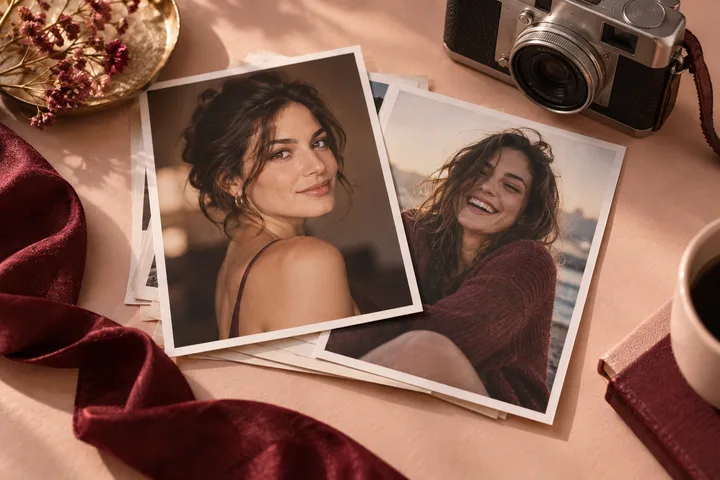
Yes. Paying for a photographer and choosing a relaxed image are compatible. The fee buys the photographer’s time and skill; it does not dictate whether you must pose stiffly. A good session for your needs might feel more like a walk and conversation than a sequence of formal headshots. It might also include a few direct portraits. The standard remains the same: you should recognize yourself in the final pictures.
The qualitative mobile-profile analysis offers a helpful way to think about the options. Its researchers examined 524 app profile pictures and described recurring self-presentation types rather than ranking them. Some images presented a subject through snapshots or activity; others used social contexts or arranged, professional-looking portraits. The study cannot tell us which type earns more dates, and it did not identify which images were paid commissions. It shows that people can present themselves in multiple visual forms within the same app setting.
That variety matters because your camera roll may not contain what you need. Maybe all your recent photos are group shots. Perhaps every solo picture is a close selfie taken in the same room. You may dislike being photographed and tense up when a friend points a phone at you. A professional can offer direction, help with light, and make more than one usable image in a session. Those are concrete services. They are different from buying a guarantee of better matches.
Imagine Maria has been dating again after a long relationship. Her recent pictures are mostly group photos, and she does not want to use an image from a trip years ago. She asks a photographer whose portfolio shows people outdoors and at ease to take pictures during a neighborhood walk and over coffee. Maria pays because she wants current solo photos and would rather receive direction than ask friends for another favor. She chooses a few frames that show her as she is now. The value is the set of accurate images she lacked, not a prediction about whom she will meet.
Before booking, look at the photographer’s actual work. Do people in the portfolio look like themselves across different frames? Do they seem comfortable, or do they all wear the same perfected expression? Ask how the session is directed, whether you can choose ordinary locations, and what retouching is included. Ask whether you can review the selected images with recognizability in mind. You are not being difficult by naming the result you want. Clear expectations make it easier to tell whether this person’s approach suits you.
You can also propose a practical mix: one clear portrait, a few varied images, and a setting that genuinely belongs to your life. If you enjoy hiking, a trail photo may feel more like you than a studio backdrop. If you prefer quiet weekends, there is no need to borrow a dramatic outdoor persona. Variety helps show context; it need not become a staged catalogue of hobbies.
A professional session is not the only way to get this. Ask a trusted friend to meet you at a place where you feel comfortable. Take a handful of pictures while you talk, walk, or do something ordinary. Use a timer if that feels easier. If the results are clear and current, you have what you need without paying. If the session leaves you tense or produces images that feel like a costume, do not use them simply because they cost money.
Sources: The Virtues and Downsides of Online Dating; Putting Your Best Face Forward: The Accuracy of Online Dating Photographs
Which choice fits your situation?
Use the pictures you already have if they pass the recognizability and self-representation tests. If the camera roll falls short, try a friend before paying. Book a professional when you need the photographer’s direction, equipment, or time and can afford the fee without expecting it to secure dates or compatibility. This is the clearest answer the available evidence supports.
Case one: your candid photos are recent, clear, and feel like you. Use them. The candid-photo experiments offer a reason to value the warmth or apparent genuineness that viewers may read in an unposed image. They do not say to spend money to reproduce that effect. If the image already makes a fair introduction, the paid alternative has to solve a problem you actually have. More polish by itself is not a reason.
Case two: your pictures are old, mostly group shots, too close, or missing a clear solo image. Ask a friend to take a few current ones. Choose a place where you feel at ease and do something ordinary. A friend may not know how to find good light or help you loosen up, but you can try this without treating a professional shoot as the entry fee for dating. If it works, keep the photos. If it does not, you will know more about what help you need.
Case three: you need skilled help. Maybe you have no friend available to take pictures, you freeze in front of a phone, or you want a range of clear solo images for a profile. Then a professional can be worth paying, provided the person understands the relaxed, accurate style you want. Ask about retouching and direction before you book. Review the portfolio. Decide in advance what would count as a useful result: perhaps several current images you would happily use, not an increase in likes.
The strongest counterargument is real: a professional portrait might be the most recognizably you and the warmest image in the set. A candid image may be blurry, dated, unflattering, or simply not a good likeness. In that case, choosing the professional photo is entirely consistent with authenticity. The label does not make the judgment. The finished image does.
What might change this recommendation? Direct evidence that a particular photo service reliably improved the outcomes you value, for people in circumstances like yours, at a price you accept. The research opened for this article does not provide that comparison. It studies reactions to images, self-presentation, perceived accuracy, or stated preferences. It does not randomize people to paid and unpaid photo options and measure actual dates or relationship quality. A photographer may still be useful, but the evidence cannot promise the return.
Keep the decision proportionate. A dating profile is one introduction, not a test of whether you are worth choosing. You can invest in a few good images because you want to feel represented, and you can decline a shoot because your current pictures already do the job. Neither choice makes you more or less dateable. Your effort belongs where it helps you feel clear and comfortable, not where someone sells you certainty they cannot support.
Sources: A Candid Advantage? The Social Benefits of Candid Photos; Putting Your Best Face Forward: The Accuracy of Online Dating Photographs; What People Look at in Multimodal Online Dating Profiles: How Pictorial and Textual Cues Affect Impression Formation
What should you ask before paying?
If you are leaning toward a session, decide what you are paying to solve before comparing photographers. ‘I need better photos’ can mean several things. You may need recent pictures, a solo image, help with light, more relaxed expressions, or a setting that reflects your real life. Name the problem. Then ask whether the photographer’s work addresses it.
Start with the portfolio. Look for people who seem present, not only perfectly styled. Do the images include varied expressions and settings? Can you imagine yourself in that kind of frame? A portfolio tells you more about the photographer’s choices than a label such as ‘dating specialist.’ It still cannot guarantee how you will feel during your own session, so use it as a conversation starter rather than proof of results.
Ask how the photographer helps people who feel awkward. Do they give simple prompts, let conversation continue, or expect you to hold a pose? There is no single right method. You want to know whether their way of working sounds comfortable to you. Ask how many locations or outfits are realistic in the session, whether you can suggest a familiar place, and how you will select final images. These practical questions help you avoid paying for a style that does not fit.
Talk about editing in plain terms. Ask what retouching means in this service. You may be comfortable with brightness and color correction but not with changes to your face, skin, or body. Say so. Ask for images that still look like your present self. The goal is not to ban every technical adjustment. It is to choose a result you can stand behind when you meet someone.
Set a personal spending boundary. The article cannot supply a fair local price because fees vary by location, experience, session length, and deliverables. Compare what is included and whether the amount feels comfortable after rent, bills, and other priorities. A photographer’s fee is discretionary. You do not need to take on debt or strain your budget to show up on an app.
Then define success before the shoot. Success might be one current solo image and two relaxed alternatives. It might be feeling less self-conscious in front of a camera. It is not a promised number of matches, messages, dates, or a relationship. None of the studies here validates a commercial guarantee of those outcomes. If a pitch leans on a promise it cannot substantiate, that is a reason to pause and compare other options.
You can also leave the decision open. Ask a friend to take a few images first, then book only if those pictures show you what you want but lack something your friend cannot provide. Or choose a professional first because you value direction and privacy. Both paths can be reasonable. What matters is that the service fits your need and your budget, and that you retain the final say over which version of yourself appears.
Sources: Putting Your Best Face Forward: The Accuracy of Online Dating Photographs; The Virtues and Downsides of Online Dating
Choose the photo you can stand behind
Put your best current options beside each other. Remove the image that is outdated, unclear, or unlike the person a date will meet. Keep the one that lets you be seen and still feels like you. If none makes a fair introduction, ask a friend to take a few relaxed pictures. Pay for a professional only when you need the skill or direction and the cost feels right.
One trusted person can help you check the part that is hard to judge in your own face. Ask which picture feels most like you in ordinary life, and why. You are not asking them to choose the most conventionally attractive image. You are asking whether the photo represents you clearly. Their answer can add perspective, but you make the decision.
If you book a shoot, describe what you want before the camera comes out: current likeness, natural expression, a setting you recognize, and editing that leaves you looking like yourself. When the images arrive, choose the frames you can imagine using and meeting someone in. Leave out any photograph that makes you feel you must maintain a persona.
Then let the photo return to its proper place. It can invite a first conversation. It cannot tell you whether the man who answers will be thoughtful, consistent, or ready for the kind of relationship you want. Watch what he does over time. Ask what you need to ask. Keep your boundaries. That is where dating clarity grows.
The verdict is simple: if your candid pictures are current and recognizable, use them and keep your money. If they are not, start with a friend. Pay for a photographer when professional help fills a real gap and the resulting images still feel like you. A useful photo is one you can stand behind, whatever kind of camera made it.
Sources: A Candid Advantage? The Social Benefits of Candid Photos; Managing Impressions Online: Self-Presentation Processes in the Online Dating Environment
A little more clarity
Are professional dating-profile photos misleading?
Not by themselves. A professional photo can be current and recognizable, while a casual photo can be old or unclear. Judge the image by whether it fairly represents the person someone will meet, not by who took it.
Will professional photos get me more matches?
The research reviewed here does not establish that paid photography increases matches, dates, or relationship quality. It studies reactions to candid versus posed images, profile judgments, and self-reported preferences. Pay for skill or direction you need, not a promised dating outcome.
What if I hate being photographed?
Start somewhere familiar and ask a trusted friend to take pictures while you talk or walk. If you still tense up, a photographer who gives gentle direction may help. Review the portfolio and ask about natural expression and retouching before booking.
Sources & further reading
- A Candid Advantage? The Social Benefits of Candid Photos
Five studies compare viewer responses to candid and posed photos, including stated interest in dating and perceived genuineness; they do not compare paid with unpaid sessions.
- Managing Impressions Online: Self-Presentation Processes in the Online Dating Environment
The opened qualitative article describes online daters managing appealing self-presentation alongside the expectation of a possible in-person meeting.
- Putting Your Best Face Forward: The Accuracy of Online Dating Photographs
The publisher abstract reports a study of 54 heterosexual daters and judges’ assessments of profile-photo accuracy, including associations with age, retouching and professional appearance.
- Looks and Lies: The Role of Physical Attractiveness in Online Dating Self-Presentation and Deception
The opened article reports correlational findings about appearance-related photo and profile enhancement among a small online-dating sample; it does not establish individual intent.
- What People Look at in Multimodal Online Dating Profiles: How Pictorial and Textual Cues Affect Impression Formation
In an eye-tracking experiment with 48 Dutch undergraduates viewing mock profiles, image attractiveness affected ratings while viewers also attended to profile text.
- The Virtues and Downsides of Online Dating
A representative survey of 4,860 U.S. adults in October 2019 reports stated views about online dating and profile information, not the effect of paid photography.
- Profiling the Self in Mobile Online Dating Apps: a Serial Picture Analysis
A qualitative visual analysis of 524 mobile dating profile pictures identifies recurring self-presentation types without ranking their dating performance.
Dating Clarity Report
Six observations about the man you are dating. A clear view of the patterns, plus a conversation for your next decision.
Get my dating clarity report