
1. Weekend love is not household evidence
He is wonderful on weekends. He remembers your coffee order. He brings flowers, puts his phone away, and makes the two of you feel like a small, bright world. You sleep late. You laugh in the kitchen. By Sunday evening, sharing an address can feel less like a decision than a correction. Why keep leaving when the relationship already feels like home?
Because a weekend has an ending built into it. Someone goes home. Someone resets the room. The hard errand can wait. The laundry can stay in a basket. You can be generous with time when Monday is still far away. A shared home removes that clean edge. It asks who buys toilet paper, who calls the landlord, who gets up when the dog is sick, and who absorbs the mood left behind after a bad day at work.
This is not an attack on romance. Romance matters. A home without tenderness becomes a small office with a bed in it. But tenderness is only one part of domestic compatibility. You need to know whether his care survives inconvenience. Does he notice what needs doing, or does he wait for instructions? Does he see your rest as a real need, or as an obstacle to his plans? When you raise a problem, does he become curious, defensive, charming, or cruel?
The Gottman Institute's moving-in guidance makes the same practical turn: couples need to discuss expectations, money, chores, and boundaries before they merge their lives. Its example of a couple who imagined different mornings shows why good intentions can still produce daily disappointment. Fidelity also points couples toward contributions, household responsibility, emotional labor, and bill plans before the move. The lesson is plain. Do not let convenience make a major decision for you.
A useful test is to compare his public tenderness with his private reliability. Does he offer to drive you home, then complain when the trip takes longer than expected? Does he enjoy cooking for you, but leave every pan in the sink because cleanup belongs to someone else in his mind? Does he speak warmly about partnership, then expect you to bend your schedule whenever his changes? None of these moments needs to become a courtroom exhibit. Together, they reveal whether his idea of love includes the unglamorous parts.
Look for initiative in places that do not flatter him. He notices that you are tired and changes the plan without sulking. He replaces something he used without being asked. He remembers a boundary after you state it once. He can spend a quiet evening without demanding entertainment or reassurance. These small acts matter because cohabitation is made of small acts. Grand gestures are easy to stage. Repeated consideration is harder, and it tells the truth more often.
A weekend tells you how he behaves when the relationship is framed as an occasion. Living together shows how he behaves when the relationship becomes an environment. Those are different tests. You should want both answers.
Sources: 20 Essential Questions to Ask Before Moving In Together; When to move in together: tips and questions; Pre-Cohabitation Conversations for Relationships: Recommended Questions for Discussion
2. Ask what moving in means to each of you
Start with the question that sounds simple and is not: What does moving in together mean to you? Let him answer before you explain your own view. You are listening for the shape of the decision. Is he describing a step toward a shared future, a way to save money, a test, an escape from his current place, or a pleasant arrangement with no larger promise attached? Any of those answers can be honest. The danger is not difference. The danger is pretending there is no difference.
Then ask, What do you want our life to look like six months after we move in? Ask about mornings, evenings, weekends, work, friends, family, sex, travel, and time alone. Ask whether he expects marriage, children, or a different city. You do not need a contract for every year ahead. You do need enough truth to know whether you are building toward the same horizon.
Listen to the verbs. A serious answer contains actions. We will decide. I will handle. We can revisit. I want to learn. A slippery answer stays in atmosphere. It will be nice. We will see. Why make it complicated? A man can be affectionate and still use vagueness to keep the benefits of commitment without accepting its meaning. Do not fill in the blanks for him because you hope the story ends well.
Consider an example. You tell him that moving in feels like a meaningful step toward a committed partnership. He says he loves you, but he has not thought about what it means and does not want the conversation to put pressure on the relationship. That is not an automatic no. It is a timing fact. You now know that you are carrying a meaning he has not agreed to carry. You can ask whether he is willing to discuss it again after a defined period, or you can decide that the mismatch is too costly.
Astrologically, this is where the seventh house and the composite chart become useful as interpretive lenses. The seventh house speaks to the one-to-one bond and the way two people meet each other as partners. A composite chart is cast from the mathematical midpoints between two people's planets and points, and astrologers read it as a chart of the relationship itself. It can show the atmosphere the partnership creates, but the chart cannot replace the conversation that tells you what each person means by commitment.
Ask the question in a way that makes evasion visible. Instead of saying, Do you see a future with me?, say, If we lived together for a year and the relationship stayed healthy, what would you hope we were moving toward? Then ask, What would you need to learn about us before you could make a bigger commitment? You are not forcing a proposal. You are checking whether he can imagine a future in which you are a full participant rather than a pleasant feature of the present.
You should also ask what he expects to change after the move. Some men imagine that cohabitation will make the relationship more secure. Others imagine that it will make it more convenient. Some quietly expect more sex, more access, more domestic care, and fewer questions. Ask directly. Will either of you expect the other to be available whenever you are home? Will you still keep separate friendships and routines? Will you tell family and friends about the arrangement in the same way? The answers expose the hidden bargain before you sign it.
Pay attention to whether he treats your questions as a chance to know you better. You may want the move to mark a serious commitment, while he may want to share rent and see what happens. Neither person has to be wrong for the arrangement to be wrong for you. If he says he is unsure, ask whether he is willing to remain in the relationship while you keep separate homes. His answer shows whether he wants you, or whether he wants access to a solution that happens to include you.
A clear conversation also protects the relationship from the pressure of the apartment itself. A lease can make a shaky promise feel permanent. A cheaper rent can make leaving feel impossible. A drawer, a key, and a shared streaming account can create the appearance of a life that neither of you has chosen out loud. Say the quiet part plainly: I do not want our housing arrangement to decide our commitment for us. If he respects that, the relationship has room to breathe. If he resists it, the resistance is information.
Ask one more question before you leave the subject: What would make you decide not to move in yet? His answer may tell you more than his reasons for saying yes. A mature man can name conditions, limits, and fears without making you manage them. He understands that a pause protects the relationship from a careless promise.

Sources: 20 Essential Questions to Ask Before Moving In Together; When to move in together: tips and questions; Composite Chart: Relationship Astrology
3. Ask who will carry the work of the home
Do not ask whether he is willing to help. Ask how the home will run. Help implies that the home belongs to someone else and that he may lend a hand. Shared life needs shared ownership. Who cooks? Who shops? Who cleans the bathroom? Who changes the sheets? Who notices that the soap is gone, books the repair, tracks the rent, and remembers his sister's birthday dinner? The visible chore is only the last step. The noticing is work too.
Fidelity names this difference as emotional labor. If you have to remind him several times before he does the dishes, the dishes are not the whole problem. You are carrying the task, the monitoring, and the resentment. A pre-cohabitation conversation framework published through the National Library of Medicine groups these discussions around relationship negotiations, household rules, and communication. It includes chores, finances, transport, pets, guests, conflict, and career goals. That range matters because a home is a system, not a mood.
Ask him to describe a normal Tuesday, not an ideal Sunday. What time does he wake? How much noise can he tolerate? Does he cook or order food? How often do friends visit? What does clean mean to him? Who gets the bedroom when one person is ill? What happens when one of you works late for three weeks? What happens when one person earns less, loses work, or needs to care for a parent? The point is not to create a perfect household before you move in. The point is to see whether he can think beyond the pleasant version.
Money needs the same directness. Ask what each of you earns, owes, pays, saves, and expects to keep private. Decide whether rent and bills will be split equally or in proportion to income. Decide how you will handle groceries, repairs, deposits, furniture, and a sudden expense. Keep some financial independence if that protects your freedom and peace. Moving in together does not require surrendering your ability to leave.
Make the plan concrete enough to survive a bad month. If one person loses income, how long can the other carry more? If one person pays the deposit, how will you record that contribution? If you buy furniture together, who owns it if the relationship ends? What happens to a pet, a car, or a lease? These questions are not unromantic. They are acts of care toward the woman who may otherwise discover, after the move, that affection has left her financially exposed.
You can even write a small household map before you move. Put recurring tasks in one column, the person responsible in another, and the backup plan in a third. Add the less visible work: scheduling, shopping, planning visits, tracking repairs, and initiating difficult talks. Do not use the map to police each other. Use it to prevent the familiar drift in which one person becomes the household manager while the other calls himself helpful because he completes a task when asked.
A useful answer includes a method. You might hold a twenty-minute household meeting every Sunday, keep a shared list, divide recurring jobs, and revisit the split when work or health changes. The method is less important than his willingness to make the invisible visible. If he laughs at the planning, calls you controlling for asking about money, or assumes you will handle the home because you are better at it, believe the assumption. He is already telling you who he expects to become responsible.
The astrology of the fourth house gives this section its natural language. The fourth house describes roots, private life, home, family patterns, and the emotional foundation under the public relationship. In a composite reading, emphasis there can describe a partnership that draws energy toward nesting, belonging, and the atmosphere created behind closed doors. A strong fourth-house signature is not a promise that he will do his share. It is an invitation to examine whether the two of you can create safety without making one woman the keeper of it.
Sources: When to move in together: tips and questions; Pre-Cohabitation Conversations for Relationships: Recommended Questions for Discussion; The Astrology of Houses: The Fourth House
4. Ask what happens when the good mood ends
You are not moving in with his best weekend. You are moving in with the whole range of his nervous system. That includes fatigue, shame, frustration, illness, disappointment, and the silence that follows a hard conversation. Ask him, What do you do when you are upset? Do you need space, reassurance, movement, or a plan? How will you tell me? Then answer the same question for yourself.
Ask, How did conflict work in your last serious relationship? Do not listen only for the story he tells about the other person. Listen for ownership. Can he name what he did? Can he say what he learned? Does he describe repair as a shared responsibility, or does every former partner become unreasonable while he remains the patient hero? Past relationships are not evidence that he is bad. His account of them may show whether he can examine his part.
The most important question may be, What happens after we hurt each other? A good answer includes a return. We take a pause, but we come back. We name the problem without insults. We do not threaten the relationship to win a point. We apologize specifically. We change the behavior. That is what makes a home emotionally safe. Not the absence of conflict. The presence of repair.
Ask how he handles a disagreement when he knows he is partly wrong. Does he become quiet so he can think, or quiet so you will panic? Does he ask for an hour and return at the agreed time, or disappear until you apologize for bringing up the issue? Does he remember the original problem after the chemistry returns? A person can have a gentle manner and still avoid repair. The question is not whether he ever gets overwhelmed. Everyone does. The question is whether he comes back with enough honesty to make the next conversation safer.
Also ask what each of you considers unacceptable in an argument. Name raised voices, insults, threats to leave, blocking a doorway, breaking objects, reading private messages, and using sex or money as punishment. You do not need to predict that these things will happen. You need to know whether you both agree that they cross a line. If he treats the question as an accusation, tell him you are describing the kind of home you will and will not enter. That is a boundary, not a prosecution.
The composite chart can help you notice how a relationship handles pressure, but do not isolate one placement and turn it into a verdict. Cafe Astrology's explanation of composite charts describes the chart as a new chart for the relationship, with different houses becoming more visible as the bond develops. It also warns, in its discussion of the composite Ascendant, that outsiders may see a harmonious couple without knowing what happens inside. That distinction fits your question exactly. Public ease is not private evidence.
The fourth-house symbols deserve a careful reading here. Moon in the composite fourth can describe deep familiarity, emotional nourishment, and the feeling that the relationship itself is a home. Venus can bring affection, beauty, and pleasure into domestic life, but it may also tempt two people to smooth over disagreements to preserve peace. Mars can put energy into the home and shared projects, but it can also make private arguments hot. Saturn can make home-building slower and more deliberate, yet it can produce a lasting foundation when both people accept responsibility. These are interpretive possibilities, not isolated promises.
Imagine Maria has a partner who is affectionate in public and warm every weekend. When she raises a concern about his temper, he tells her that she is ruining a good thing and refuses to discuss it. No gentle Moon symbolism can make that safe. The strongest exception to every favorable domestic indication is a present pattern of intimidation, contempt, coercion, or punishment when you speak. If you are afraid to ask a normal question, do not move in. Your safety outranks the chart.
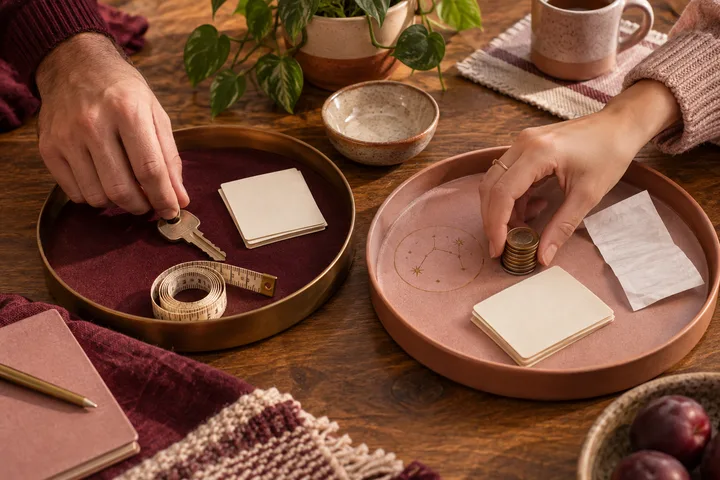
Ask him what moving in means, how he will share the work, how he handles money, what happens when one of you needs space, and how you will repair conflict. A man can be loving, attentive, and easy to adore for two days at a time while still being unready for the ordinary weight of a shared home. Weekend chemistry shows how you enjoy one another. It does not show whether he notices the empty fridge, pays a bill without being chased, protects your sleep, or stays kind when work has gone badly. Astrology can help you name the pattern you need to examine. In synastry, look first at the Moon and the fourth-house overlays for emotional safety and domestic instinct. Then read Saturn, Mars, and the condition of the composite fourth house for the work, pressure, desire, and structure that the relationship brings into private life. These symbols describe a field of experience. They do not give him a pass, and they do not ask you to ignore what you can already see. The right next step is not a soulmate verdict. It is a clear conversation, followed by evidence. Ask the questions below. Watch whether he answers directly, asks about your needs, and turns the agreement into action. If he wants the comfort of a home with you but resists the responsibility of building one, slow the move down.
Sources: 20 Essential Questions to Ask Before Moving In Together; When to move in together: tips and questions; Composite Chart: Relationship Astrology; Composite Fourth House
5. Use astrology to read the pattern, not to excuse him
Once you have the real conversation, astrology can sharpen what you are already trying to understand. It can show where the bond feels like shelter, where it asks for work, and where private life may bring out material that dating lets you avoid. It should help you ask better questions. It should never persuade you to abandon a clear boundary.
Begin with the chart inputs. A synastry reading compares two birth charts, so accurate birth date, birthplace, and birth time matter when you are reading houses and angles. If a birth time is unknown, say so. Do not pretend to know fourth-house overlays or an Ascendant that the available data cannot support. You can still read sign and planet relationships within the scope the data allows, but you should not build a domestic conclusion on an unverified house position.
Then take the reading in layers. First, look at the Moon for emotional rhythm. How does one person's Moon connect with the other's personal planets? Does the bond offer soothing, recognition, stimulation, or reactivity? Next, inspect fourth-house overlays and the IC, the chart's private foundation. This layer can describe why someone feels familiar, why home themes arise quickly, or why family history becomes part of the relationship before either person planned it.
After that, read Saturn and Mars. Saturn asks what the relationship must carry over time. It can show duty, fear, delay, structure, or endurance, depending on the contact and the wider chart. Mars shows how desire, anger, initiative, and domestic effort move through the bond. A warm Moon with no capacity for repair is not enough. A demanding Saturn is not automatically a warning. A difficult aspect may describe work that becomes strength when both people meet it consciously.
Finally, use the composite chart to ask what the relationship becomes when you act together. Cafe Astrology describes it as a midpoint chart of the relationship, while the fourth-house material in the Kerykeion reference describes the composite fourth as the private emotional foundation and domestic life of the partnership. I would read a strong domestic emphasis as a question about shared responsibility: Can you both create a home, or will one person become the emotional climate manager?
Keep the reading honest about what it can and cannot show. A synastry chart is not a surveillance device. It cannot reveal a hidden debt, confirm that a man is faithful, or certify that he will mature after you move in. It can, however, give language to a felt pattern. You may notice that a familiar bond pulls you into caretaking. You may see that desire runs ahead of trust. You may recognize why you mistake emotional intensity for proof of safety. The value lies in the question the symbol opens, not in a dramatic sentence that ends the inquiry.
Pay attention to house ownership as well. When his planets fall in your fourth house, you may experience him as someone who enters your private foundation. When your planets fall in his, he may experience you through his own home and family lens. The overlay can feel intimate, but intimacy is not the same as equality. Ask whose routines are changing, whose furniture is disappearing, whose friends are traveling farther, and whose family gets more access. A domestic chart becomes useful when it helps you notice the person who is being asked to adapt most.
You can also read the timing of the decision without pretending that one transit dictates a move. If a relationship is entering a period of pressure, change, or expansion, treat that as a reason to discuss capacity and support. Do not turn a difficult sky into a prophecy of failure. Ask what the two of you do with stress now. A chart may describe a season. Your habits decide how you live it.
Consider this example. A woman sees strong fourth-house and Moon themes with a man who feels familiar almost immediately. She also sees a hard Mars contact and a serious Saturn emphasis. The lazy reading says, This is intense, so it must be important. The better reading says, Familiarity may be real, and so is the work. She asks how he handles anger, how they will divide chores, and whether he can accept a pause without retaliation. His answers and actions decide whether the symbolism becomes a foundation or a trap.
Your chart reading should end with three questions. What feels easy between us? What becomes charged in private? What behavior would show that we are handling the difficult part well? That last question turns astrology into guidance you can observe.

Sources: Composite Chart: Relationship Astrology; Composite Fourth House; The Astrology of Houses: The Fourth House
6. Let his answers set the pace of your decision
You do not need to decide in the same conversation. In fact, you may learn more if you give the answers a few days to settle. Write down what he said. Write down what you said. Notice where you felt relief and where you started explaining his position for him. That second feeling deserves attention. Hope can make you generous with missing information.
Rank the evidence. First comes safety and respect. If he threatens, controls, humiliates, isolates, monitors, or punishes you for having needs, do not move in. Second comes consistency. Does he do what he says when no one is applauding? Third comes shared capacity. Can he discuss money, work, privacy, and future plans without making you carry the whole conversation? Chemistry matters, but it belongs after these foundations, not before them.
Give yourself permission to choose a smaller next step. You might keep separate homes, spend four consecutive nights together, share one recurring expense, or take a trip that includes a stressful delay and an honest budget. You might ask him to host a week of ordinary meals rather than a weekend of plans. You might wait until you have seen him under pressure from work, family, illness, or disappointment. A slower pace is not a punishment. It is a way to collect the kind of evidence that a weekend cannot provide.
Write your own threshold before you hear his answer. What must be true for you to feel ready? Perhaps you need full financial disclosure, a written rent agreement, equal access to the home, a plan for pets, and proof that he can repair conflict. Perhaps you need your own savings and a clear exit plan. Make the list yours. Do not borrow his threshold because he is more eager, or your friends' threshold because they think you are taking too long. The person who will live the daily reality is you.
When the two of you disagree, separate a solvable difference from a values gap. You can solve different sleep schedules with quiet hours. You can solve different cleaning styles with a task plan and a standard you both accept. It is harder to solve contempt for your work, secrecy about debt, a refusal to discuss commitment, or the belief that your needs are excessive. Do not call every conflict a red flag, but do not call a values gap a communication issue just because you love him.
A pause can be specific. You can say, I am not ready to sign a lease yet. I want us to spend the next two months testing our household plan, talk about money twice, and revisit this on a date we choose now. That is not a vague delay. It is a boundary with a path. You can also say, I will move only if the lease gives me equal rights, I keep my emergency savings, and we agree on how to divide recurring work. The right man may not love every condition, but he will understand why you need it.
If he becomes more attentive only when you threaten to leave, wait for the improvement to last before you treat it as change. A promise made under pressure can be sincere and still be untested. Ask what he will do differently, when it will begin, and how the two of you will know it is working. Then watch. Consistency has a slower rhythm than chemistry. That is why it is so easy to overlook, and why it matters so much when you are deciding whether to make someone part of your home.
Before you agree, imagine the ordinary scene you are actually buying. It is Tuesday at 7:40 in the morning. You are late, he is tense, the sink is full, and a family message needs an answer. What would you need from him then? What would he need from you? If you can discuss that scene without either person becoming a child, a parent, or a judge, you may be ready to keep building. If the imagined home requires you to stay cheerful, quiet, flexible, and endlessly understanding, it is not a shared home yet.
A useful next step may be a trial period. Spend a longer stretch together while keeping your own access to money, documents, transport, friends, and a place to sleep. Do not make the experiment secret or coercive. Tell him what you are testing: daily rhythm, household work, conflict repair, and the ability to remain two people inside one home. The Gottman Institute suggests a short period of living together before an official move as one way to reveal practical differences. Treat it as information, not a performance review he can charm his way through.
Set a date for a second conversation. Ask, What did we learn? What needs to change before we sign anything? If he responds with patience, specific proposals, and follow-through, you have something to build on. If he calls your questions an attack, rushes you, or offers affection instead of an answer, slow down. A loving man can still be the wrong housemate. A wonderful weekend can still be a poor foundation for a shared life.
The astrological reading can stay beside you as you make the choice. It may help you understand why the bond feels private, why the home question brings up old family patterns, or why closeness and pressure arrive together. But the chart should send you back to your life with sharper eyes. You are not asking whether the relationship is fated. You are asking whether it can hold two adults with equal dignity, room to breathe, and a fair share of the work.
This is also why your answer may be not yet rather than no. You can love him and still need more evidence. You can honor the tenderness between you without handing it the keys to your home. A careful decision gives the relationship a chance to become stronger in daylight, where promises meet schedules, budgets, mess, fatigue, and choice. That is where compatibility becomes visible.
So ask him one specific question tonight: If we moved in and one of us became overwhelmed, what exactly would you expect the other person to do, and what would you take responsibility for yourself? Then stop talking. Let him think. Listen to the answer. Watch what he does next. Your decision begins there. Not in the fantasy of the perfect weekend, but in the real life you can both carry together.
Sources: 20 Essential Questions to Ask Before Moving In Together; When to move in together: tips and questions; Pre-Cohabitation Conversations for Relationships: Recommended Questions for Discussion; Composite Chart: Relationship Astrology
A little more clarity
Is a strong fourth-house synastry connection enough reason to move in together?
No. A strong fourth-house connection can describe familiarity, emotional safety, family themes, or a powerful wish to create a home together. It does not prove that the two of you will share money fairly, divide chores, repair conflict, or respect privacy. Read the fourth house with the Moon, Saturn, Mars, the wider synastry, and the composite chart, then compare that picture with his repeated behavior. Move in when the practical evidence supports the emotional bond, not when the symbolism asks you to overlook a gap.
What is the clearest question to ask before moving in with a man who is wonderful on weekends?
Ask, What does moving in mean to you, and what will you personally take responsibility for when ordinary life gets hard? The first half reveals whether you share a direction. The second reveals whether he understands partnership as participation rather than access to your home, care, and labor. Follow up with specific questions about money, chores, privacy, guests, conflict, and time alone. His willingness to answer matters, but his follow-through matters more.
Sources & further reading
- 20 Essential Questions to Ask Before Moving In Together
Supports discussing expectations, money, chores, boundaries, readiness, and a trial period before cohabitation.
- When to move in together: tips and questions
Supports questions about financial contributions, household responsibilities, emotional labor, and bill planning.
- Pre-Cohabitation Conversations for Relationships: Recommended Questions for Discussion
Supports organizing pre-cohabitation discussions around negotiation, household rules, communication, chores, finances, and conflict.
- Composite Chart: Relationship Astrology
Supports reading a composite chart as a midpoint chart of the relationship and distinguishing public appearance from private dynamics.
- Composite Fourth House
Supports interpreting the composite fourth house through domestic life, emotional foundations, belonging, care, and shared responsibility.
- The Astrology of Houses: The Fourth House
Supports the fourth house as more than an address, including roots, ancestry, private foundations, and home themes in relationship astrology.
Dating Clarity Report
Six observations about the man you are dating. A clear view of the patterns, plus a conversation for your next decision.
Get my dating clarity report