
The question beneath the pet question
You may think you’re asking whether he has a good sitter. You’re really asking something larger. If work sends him away, a flight is canceled, or a family emergency pulls him across the country, will he protect what depends on him? And if you’re building a life together, will he make room for your needs while he handles that duty?
A pet plan brings those questions into the open because an animal can’t postpone dinner, explain a symptom, or wait for a better week. The plan has to become concrete. Someone must feed the pet, give medication, open the door, drive to a clinic, or make a decision when the owner can’t. His choices show you how he handles care when affection needs a schedule.
That doesn’t mean you should demand a perfect binder, a color-coded calendar, or a man who predicts every possible disaster. Perfection can be another form of avoidance. You’re looking for a working promise. He has thought about the pet’s temperament, health, routine, transport, and safe places. He knows who can step in. He has told those people what the job involves. If he hasn’t done all of that yet, he can say so plainly and take action now.
The weak version sounds warm but stays foggy. ‘My sister can probably help.’ ‘The dog is easy.’ ‘We’ll figure it out if something happens.’ The strong version has names and verbs. His neighbor has a key. The medication sits in a labeled case. The carrier is familiar. The destination hotel accepts the animal. The backup sitter has met the pet. A plan earns trust through details, not through the intensity of his promise.
Notice the difference between ownership and performance. Ownership sounds like, ‘I’ve confirmed that Lena can take him, and the clinic has her number.’ Performance sounds like a long speech about how nobody loves the dog as much as he does. The speech may be heartfelt. It still doesn’t get the animal safely through a delayed train or a night at the emergency clinic. When care is real, feeling becomes a task someone can carry.
You can also watch the timing. Does he make the plan before asking you to book the trip, or after the details become urgent? Does he check whether the sitter can cover the whole period, including the extra night a delay might create? Does he keep the plan somewhere the caregiver can actually find it? These questions sound small until you’re standing in an unfamiliar city with a frightened animal and no record of the medication dose.
Astrology gives you another way to read the pattern. It can show how he experiences duty, how you receive care, and where daily obligations press on intimacy. But the chart doesn’t absolve him from making arrangements. It doesn’t turn your labor into destiny. Let the lived facts lead. Then let synastry tell you why the facts feel easy, heavy, intimate, or strangely familiar.
That order matters because attraction can make a thin plan look more generous than it is. You may supply the missing details in your mind because you already picture the two of you as a team. Pause there. Ask whether he has invited you into a team or simply noticed that you are capable. Your future isn’t measured by how much work you can absorb. It’s measured by whether the two of you can meet reality without one person disappearing inside the other’s obligations.
Sources: Pet Disaster Preparedness & Recovery; Travel Safety Tips; Disaster Preparedness; Traveling With Your Pet
What a real plan contains before the trip begins
Start with the ordinary version. How does he care for the pet on a normal day? Ask about feeding times, walks, litter, exercise, medication, sleep, and the small signs that mean something is wrong. You’re not inspecting him. You’re learning the shape of his life. A person who knows the routine can hand it to someone else. A person who only says ‘she’ll be fine’ may be relying on luck or on a woman to fill in the gaps.
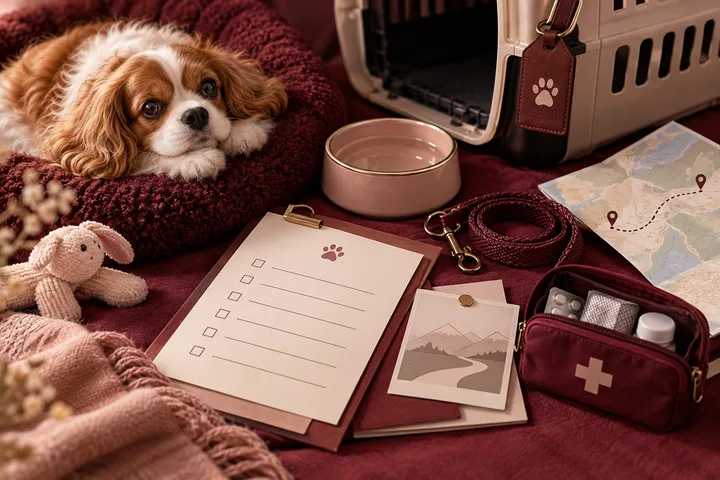
The American Red Cross recommends a pet emergency kit with food, water, bowls, carriers or leashes, medication, medical records, first-aid supplies, recent photos, feeding information, behavior notes, and veterinary contact details. The ASPCA adds a sharper test of readiness: name designated caregivers, give a trusted person access to the home, choose a safe haven ahead of time, and prepare as if a one-day absence could become several weeks. These aren’t romantic details. They’re the infrastructure of care.
Travel adds another layer. The American Veterinary Medical Association advises owners to check destination rules, confirm that a pet is welcome where they’ll stay, prepare identification and records, carry enough food and medication, and keep emergency veterinary contacts available. For some journeys, health documents need to be arranged well before departure. He doesn’t need to recite a brochure. He does need to understand that leaving home changes the risk.
Ask him to describe the handoff. Who has the key? Has that person met the pet? Can they reach the home during the day? What happens if the sitter is sick? Where are the records? Who can authorize veterinary care? What does the sitter do if the pet hides, escapes, refuses food, or needs urgent help? A plan becomes believable when it survives one follow-up question after another without turning you into the unpaid project manager. It should also be easy for the actual caregiver to use, because a complicated plan that nobody understands is only decoration.
A useful plan also respects the caregiver’s limits. The neighbor may be able to feed a cat twice a day but not transport a large dog. His mother may love the pet but live somewhere that doesn’t allow animals. A boarding facility may offer trained staff but require current records and advance notice. He should know which option fits which problem. If every backup is just another person he hasn’t asked, the plan has not reached the people who would have to perform it.
Put access beside every promise. A sitter needs a key or a working entry code. A caregiver needs written permission if a clinic must make a decision. Someone needs a way to reach him when the train is delayed or the phone battery dies. The point isn’t to turn care into paperwork. It’s to make sure the person who says yes can actually act. Ask who has access today, not who might help in theory. That answer separates a usable plan from a comforting story.
Ask whether the pet has practiced any part of the arrangement. The Red Cross recommends including pets in evacuation drills so they become more comfortable entering carriers and traveling calmly. The same principle applies to a sitter. A person who has never met a fearful dog may not be able to manage the first crisis. Preparation isn’t about making an animal perfectly predictable. It’s about reducing the number of surprises that land on one exhausted person.
Then ask what he expects from you. Does he want you to join the plan because you genuinely want that role, or because he has quietly decided that a girlfriend is available labor? There’s a difference between inviting you into a shared life and assigning you a responsibility you never accepted. Care should be chosen, discussed, and fairly divided. Love doesn’t erase consent. It makes honest consent more important.
If he has no plan yet, don’t punish him for being at the beginning. Ask whether he will build one with a clear deadline. A man who says, ‘I haven’t thought this through, but I’ll call two sitters tonight and show you what I learn,’ is giving you something to evaluate. A man who says, ‘Why are you making this a big deal?’ is also giving you something to evaluate. Curiosity can begin the conversation. Follow-through is what answers it.
Sources: Pet Disaster Preparedness & Recovery; Travel Safety Tips; Disaster Preparedness; Traveling With Your Pet
Read his first chart layer through daily care
In a synastry reading, begin with the layer closest to the behavior you’re trying to understand. For pet care, that often means the Moon and the sixth house, with Mercury close behind. The Moon speaks to instinctive care, comfort, food, and the habits that soothe a living being. The sixth house describes routines, service, maintenance, health tasks, and the repeated work that keeps a life functioning. Mercury shows how clearly the plan gets spoken, recorded, and adjusted.
This isn’t a claim that one placement produces one kind of boyfriend. Astrology works through a pattern of meanings. A strong Moon contact may make his care feel immediate and protective, or it may show that he reacts emotionally when the pet is distressed. Saturn touching the Moon can add endurance and duty, but it can also make care feel solemn or burdened. Mercury linked with Saturn can favor careful instructions and reliable records. Under pressure, it may become rigid or overly controlling.
Now turn the chart toward you. His Moon may touch your fourth house, making his domestic habits land directly in your sense of home. His Saturn may contact your Moon, so his responsibilities stir your need for security while also making you wonder whether you’ll be carrying too much. His Mercury may fall in your sixth house, bringing practical conversations into the relationship. You may feel close when you solve small problems together. You may also feel that every date becomes an errand.
The house person often experiences the other person’s planet through the matters of that house. A planet in your fourth house can make him feel woven into home and family. A planet in your sixth can make him present in your daily systems, chores, health concerns, and schedules. That presence can be useful. It can also become invasive if the roles aren’t named. The chart shows the doorway. Your conversations decide who walks through it and how long they stay.
Use one clean question while reading this layer: when care becomes repetitive, does he stay engaged? Look at what he does when the pet needs the same medicine for the tenth time, when a sitter cancels, or when a trip loses its glamour. His Moon may explain why he feels deeply. His Saturn may explain why he persists. His Mercury may explain why the plan works or falls apart. The complete picture needs all three, plus the evidence of his actual routine.
The sixth house can also show the point where romance meets maintenance. If his planets activate your sixth house, you may become aware of his schedules, errands, work habits, and health routines very quickly. That can create a satisfying rhythm when both of you like practical closeness. It can create resentment when one person becomes the scheduler and the other becomes the grateful recipient. Read the house as a field of interaction, not as a job description for you.
The fourth house adds the question of home. A pet may be the emotional center of his household, the reason he chooses one neighborhood, or the companion who makes solitude feel safe. If his planets fall in your fourth house, his domestic world may feel familiar before you have decided whether it is workable. That familiarity deserves respect, but it also deserves inspection. Can your sleep, routines, allergies, work, and privacy fit there? A chart can describe belonging without answering whether the furniture has room for both of you.
The point of the first layer is not to label him nurturing or unfeeling. It is to locate the work. Does he need help translating concern into a routine? Does he need permission to accept support? Do you need to stop proving love by anticipating every need? Once you know the work, watch what happens next. A pattern becomes useful only when both people can name it and practice a better response.
Sources: Synastry; Synastry Chart; Synastry: Planet Overlays in Houses
Then read the relationship between care and control
A man can be devoted to his pet and still be a difficult partner. Care isn’t automatically generosity. Sometimes it becomes a reason to control the home, cancel every plan, reject help, or demand that everyone follow rules he refuses to explain. The question isn’t whether he loves the animal. The question is whether love leaves room for another adult’s reality.
This is where Saturn, Mars, and the eighth house can sharpen the reading. Saturn can describe commitment, limits, and the duties that endure after the mood has passed. Mars shows how he acts when something has to happen now. The eighth house brings shared vulnerability, crisis, trust, and the question of who holds power when resources or decisions become urgent. A supportive pattern may help you face a crisis together. A tense pattern may show where fear turns into pressure.
Suppose his Saturn squares your Moon. You might feel that his obligations set the emotional weather. He may believe he’s being responsible while you experience him as unavailable or hard to reach. If his Mars contacts your Mercury, conversations about logistics may move quickly into arguments. You ask a practical question. He hears criticism. He gives an order. You begin editing your needs before you speak. That is the lived pattern to name, not a sentence about ‘bad compatibility.’
Now consider the other direction. His Moon trines your Saturn, and his Mercury falls in your sixth house. You may steady him when the pet is ill, organize the schedule, and help turn worry into action. That can be tender. It can also tempt you to become the competent one who quietly owns everything. A harmonious aspect makes cooperation available. It doesn’t guarantee equal effort. Sometimes the easiest role to slip into is the role you should question most.
Ask for a boundary before the emergency arrives. ‘I’m willing to help with one trip a year, but I won’t be the default sitter.’ ‘I can drive to the clinic, but you need to handle the medication schedule.’ ‘If we travel together, we’ll choose a place that works for both of us, not just the pet.’ Watch the response. A mature man may feel disappointed, but he can hear you. A controlling man treats your limit as evidence that you don’t care. That response tells you more than the aspect.
Control can hide inside the word responsible. He may say that only he knows what the pet needs, then refuse to give anyone enough information to help. He may insist on managing every decision, then complain that he is carrying everything alone. Or he may hand you a list so strict that your every movement becomes a test. The answer isn’t to care less. It’s to ask whether responsibility can be shared without being surrendered or seized.
Mars deserves a concrete look here. In a supportive contact, his Mars may help your Mercury move from discussion to action. You make the call, pack the carrier, or drive to the clinic together. In a tense contact, the same urgency may make every question feel like resistance. Add Saturn, and one person may become the rule-maker. Add the Moon, and the argument may feel personal within seconds. Name the pattern early: ‘We need a plan, but we don’t need to speak to each other as if one of us is the problem.’

Read his plan as a record of responsibility, not as a romantic promise. A solid plan names who can help, where the pet can go, what supplies and medical records travel with them, and what happens if the first option fails. He can explain it without making you feel guilty for asking. He can also change it when the pet’s needs, your trip, or the emergency changes. That is the part that matters for your future together. In synastry, start with the Moon, Saturn, Mercury, and the sixth and fourth houses, then check whether the same themes repeat through aspects and rulers. Use the chart to understand his habits of care and your response to them. Use his actions to decide whether you want to invest. Ask him to walk you through one ordinary trip and one hard scenario. Listen for specifics. Then notice whether he expects you to become the plan.
Sources: Pet Disaster Preparedness & Recovery; Disaster Preparedness; Synastry; Synastry: Planet Overlays in Houses
Use a worked example without turning it into a verdict
Imagine Maria is dating Daniel. Daniel has an older dog who needs daily medication and struggles with unfamiliar places. He tells Maria he wants her to come on a work trip, but he hasn’t booked a sitter. He says his cousin can help. When Maria asks whether the cousin knows the medication schedule, Daniel says they’ll work it out. Maria likes how gentle he is with the dog. She also notices that every practical question lands in her lap.
The lived reading comes first. Daniel’s feeling for the dog may be sincere, yet his preparation is incomplete. The travel choice creates a conflict between his wish for Maria’s company and the animal’s known needs. He has two honest options. He can arrange a capable sitter and share the details, or he can change the travel plan. If he asks Maria to solve the gap, he turns romance into rescue. Maria doesn’t need to make that choice for him.
Now imagine their synastry includes Daniel’s Moon in Maria’s fourth house, Daniel’s Saturn conjunct Maria’s Moon, and Daniel’s Mercury trine Maria’s Saturn. This could describe a bond where home, duty, and practical support become central. Maria may feel that Daniel brings a serious kind of intimacy. She may also feel the weight of being the person who notices what could go wrong. The chart helps her recognize the emotional pull of the role.
The next question is not, ‘Are they compatible?’ It is, ‘What happens when Maria refuses the role the chart makes easy for her?’ She can say, ‘I want to travel with you, but I won’t arrange care for your dog. Please show me the plan by Friday, or let’s postpone the trip.’ If Daniel makes the arrangements, communicates clearly, and accepts her boundary, the chart’s Saturn story can become dependable commitment. If he sulks, blames, or waits for her to cave, the same theme becomes unequal duty.
This is the value of a worked example. It keeps astrology close to a decision. The houses describe where the relationship lands. The aspects describe how the exchange may feel. The conversation tests whether the pattern can be used well. Don’t use a tender Moon contact to explain away a missing sitter. Don’t use a difficult Saturn aspect to condemn a man who learns, repairs, and shares the work. Let behavior refine the interpretation.
You can make the example your own by writing two columns. In the first, record what he actually does: who plans, who pays, who remembers, who follows through, who changes course. In the second, record your response: where you soften, brace, overfunction, or feel cared for. Then read the chart against both columns. The strongest astrological insight often appears where your attraction and your exhaustion touch the same theme.
Suppose Daniel changes course after Maria speaks. He confirms the cousin, sends the medication instructions, books a nearby boarding facility as backup, and tells Maria she can come without touching the arrangement. The plan now says something different about him. He may still be learning. He may still dislike logistics. But he can receive information, act on it, and keep his girlfriend from becoming the hidden support system. That is a meaningful sign of partnership.
Suppose instead that Daniel says Maria is cold, cancels the trip without telling the sitter, and later asks why she didn’t notice that he was overwhelmed. The synastry may explain the intensity of their bond, but it doesn’t rescue the exchange. Maria is allowed to love his tenderness and reject his lack of preparation. She can say, ‘I’m not willing to build a future around emergencies I’m expected to solve.’ The sentence is clear. It doesn’t require a cosmic ruling.
Keep one distinction in view: preference versus responsibility. Daniel may prefer that Maria come on the trip. He is responsible for arranging safe care. Those obligations aren’t equal. When a couple confuses them, the more flexible person pays the hidden cost. The chart can show where desire and duty meet. The conversation shows whether both people can see the line.
Test the plan against the strongest exception
The strongest exception is a genuine emergency. A flood, sudden hospitalization, unsafe weather, or an unexpected evacuation can break a carefully prepared plan. A man shouldn’t be judged because reality refused to cooperate. Judge the next move. Does he call the backup person? Does he keep you informed? Does he protect the pet without assuming you’ll absorb the crisis? Does he review what failed afterward and improve the plan?
The Red Cross advises evacuating pets when it isn’t safe to remain at home, keeping transport equipment and supplies ready, identifying pet-friendly places, and knowing which friends, relatives, boarding facilities, shelters, or veterinarians can help. The ASPCA similarly recommends designated caregivers, current identification, emergency supplies, medical records, and a realistic plan for being away longer than expected. A plan that depends on one person’s availability isn’t a plan. It’s a hope with a phone number.
Travel can expose another exception: the pet may not be suited to the journey. The AVMA notes that illness, injury, temperament, and certain physical traits can make travel uncomfortable or risky, and that a reliable sitter or veterinary-recommended boarding facility may be the better choice. If he insists that the pet must come everywhere because separation makes him anxious, ask whose need is being served. Protection includes knowing when not to force a trip.
Astrologically, an exception may show up as a clash between ease and pressure. His Venus could make the pet part of his pleasure and affection, while Saturn or the sixth house keeps bringing duty into the picture. His Mars may respond fast in a crisis, but a hard Mercury contact can make communication sharp. Your Moon may absorb his fear. Your Saturn may become the structure he lacks. None of these patterns tell you to stay or leave. They tell you where to keep your eyes open.
There’s also an exception that should end the debate: cruelty, intimidation, neglect, or using the pet to punish you. No synastry pattern softens that. If he leaves an animal without needed care, threatens you with the pet, blocks veterinary treatment, or makes you responsible for consequences he created, step back and protect yourself. Compassion for the animal doesn’t require you to remain in an unsafe relationship. A chart can describe intensity. It cannot turn harm into devotion.
After the exception, ask whether repair is possible. He might say, ‘The sitter canceled, and I froze. I should have called the boarding facility sooner. Here’s the new backup plan.’ That’s different from, ‘You should have reminded me.’ The first response owns the gap. The second recruits you to manage it. Your chart may explain why you’re tempted to soothe him. Your boundary explains what happens next.
You can separate an accident from a pattern by looking at repetition and response. One missed detail may come from bad luck or a difficult week. Several missed details, followed by excuses and no repair, show a way of living. So does a repeated cycle in which he creates a crisis, pulls you close through urgency, and then returns to the same careless habits once you have rescued the situation. Intimacy should not require a fresh emergency to become visible.
The chart can help you ask a more exact question about repair. Does Saturn provide a container for the Moon’s fear? Does Mercury give Mars a way to act without attacking? Do the fourth and sixth house themes have room for shared routines, or do they keep one person in the role of caretaker? You’re not looking for a clean chart. You’re looking for a pattern the two of you can name and practice. A difficult theme becomes useful when it has a responsible response.
A difficult aspect can still belong to a lasting bond. Friction gives the couple a place to practice, but the practice has to be visible. He can slow down. You can ask directly instead of taking over. Both of you can return to the subject after the first argument. If only one person keeps adapting, the aspect isn’t being worked. It’s being endured.
Sources: Pet Disaster Preparedness & Recovery; Travel Safety Tips; Disaster Preparedness; Traveling With Your Pet; Synastry
Make the reading useful before you invest more
You don’t need a dramatic test. Ask for a calm conversation when nobody is rushing to catch a train. Tell him what you’ve noticed and what you need to understand. ‘Your dog is important to you, and I respect that. If we travel together, I need to know the care plan won’t quietly become my job.’ That sentence honors his attachment while keeping your agency in the room.
Ask him to answer in sequence. Who is the primary caregiver? Who is the backup? Where are the food, medication, records, carrier, and emergency numbers? What does the pet need each day? What happens if the first caregiver can’t help? What decision can the caregiver make without waiting? What would make him cancel the trip? The answers don’t need to sound polished. They need to be real, current, and shared with the people involved.
Then name your part. Maybe you’re happy to feed the cat while he visits his mother. Maybe you don’t want to stay in a home with a dog who has bitten someone. Maybe you can travel with a calm pet but not manage a complicated medical routine. Maybe the pet’s needs fit your life beautifully. The right answer differs from woman to woman. Compatibility includes the space to tell the truth about that difference.
For the chart, write down the actual inputs before interpreting them: both birth dates, birth places, and birth times if you have them, plus the chart system and the aspects you’re using. Accurate house overlays depend on reliable birth times. If a time is unknown or approximate, don’t build a strong conclusion around the Ascendant, Midheaven, or house cusps. You can still read available planetary contacts, but say what the comparison can and can’t show. Precision protects the meaning.
Read the chart in a fixed order. First, identify the Moon, Saturn, Mercury, and relevant houses in each natal chart. Next, inspect close synastry contacts between those points. Then check house overlays, especially the fourth and sixth, and any repeated theme through rulers. Finally, compare the chart story with the conversation and the plan. If the chart suggests tenderness but his actions show neglect, trust the action. If the chart shows pressure but he shares work and respects limits, read the pressure as something they can handle consciously.
Keep the interpretation narrow. You don’t need every asteroid, midpoint, or minor aspect to answer a question about a sitter and a canceled flight. Too many details can hide the one pattern you came to understand. Start with the contacts that repeat the lived story. If his Saturn touches your Moon and also activates your sixth house, duty is probably part of the relationship’s central language. If the only relevant contact is loose or uncertain, keep the conclusion modest and return to the conversation.
A Dating Clarity Report can help you turn that pattern into six focused observations about consistency, intentions, pace, needs, and boundaries. Bring the question you’re actually facing. Not ‘Does he love animals?’ Ask, ‘Can I build a shared life with the way he handles care?’ The report should lead you back to a conversation you can have, a limit you can state, or a choice you can make. Insight matters when it returns you to your own life.
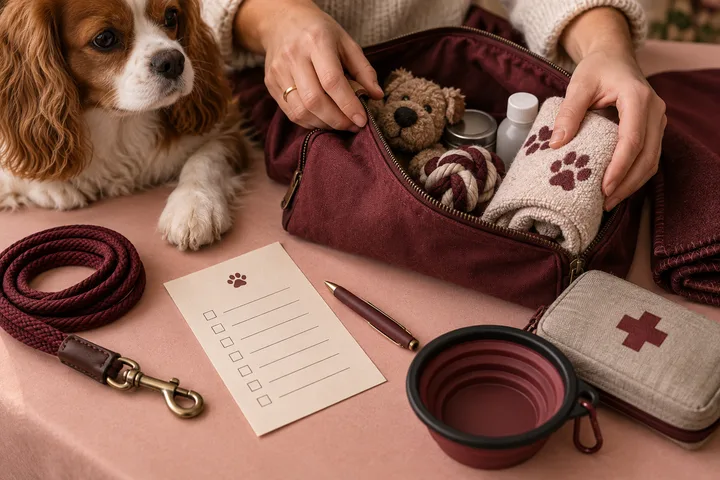
Before you agree to a trip, ask for the plan in writing. Not because love needs paperwork, but because memory becomes unreliable when a crisis starts. A short message can name the sitter, dates, feeding instructions, medication, emergency clinic, and backup. If he welcomes that clarity, you’re building a shared practice. If he treats clarity as an insult, you’ve learned that the difficulty isn’t the pet. It’s his relationship with accountability.
Your final decision can be simple even when the feelings aren’t. Invest more when he prepares, communicates, shares the load, and repairs mistakes. Slow down when he loves the idea of responsibility but leaves its details to you. Step away when he uses the pet, the emergency, or your compassion to control your choices. You don’t need to prove that he is a bad man. You only need to decide whether this relationship gives your life enough room to remain yours. You’re choosing a partner, not auditioning to become his permanent backup system.
Return to the opening question. How should you read his plan? Read it as a small model of the future he is offering. If the model has names, backups, and respect for your limits, it can grow. If it has affection but no structure, believe the affection and question the structure. Then ask him for one concrete change. His answer will give you the next piece of the chart that matters most: the life you’re actually building together.
For example, ask him to confirm the primary sitter and backup before you book anything, or to arrange a veterinary contact at the destination. Give the request a time, and don’t chase him through ten reminders. You’re not setting a trap. You’re observing whether he can hold a responsibility that matters to him while respecting the fact that your time matters too. That is the cleanest reading available: not what he might do, but what he does when the choice is clear.
You can also ask what happens if your needs conflict with the pet’s needs. Maybe you need a quiet hotel room, a shorter drive, or a weekend without caregiving. A shared life will contain those moments. The answer you want is not always ‘the pet comes first’ or always ‘the relationship comes first.’ It’s a thoughtful process: understand the need, look for a safe option, and refuse to make one person vanish. That process is where compatibility becomes visible. It should leave both of you more honest, not one of you quietly resentful.
Sources: Synastry; Synastry Chart; Synastry: Planet Overlays in Houses
Sources & further reading
- Pet Disaster Preparedness & Recovery
Supports the practical standards for pet emergency kits, evacuation, caregivers, identification, and fallback locations.
- Travel Safety Tips
Supports travel preparation involving veterinary records, carriers, identification, safe restraint, and destination planning.
- Disaster Preparedness
Supports designated caregivers with home access, safe-haven planning, identification, emergency supplies, and preparation for a longer absence.
- Traveling With Your Pet
Supports veterinary consultation, destination requirements, travel suitability, records, supplies, and emergency contacts.
- Synastry
Supports the interpretive scope of synastry as inter-chart aspects and house overlays read as interaction patterns.
- Synastry Chart
Supports the distinction between a synastry comparison and a composite relationship chart technique.
- Synastry: Planet Overlays in Houses
Supports reading house overlays as the area of life where a partner’s planet becomes especially active.
- Synastry House Overlays Explained
Supports distinguishing inter-chart aspects from house overlays and reading overlays as activated areas of relationship life.
Dating Clarity Report
Six observations about the man you are dating. A clear view of the patterns, plus a conversation for your next decision.
Get my dating clarity report