
Imagine Maria asks once, then watches what happens
Imagine Maria and Daniel have been dating for nine months. He is warm, funny, and generous with his time. When she stays over, he cooks breakfast. He carries the heavy bags. If she says, ‘Could you run the dishwasher tonight?’ he says yes and does it. Maria likes him. She also notices that the dishwasher never exists for Daniel until she points at it.
The difference is small on a Tuesday. It becomes enormous when Tuesday follows Tuesday. Maria keeps the running list in her head. The bin needs taking out. The bathroom needs cleaning. There is no coffee left. His sister's birthday is next week. The sheets have been on the bed long enough that they no longer feel fresh. Daniel responds when she assigns a job, and then he feels proud that he helped. Maria feels alone in a house that contains two adults.
She wonders if she is being unfair. He does things. He isn't refusing. He may even say, with some hurt, ‘You only had to ask.’ But that sentence is the clue. If she has to see the need, remember the need, decide when it matters, ask for the work, explain what done means, and check whether it happened, she hasn't shared the work. She has shared the execution of a task while keeping the responsibility for the whole system.
That is the distinction this article is here to sharpen. Helping is a response. Sharing is ownership. One can be loving. The other makes love easier to live inside.
Before Maria looks at a chart, she should watch the pattern in real life. Does Daniel notice an empty cupboard and replace what is missing? Does he take the laundry through washing, drying, folding, and putting away, or does he move a load when she starts it? Does he make a plan for dinner when both of them are tired? When his plan fails, does he repair the inconvenience, or does he wait for Maria to rescue the evening? These are not tests designed to trap him. They are ordinary moments that reveal whether he experiences the home as a shared place or as a place where she issues instructions.
The astrological question is just as precise. What parts of daily life does the connection activate? How do the planets involved behave there? Does the bond invite care, discipline, and mutual adjustment, or does it pull one person into service while the other receives? A chart can describe the role a relationship tempts you to play. You still decide whether you will accept it.
That is why you should observe more than whether he is pleasant when you ask. Watch whether he brings an idea to the table, remembers what matters to you, and can hold a responsibility that nobody is applauding. Domestic partnership is made of unremarkable acts. Its truth often appears where there is no audience and no immediate reward.
The real measure is ownership, not visible effort
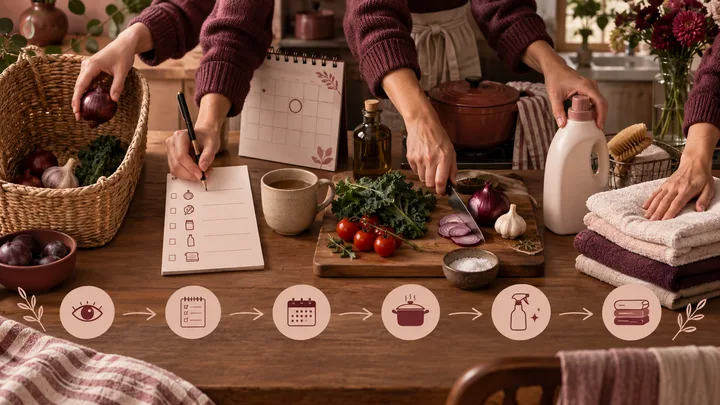
Domestic work has a visible side and a hidden side. The visible side is the plate washed, the floor swept, the meal cooked, the appointment attended. The hidden side is noticing that the plate is there, remembering the floor, deciding what the meal should be, finding the appointment, and knowing what must happen next. If you count only the final action, you can mistake delegated help for an equal partnership.
Research on household labor has long treated measurement as part of the problem. The work is not just a number of hours. It includes how tasks are defined, divided, and experienced, and it affects perceptions of fairness, well-being, satisfaction, and paid work. More recent work on mental labor separates cognitive effort, managerial effort, and emotional effort. That vocabulary matters because a man can do a visible chore and still leave the household's mental engine with you.
Try this simple four-part test. Who notices the need? Who decides the timing? Who carries the task from beginning to end? Who handles the failure when something goes wrong? The man who shares domestic work can answer all four questions about at least some areas of life. He doesn't need to perform every task your way. He does need to hold responsibility without making you his reminder system.
Consider groceries. Helping looks like going to the shop after you write the list, send the brand, and mention that the guests are coming. Sharing looks like knowing what the household eats, checking supplies, making a list, shopping, and adapting when the preferred item is unavailable. Consider laundry. Helping looks like putting clothes in the machine after you ask. Sharing includes towels, bedding, detergent, drying, folding, and putting things back where they belong. The complete task is the unit, not the most photogenic part of it.
This isn't a demand for perfect symmetry. Fairness doesn't always mean fifty percent of every chore. One person may work longer hours, travel more, live with a disability, or carry a different kind of care. The question is whether both people have an equal stake in the home's success and whether each person can rest without the other person's supervision. A fair arrangement can be uneven in tasks. It cannot be one-sided in responsibility.
Watch his reaction when you name the invisible part. A receptive man may say, ‘I see that you were holding all of that. Let me take dinner and groceries from start to finish.’ He may need practice. That isn't the same as resistance. A defensive man argues over the last time he took out the trash, treats your exhaustion as an accusation, or demands a perfect chore ledger before he will notice your point. The first response gives you data. The next few weeks give you more.
Pay attention to the kind of help he chooses. Does he take the easy, visible job while you keep the dull, repeating one? Does he volunteer for a one-off repair but ignore the daily maintenance that gives you no story to tell? Does he perform generosity in public and become helpless in private? These contrasts tell you where his identity lives. He may like being seen as caring. He may not yet be willing to practice care as a discipline.
Also ask what happens to your time. If his help lets you relax, it is support. If his help creates a second job because you must correct, remind, or finish it, the apparent contribution may be a transfer of labor back to you. You don't need to demand that he fold towels exactly as you do. You do need the freedom to accept his work without inspecting it, and he needs the humility to learn the parts that affect both of you.
You can tell by watching who notices, plans, starts, finishes, and repairs the ordinary work of life. A man who shares domestic work doesn't wait for you to become his supervisor. He sees what needs doing, claims a portion of it, learns your standards, and keeps the task moving without repeated reminders. A man who only helps when you ask may still be kind and willing, but he has left the household's awareness and management in your hands. Astrology can help you understand why this pattern feels intimate, heavy, comforting, or irritating. It can't turn a missed bin into a hidden promise. Read the chart for the relationship's habits and pressure points, then read his choices in the kitchen, the calendar, and the quiet spaces between requests. That combination gives you the answer to the question underneath the question: can you build a daily life with him without becoming its unpaid manager?
Sources: The Division of Household Labor; Understanding the dimensions of mental labor: the invisible load of Italian mothers; Beyond Time: Unveiling the Invisible Burden of Mental Load
What the fourth and sixth houses show in synastry
In relationship astrology, the fourth and sixth houses give you a useful map for this question. The fourth house speaks to roots, family patterns, the private home, emotional foundations, and the feeling of being settled somewhere. The sixth house speaks to daily work, routine, upkeep, service, health, and the small duties that keep life functioning. Domestic labor lives in the meeting point between them. The fourth asks, ‘What kind of home are we creating?’ The sixth asks, ‘Who does what on an ordinary morning?’
Synastry compares two natal charts by placing one person's planets against the other person's planets and houses. House overlays show where the other person enters your life and which topics they wake up in you. When his personal planets fall in your sixth house, he may become closely tied to your routines, errands, work habits, and practical needs. You may experience him as useful, helpful, or woven into the details of your day. That can feel wonderfully supportive. It can also create the exact imbalance Maria fears if you become the organizer and he becomes the person waiting to be directed.
His planets in your fourth house can make him feel familiar. He may stir your longing for safety, family, and a private life that belongs to both of you. You may want to feed him, shelter him, and make room for him before the relationship has earned that level of access. That tenderness is real. It is not the same as proof that he knows how to maintain a home with you.
Read the overlay in both directions. Where do your planets fall in his chart? If you activate his sixth house, he may experience you as someone who organizes, improves, or steadies his daily life. If he activates your fourth and sixth houses while you activate his more social or playful houses, you may carry the relationship deeper and more practically than he does. The chart then explains why his small acts affect you so strongly, while your invisible effort feels ordinary to him. It does not excuse the gap.
The planet matters too. His Moon in your fourth can bring instinctive care and a powerful sense of home, but the Moon can also retreat into habit. His Moon touching your sixth may show care through small services, food, errands, and attention to your body or schedule. His Saturn in your fourth or sixth can offer endurance and reliability when mature, yet it can also make the home feel like a duty assigned by an authority. His Mars in your sixth may get things moving, repair what is broken, and work beside you, or it may create criticism, rushing, and arguments over how tasks should be done. Venus may bring pleasure in making a space beautiful, while Neptune can idealize the shared home and blur who is actually responsible for it.
No single overlay settles the matter. Look at the sign, the house ruler, close aspects, and the condition of the planets involved. A flowing aspect can make cooperation easier, while a hard Saturn contact can become durable commitment when both people choose maturity. Read the whole pattern before you name the role it invites.
The house ruler adds a practical question. If your sixth-house cusp falls in a sign ruled by a planet that is strongly placed, daily work may have a clear organizing principle in your chart. If that ruler is under pressure, you may be especially sensitive to disorder, unreliability, or being left to manage too much alone. This doesn't make you demanding. It tells you where a small practical gap can become an emotional one. Your standard is part of the reading, too.
Suppose his Venus falls in your sixth house and makes a supportive aspect to your Moon. He may enjoy caring for you through meals, errands, and small comforts. That is a lovely signature for affection in daily life. But if his Venus also receives a hard Saturn contact, affection can become conditional or scheduled. He may do what is expected while resenting the duty. Ask whether warmth and responsibility can coexist without one cancelling the other.
Suppose his Mars falls in your fourth house. He may energize the home, fix things quickly, and make a private life feel active. He may also bring impatience into the kitchen or treat your way of doing things as an obstacle. If Mercury connects well with that Mars, you can solve practical problems through direct conversation. If Mercury is strained, every task can become a debate about competence. The same planet can build or disturb, depending on how the whole pattern is held.
And don't read only his planets in your chart. Your planets in his houses may show why he lets you lead. If your Saturn sits in his sixth, he may see you as the person who sets the standard. That can produce respect and reliability, or it can make you the strict adult while he waits to be evaluated. If your Moon sits in his fourth, he may experience you as home and expect you to keep providing the emotional climate. Ask whether he returns the shelter you create.
Sources: A Brief Introduction to Astrology: Houses; Synastry - Astrodienst Astrowiki; Composite charts - Astrodienst FAQ; Romantic Compatibility Synastry House Overlays
The composite chart describes the household atmosphere
Synastry shows how you affect each other. A composite chart, calculated from the midpoint of the two natal charts, describes the relationship as its own living field. Astrologers read its planets and houses for the character of the partnership: what the bond emphasizes, what it asks both people to develop, and where the relationship's energy gathers. It isn't a scorecard. It won't pronounce one man good and another bad. It can show what daily life together tends to demand.
A composite fourth-house emphasis can make privacy, home, family, and emotional security central to the relationship. You may want a nest. You may also discover that both of you bring strong ideas about what a nest should be. A composite sixth-house emphasis puts ordinary work, health, schedules, and service on the relationship's agenda. You may grow through routines, shared projects, and practical care. But a sixth-house relationship can become a work arrangement if nobody protects pleasure, desire, friendship, and rest.
This is where many women misread a dutiful relationship. He may be dependable when there is a crisis. He may show up for a move, a repair, or a long drive. The composite bond can feel capable and serious. Yet the daily rhythm may still place you in the role of household forewoman. Big gestures don't erase small absences. A man can rescue a weekend and still leave you carrying Monday through Friday.
Look for the relationship's ruling planet and its condition, then bring the reading back to behavior. A strong Saturn may support long-term structure, but ask who sets the structure and who benefits from it. A prominent Moon may make care and domestic comfort essential, but ask whether care flows both ways. Mercury can make talking about logistics easy, or keep the couple in endless planning without execution. Mars can supply initiative, but the mature form of Mars acts without waiting to be managed. Venus can make shared chores pleasant, but beauty and affection must not become a substitute for an honest division of labor.
The strongest exception is important. Sometimes the man really is learning. He may come from a home where nobody taught him the full shape of domestic work. He may have executive-function difficulties, cultural habits, a demanding season at work, or a different standard of order. Those facts can explain a slow start. They don't turn you into his permanent teacher. Look for humility, investment, and change. Does he ask questions, build a system, accept a reminder without making it your job forever, and improve over time? If yes, you may be watching development. If he uses the explanation to protect his comfort while you absorb the cost, you are watching avoidance.
A composite chart can also show why a couple keeps postponing this conversation. Composite Mercury tied to the sixth house may produce endless talks about schedules and systems. The pair can be excellent at naming the problem and poor at assigning ownership. Composite Neptune near the fourth may make the home feel enchanted, private, and hard to define. That can be beautiful during courtship. It can become fog when bills, cleaning, and family obligations need clear names. Composite Saturn may make the couple serious about building, but seriousness is not automatically fairness.
Read these symbols as invitations to practice a better form of the relationship. A sixth-house emphasis asks for useful habits. A fourth-house emphasis asks for emotional safety. If the bond has both, you can create rituals that make work visible without making love mechanical. Sunday planning can be intimate when both people bring information. Cooking together can be sensual when neither person becomes the unpaid coordinator. A shared home needs systems, but it also needs tenderness.
Use those symbols to name the role the relationship invites. It may be daughter, caretaker, rescuer, or critic. Once you see it, you can decline it. You can say, ‘I won't be the only person who knows what needs to happen here,’ and watch whether he meets that boundary with action.
Sources: Synastry - Astrodienst Astrowiki; Composite charts - Astrodienst FAQ; Romantic Compatibility Synastry House Overlays
Run a two-week observation before you make a promise
You don't need to create a secret exam. You need enough ordinary life to see whether his attention reaches beyond the moment. For two weeks, stop filling every gap before it becomes visible. Don't manufacture a mess or punish him with silence. Keep living. Notice what he sees, what he claims, and what he leaves for you.
Choose a few areas that actually matter to you. Food. Laundry. Cleaning. Shared plans. Household supplies. If you don't live together, use the life you do share. Who plans the weekend? Who checks the route? Who replaces the item he used? Who notices that you are doing the emotional work of keeping contact alive? Domestic compatibility begins before cohabitation because initiative travels across every kind of shared life.
Write down facts, not verdicts. ‘He noticed the empty water filter and ordered one’ is a fact. ‘He cares about me’ is an interpretation. ‘He cooked after I said I was exhausted’ is a fact. ‘He is an equal partner’ is a conclusion that needs a pattern behind it. Astrology belongs beside this record, not on top of it. If his planets activate your sixth house, ask whether that activation feels like support or supervision. If his Saturn touches your Moon, ask whether his steadiness feels safe or whether you are doing all the emotional adapting. Let the chart help you name the sensation. Let conduct test the promise.
Then have one direct conversation. Say what you see without turning the whole relationship into a prosecution. ‘I don't want to manage our home by assigning you tasks. I need us both to notice and own parts of daily life. I'd like you to take responsibility for dinners and groceries from planning through cleanup for the next two weeks. Can you do that?’ Be concrete. Define the whole task. Leave room for his method, but not for deliberate incompleteness.
His answer matters less than his follow-through. A good answer includes curiosity and a plan. A good follow-through survives the second week, the busy day, and the moment when you stop praising him for basic adulthood. He may make mistakes. Watch whether he repairs them. He may forget once. Watch whether he builds a reminder that doesn't live in your head. He may dislike your standard. Watch whether he negotiates respectfully instead of quietly lowering it and calling the matter finished.
This observation also protects you from your own chart's tender spots. Strong fourth-house or Moon contacts can make potential feel like belonging. Strong sixth-house contacts can make being needed feel like being loved. Saturn contacts can make endurance look noble even when it has become a burden. Ask the plain question: if nothing changed for a year, would this arrangement still be acceptable to me? The answer will tell you more than the chemistry does.
You aren't asking him to read your mind. You're asking him to inhabit the same reality.
Make the observation fair to both of you. If you have never said what shared responsibility means, don't grade him against a private standard. Tell him what you need. Some people genuinely divide tasks by alternating requests because that is what they learned. The conversation gives them a chance to understand the cost. But once the standard is clear, continued helplessness becomes a choice worth taking seriously.
Use three questions after each week. What did he notice without prompting? What did he own without supervision? What changed after the first conversation? You can add a fourth: how did you feel in your body while the week unfolded? More spacious? More watched? More resentful? Your nervous system often registers the manager role before your mind finds its language. Let that information guide another clear question, not a silent punishment.
Give the test enough detail to reveal a pattern, but keep it human. For food, notice whether he knows what you can eat, remembers the night you will be late, and adjusts when plans change. For laundry, notice whether he returns clean clothes to their places or treats the washer as the finish line. For shared plans, notice whether he checks the time, travel, cost, and next step, or waits for a complete itinerary. These details matter because ownership has a shape. It anticipates, decides, acts, and closes the loop.
Then separate skill from stance. A man may cook badly, miss a preferred detergent, or forget how you like the towels folded. Those are teachable details if he stays engaged and learns. The harder question is whether he treats the work as real. Does he ask what the task includes? Does he notice the effect of his mistake and repair it? Does he take over a domain even when the result won't earn praise? A beginner can become dependable. A man who sees every ordinary duty as your territory is offering a different message.
You can also watch the handoff. When he says, ‘Tell me what needs doing,’ answer with a domain rather than a list: ‘You own breakfasts and groceries this week.’ If he asks sensible questions, creates his own way to remember, and brings you a finished result, he is taking the work seriously. If he keeps returning for daily instructions, narrows the assignment to the easiest piece, or waits until the deadline makes you rescue it, the handoff never happened. You gave him a task. He gave you administration.
Pay attention to what happens after a small failure. Shared life will include forgotten items and late plans. The useful question isn't whether he ever misses. It is whether he sees the consequence, names it, and changes his method. A sincere apology without a new habit may soothe the moment while leaving you with the same job next week. Real adjustment is quieter. He adds the item to his list, checks the calendar, or takes the next turn without asking you to make the repair emotionally easy for him. That is how willingness becomes dependable practice, and how trust becomes something you can feel in daily life.
If you are dating long-distance, this test still works. Notice who plans visits and handles the inconvenient details. If you are in a new relationship, notice who cleans up after a shared meal or checks the next step of a plan. If you are engaged, make the invisible work explicit before signing a lease or setting a wedding date. If children are part of the future you want, ask how he imagines nights, appointments, school forms, sick days, and the constant remembering that surrounds them. A man who says, ‘We'll figure it out,’ may be hopeful. He has not yet shown a plan.
Don't turn the experiment into surveillance. You are not waiting for a single missed towel to prove a theory. You are looking for a direction. People can have an off week. What matters is whether the relationship bends toward shared life when you name what is true.

Sources: The Division of Household Labor; Understanding the dimensions of mental labor: the invisible load of Italian mothers; Beyond Time: Unveiling the Invisible Burden of Mental Load
Your direct answer, and the conversation that follows
So, how can you tell? Look at the direction of the pattern. When he notices needs, takes a whole domain, and keeps it moving without your supervision, he is building shared responsibility. When he waits for instructions or becomes wounded when you name the imbalance, he is preserving the manager role. Your chart can explain why that role feels familiar or emotionally powerful, but it can't promote a willing helper into a partner by itself.
If he is willing but unpracticed, make the ownership visible. Divide domains rather than errands. He owns meals, including planning, shopping, cooking, and cleanup. You own another domain. Revisit the arrangement after a set time, not every night. If he wants a different standard, negotiate it openly. If he needs tools, help him choose tools once. Then hand the responsibility back. You are a partner, not a project manager.
If he is dismissive, don't keep offering better explanations until he finally agrees that your exhaustion is real. A man who wants an adult partnership may not love the feedback, but he will care about its effect on you. He will move toward the problem. A man who wants the benefits of a shared life without its shared labor will keep asking for proof, exceptions, reminders, and patience. At some point, patience becomes permission.
For Maria, the answer appears when she stops directing every small act and Daniel notices the life around him. A deep fourth-house pull or sixth-house bond may explain why the relationship feels like home, but he still has to claim the work.
Give him a clear conversation and a fair chance to act. Then believe the pattern. If you want a more personal reading of your pace, needs, boundaries, and his consistency, get my dating clarity report. Bring your real question. Leave with a decision you can live with.
A useful boundary can sound simple: ‘I won't remind you about a responsibility you have agreed to own.’ That sentence isn't a threat. It is a refusal to keep the invisible part of the task. If he forgets, he handles the consequence and changes his system. If he disagrees with the division, he brings a counterproposal. You don't need to chase him into adulthood.
There is another distinction worth keeping. Sharing domestic work doesn't mean he must become a copy of you. He may cook different meals, shop at a different store, or clean in a different order. Compatibility grows when two adults can negotiate standards without one person surrendering all authority or the other person using difference as an excuse for neglect. You are not looking for obedience. You are looking for responsible participation.
And there is no prize for tolerating an arrangement that drains you. Some women stay because the man is otherwise wonderful. Some stay because the chart feels profound. Some stay because asking for more makes them fear becoming difficult. Your need for a partner who notices the work is not excessive. It is a condition of the life you want.
Read the stars with reverence. Read the calendar with care. Read the sink, the grocery shelf, the unanswered plan, and the way he responds when you tell the truth. Together, those signs answer whether the relationship has a home in it, or only the fantasy of one.
You are allowed to make that decision slowly. You are allowed to enjoy his good qualities and still decide that his current way of living doesn't fit the future you want. Compatibility isn't only attraction, shared values, or a beautiful synastry contact. It is also whether ordinary Tuesday leaves room for both of you to be cared for.
If he meets the conversation with care, keep watching. If he meets it with charm but no change, keep watching. If he meets it with contempt, believe that faster. The relationship doesn't need a dramatic ending to give you a clear answer. Sometimes the answer is simply that you no longer want to be the person who notices everything. You want a man who notices you, too, especially when life becomes ordinary and nobody is performing for anyone. That is a modest wish, and a decisive one.
Sources: A Brief Introduction to Astrology: Houses; Synastry - Astrodienst Astrowiki; Composite charts - Astrodienst FAQ; Romantic Compatibility Synastry House Overlays; The Division of Household Labor; Understanding the dimensions of mental labor: the invisible load of Italian mothers
A little more clarity
Does a strong sixth house in synastry mean he will do housework?
No. A sixth-house emphasis links the relationship with routines, practical care, service, and everyday work. It can describe a man who shows love through useful acts, but it can also create a helper-manager pattern. Check whether he initiates and owns complete tasks. The chart describes the field; his repeated conduct shows how he uses it.
What does his Saturn in my fourth or sixth house mean for domestic compatibility?
Saturn can bring steadiness, commitment, and the willingness to maintain a shared life over time. It can also feel heavy, critical, or unequal if one person becomes the authority and the other becomes the responsible child. Look for mature Saturn: clear agreements, follow-through, patience, and shared standards. Endurance only helps when both people carry the weight.
How do I talk about mental load without sounding like I'm keeping score?
Name the work as a whole instead of listing every past failure. Say, ‘I need us both to notice, plan, and finish parts of daily life. I don't want to assign you tasks.’ Then give him a complete area to own, such as meals and groceries. Watch his response and follow-through. Fairness is not a perfect ledger. It is shared responsibility.
Should I move in with him if he only helps when I ask?
Not until you have seen a sustained change in initiative. Cohabitation usually magnifies an existing pattern. Have one direct conversation, assign complete areas rather than isolated chores, and observe whether he acts without reminders through an ordinary busy stretch. If you still manage the home from your head, moving in will give you more work, not more clarity.
Sources & further reading
- A Brief Introduction to Astrology: Houses
Supports the traditional meanings of the fourth house as home and roots and the sixth house as daily work and routine.
- Synastry - Astrodienst Astrowiki
Supports synastry as comparison of two horoscopes, including interchart aspects and planets falling in each person's houses.
- Composite charts - Astrodienst FAQ
Supports the midpoint composite method and reading a composite chart as information about the partnership.
- Romantic Compatibility Synastry House Overlays
Supports the interpretive distinction between house overlays, receptive practical houses, and possible helpful or imbalanced roles.
- The Division of Household Labor
Supports the distinction between measuring household work and examining its effects on fairness, satisfaction, well-being, and paid work.
- Understanding the dimensions of mental labor: the invisible load of Italian mothers
Supports mental labor as cognitive, managerial, and emotional effort and distinguishes organizing a task from executing it.
- Beyond Time: Unveiling the Invisible Burden of Mental Load
Supports the measured distinction between organizing household activities, executing them, emotional fatigue, and spillover into paid work.
Dating Clarity Report
Six observations about the man you are dating. A clear view of the patterns, plus a conversation for your next decision.
Get my dating clarity report