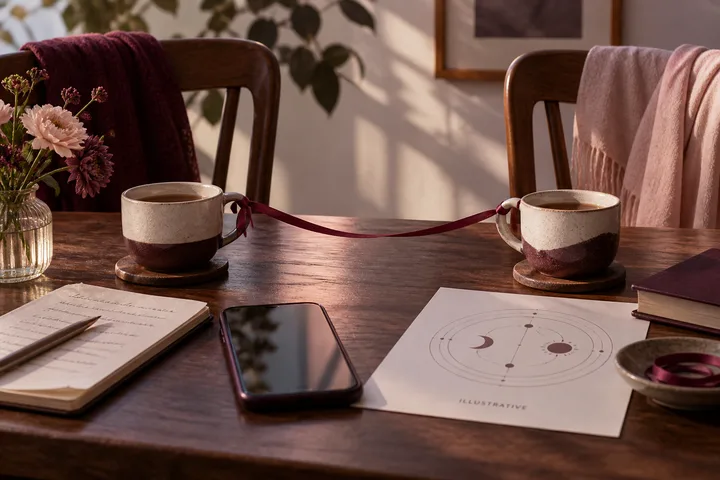
The date feels real, but what happens after it?
You leave his apartment or the restaurant with that soft, unsettled feeling. He looked at you when you spoke. He remembered the small thing you said last week. He touched your back as you crossed the street. In person, he seems generous with his attention. Then the next day arrives, and the space between you goes quiet.
Maybe he sends one practical message. Maybe he waits until the afternoon before your next date. Maybe he comes back warm enough to make you doubt the question you asked yourself in the silence. This is how the pattern keeps its power. Each good date gives you fresh evidence for hope, while each empty interval asks you to explain away what you need.
Here's the clean answer. Warmth in person counts, but it doesn't cancel a communication pattern that leaves you anxious and alone. A date shows how he connects when the relationship is placed in front of him. The days between dates show whether he carries any part of the connection when no appointment requires him to.
Consider an example. Maria likes a man who is affectionate on Thursday nights and vague from Friday morning through Wednesday afternoon. He says he isn't a big texter. That may be true. It may describe his habit, not his intention. But the useful question isn't whether his habit is morally wrong. It's whether he can make room for a small amount of contact because Maria has told him that steady contact helps her feel connected.
That distinction protects you from two bad readings. The first says, 'He is warm, so the silence means nothing.' The second says, 'He is quiet, so he must be playing games.' You don't know either conclusion yet. You do know the pattern. You know how often he reaches out, who plans the next date, whether he answers a direct request, and how you feel while waiting. Start there.
Astrology gives you a richer language for the pattern. It helps you ask why the warmth and the distance might belong to different parts of the connection, and whether those parts can work together. It doesn't ask you to abandon what your week is showing you. A chart can name a tension; it can't carry the conversation for either of you.
Notice the difference between a pause and a pattern. A pause has a reason that can be named and a return that repairs the gap. A pattern repeats without becoming clearer. Your first decision doesn't have to be whether he is a good man. Ask whether this pace is good for you, and measure the investment you are making before the relationship has earned it.
When you name the rhythm, use facts you could show another person. 'We've seen each other four times, and I usually don't hear from you until the day before we meet' is clearer than 'You make me feel unimportant.' The feeling deserves care, but the pattern gives the conversation a handle. Start with what happened. Then ask whether he can help create a different pattern.
Read the pattern, not the best two hours of the week. A man who is warm, attentive, and fully present in person may genuinely enjoy you. But if he disappears between dates, avoids a simple conversation about contact, and leaves you carrying the connection, his warmth isn't yet proof that he can offer the relationship you want. In astrology, the missing piece belongs to the whole communication and attachment pattern, not one romantic signal. A real synastry reading would compare both birth charts, with accurate birth date, time, and place, and examine Mercury for communication, the Moon for emotional rhythm, Venus for affection, Saturn for consistency and responsibility, and house overlays for where the bond lands in daily life. Until then, ask for one clear change: a modest, agreed check-in between dates. Watch what he does over the next few weeks. You don't need to chase a verdict. You need enough evidence to choose your pace.
Sources: Relationship Charts; Love and Relationship Astrology: Mercury in Synastry; Want to Improve Your Relationship? Start Paying More Attention to Bids; The Digital Age: Building Intimacy
Why his in-person warmth can be so convincing
Warmth has texture. Silence doesn't. When you're together, you can see his face, hear the change in his voice, and feel whether he is leaning toward you or away. Your body receives a stream of small signals. A smile answers a question. A hand finds yours. A story becomes an inside joke. You don't have to guess every millisecond of the bond.
Between dates, the evidence gets thinner. A blank screen invites interpretation, and interpretation tends to borrow from the last good evening. You replay his tenderness and use it to fill the gap. Perhaps he is busy. Perhaps he is overwhelmed. Perhaps he misses you but doesn't think to say so. Perhaps he likes the intimacy of dates more than the work of building a relationship. Several stories can fit the same silence.
This is why a warm man can still be a poor match for your pace. He may not be faking anything. He may feel close when you're beside him and return to his ordinary life when you leave. He may experience the relationship as a series of vivid encounters. You may experience it as an unfolding bond that needs a thread between those encounters. Neither experience becomes false because the other person has a different rhythm. But the mismatch becomes costly when only one person keeps adapting.
The date also creates a contained setting. He has time, privacy, and a clear role. Showing interest there can be easy for someone who struggles with continuity, initiative, or emotional exposure in ordinary life. A man can be an excellent companion for three hours and still lack the habits required to build a dependable partnership. Charm is not a contract. Attentiveness is not a plan.
The fair test is small. Don't ask him to become a constant messenger or to perform anxiety management on your phone. Ask for the kind of contact you actually want. 'I like seeing you, and I feel more connected when we check in between dates. Could we talk or exchange a few messages during the week?' Then leave the request intact. Don't dilute it with an apology. Don't hide it inside a joke.
His response gives you more information than another perfect date. A warm response followed by a real adjustment is promising. A warm response followed by the same pattern tells you the words soothed the moment, not that the need found a place. Irritation, mockery, guilt, or a sudden accusation that you're demanding too much tells you something sharper. You are not asking for a performance. You're asking whether your experience can exist in the relationship.
Pay attention to the quality of his attention, not just its quantity. Ten scattered messages can still leave you feeling managed or unseen. One thoughtful call can carry real presence. The point isn't to set a universal texting quota. The point is to find out whether he can remember that a relationship has an inside and an outside. If he can only access tenderness when you are physically in front of him, you may be dating a moment rather than building a bond.
Name the cost without shaming yourself. Are you rearranging your week around a man who hasn't claimed a place in it, or checking your phone during work while calling it excitement? Uncertainty is spending your attention. Keep your plans, and let his actual effort earn more of your time.
Sources: Want to Improve Your Relationship? Start Paying More Attention to Bids; The Digital Age: Building Intimacy
What astrology can tell you about the gap
Astrology doesn't read one behavior in isolation. In relationship work, synastry compares two natal charts. The planets in one chart are considered in relation to the planets and houses in the other, while a composite chart offers a separate symbolic picture of the relationship itself. That matters because 'he is warm in person but quiet by phone' is a lived question, not a single planetary label.
The chart inputs matter. A serious reading needs both people's birth dates, birth times when available, and birth places, along with a clear choice of method. Birth times are especially important for the Ascendant and house overlays. Without those details, you can still reflect on broad planetary symbolism, but you can't honestly name a precise house placement or claim that a particular synastry aspect has been calculated.
For this article, no personal charts have been calculated. The astrological reading is therefore a method for understanding the question, not a private verdict about this man. That scope is simple and useful. It keeps you from forcing your story into a chart you haven't actually seen, and it keeps general interpretations from pretending to know his intentions.
Start with Mercury. It describes the way thought and communication move. Look at each person's Mercury by sign and house in the natal chart, then examine Mercury cross-aspects in synastry. A flowing contact may make conversation easy. A tense one may bring interruption, defensiveness, or different ideas about what needs to be said. But a strong Mercury connection can create the feeling of being understood while leaving emotional needs untouched. Talking easily is not the same as staying emotionally present.
Then add the Moon and Venus. The Moon speaks to instinct, comfort, and the rhythm of emotional security. Venus shows affection, pleasure, and the ways someone gives and receives warmth. A man may have a Venus style that is vivid and physically attentive in person, while his Moon needs long stretches of privacy or his Mercury expresses care through practical acts rather than frequent messages. That can explain a difference. It doesn't automatically solve it.
Finally, ask Saturn to join the conversation. Saturn can bring patience, structure, and the willingness to build slowly. It can also describe inhibition, fear, criticism, or a habit of withholding. The same symbol can mature a bond or make one person feel they must earn basic attention. The chart helps you name the tension. Your boundary tells you what happens next.
The order of interpretation matters. Begin with the natal charts separately. What does each person need before synastry begins? Then compare the charts. Which planet receives the other person's attention, and in what sign, house, and aspect? After that, consider the relationship chart if the question is about how the pair functions as a unit. This sequence keeps you from turning one aspect into a complete personality. It also makes room for contradiction, which is where the useful reading often lives.
The chart can also separate a communication preference from a communication wound. A Mercury in an earth sign, for example, may favor useful, timed exchanges over a running stream of updates. A Saturn contact may make a person careful because words feel consequential. Those are interpretive possibilities, not evidence that a particular man has either placement. The evidence arrives when he explains his rhythm and takes responsibility for its effect on you.
Notice what a chart cannot answer on its own. It cannot tell you whether he has seen your message, whether he intends to call Tuesday, or whether he will keep a promise after the excitement fades. It can show a symbolic conversation between Mercury, Moon, Venus, Saturn, and the houses. You still need the birth data, the chosen technique, and the living exchange that gives those symbols a place to land. A method that respects astrology also respects the woman reading the result.
A man can have an intimate Moon contact with you and still have a Mercury pattern that makes regular contact difficult. You can have Venus chemistry with him and still feel Saturn's weight when you ask for definition. These aren't competing truths. They describe different rooms in the same house. Your work is to see whether the house has a door between them. In life, that door is a conversation followed by repeated action.
Sources: Relationship Charts; Synastry; Love and Relationship Astrology: Mercury in Synastry; Synastry: Mercury-Saturn Aspects
Moon, Venus, and Saturn show what the warmth is made of
The question changes when you stop asking, 'Does he like me?' and ask, 'What kind of closeness can he sustain?' Attraction answers the first question. The Moon, Venus, and Saturn help you explore the second. So does his behavior. The chart gives you symbolic layers for a pattern you can already observe.
Moon symbolism describes the private need for safety. In one chart, the Moon may seek regular reassurance and a sense of emotional continuity. In another, it may need solitude before it can reconnect. Moon contacts in synastry can make one person feel familiar to the other, as if the bond reaches an old inner room. That familiarity can be nourishing. It can also make you excuse a lack of care because the connection feels emotionally important.
Venus describes how affection gets offered. Some people court through touch, food, beauty, and concentrated time. Some show love by making practical life easier. Some need frequent signs of appreciation, while others assume the bond remains secure unless there is a problem. A Venus contact can make a date feel lush and natural. It doesn't promise that both people will maintain the relationship once the setting changes.
Saturn is the planet that asks what will hold. Its presence can make a relationship patient, responsible, and willing to grow through ordinary weeks. But Saturn can also bring reserve. Cafe Astrology's treatment of Mercury-Saturn synastry describes a serious tone, possible criticism, and the risk that one person grows quiet under the other's judgment. It also describes the stronger expression: practical guidance, careful problem-solving, and a bond that gains form through steady effort. The aspect doesn't choose between those expressions by itself. Conduct does.
A useful reading compares the symbols. Warm Venus or Moon contact may explain why the dates feel tender. Saturn may explain why contact feels delayed or controlled. Mercury may show different habits of speaking. If the chart contains both sweetness and restraint, don't reduce it to 'he is secretly scared' or 'we are meant to heal each other.' Say something more honest: the connection has real warmth and a real bottleneck. The bottleneck needs a shared response.
Now bring the chart back to the room. Does he notice the effect of his distance? Can he discuss it without turning your need into a defect? Does he make one repeatable adjustment? If yes, the Saturn lesson may be patience with structure. If no, the same symbolism has become a story you tell yourself while doing the relationship alone.
Compare two possible readings. In the first, his Venus is expressive in person, his Mercury prefers fewer but more deliberate exchanges, and the relationship's Saturn asks both people to make a schedule they can honor. The interpretation points toward translation. You might not get a stream of messages, but you could get a reliable call and a clear plan. In the second, the same warmth is paired with missed plans, evasive answers, and irritation whenever you ask for ordinary consideration. The chart may describe the tension, but the conduct names the choice.
Your side matters just as much. If your Moon settles through frequent reassurance, long gaps may drain you before you can enjoy the next date. If your Mercury needs immediate clarity, a vague promise may create more agitation than a direct no. That doesn't make either person wrong. It tells you what the relationship would need to translate. Ask whether you have the desire and capacity to keep translating, and whether he is doing any of that work with you.
The chart should also make room for your side of the synastry. If your Mercury needs frequent exchange and his prefers long pauses, the contact between your Mercuries describes a negotiation. If your Moon needs reassurance and his Saturn responds with restraint, the bond may feel serious but lonely. If Venus keeps drawing you back to the sweetness of the date, you may need to ask whether pleasure is covering a missing promise. Astrology becomes useful when it gives both people a place in the picture.
Sources: Synastry: Mercury-Saturn Aspects; Want to Improve Your Relationship? Start Paying More Attention to Bids
The strongest exception: some men truly connect better face to face
There is an exception worth taking seriously. Some men aren't natural texters. They dislike carrying a relationship through a screen, work long hours, care for family, travel, or protect their attention during a demanding season. A man can be sincere, affectionate, and poor at casual messaging. His quiet phone may describe a preference rather than a lack of interest if he names the limit, offers another way to stay connected, and keeps making clear plans.
The other bridge might be a Wednesday call, a short note before a demanding day, or setting the next date before you part. Those choices create continuity without requiring him to become someone else. The test isn't message volume. It's whether he makes the relationship easy to locate.
The exception stops being reassuring when it becomes a permanent refusal to meet you halfway. 'I'm not a texter' explains why he doesn't send a running commentary. It doesn't explain why he can't answer a direct question, confirm plans, initiate sometimes, or agree on a simple rhythm.
Astrologically, a reserved Mercury or Saturn emphasis may describe a man who takes time to formulate thoughts or experiences communication as weighty. The mature form of that pattern still has integrity. He tells you what he can offer, then follows through. He doesn't make you guess for weeks and call the guessing a test of your faith.
Rank the evidence in order. Did he hear the request? Did he propose a workable alternative? Did he repeat it without being managed? A quiet man may be hard to reach by text and still easy to trust. An unavailable man keeps the date possible while keeping the relationship undefined. Measure initiative, not just silence.
Give a compatible man room to be quiet. Don't give an unavailable man unlimited room to avoid being known.

Sources: Relationship Charts; Love and Relationship Astrology: Mercury in Synastry; The Digital Age: Building Intimacy
Read the days between dates as relationship evidence
A relationship is not built only in the hours you reserve for romance. It also appears in the ordinary space around those hours. The Gottman Institute distinguishes focused time from the small bids for connection that happen during the rest of the week. That distinction is useful here: a date can be sincere and still fail to show how the bond operates in daily life.
For early dating, the bid may be simple. You send a photograph of the street you both liked. You mention a stressful meeting. You ask how his trip went. You share a thought that reminded you of him. You don't need a grand declaration in return. You do need some sign that the thread works both ways. When every bid disappears into silence, you begin to reduce your own reach. You stop sharing. You stop asking. Then the relationship feels calmer because you've made yourself smaller.
Track four things for three weeks. Who initiates contact? Who suggests the next date? What happens when one of you has a hard day? What happens after a small misunderstanding? You aren't building a spreadsheet to prosecute him. You're giving yourself a clear view. Warmth at the date belongs in the picture, but it cannot be the whole picture.
A man who wants to build something may be imperfect and still visible. He might miss a message, then return and explain. He might forget the exact day, then make a repair. He might need a reminder about your preferred pace, then remember it later. Consistency doesn't mean flawless performance. It means the pattern bends toward care instead of making you beg for each small improvement.
A man who wants the benefits of closeness without the ordinary work often creates a different rhythm. He appears when the reward is immediate. He avoids conversations that would define the bond. He calls your needs pressure while asking you to accept his preferences as fixed. He may not be calculating. He may simply be unavailable. Your decision doesn't require a courtroom finding about his motive.
Make the three-week check concrete. In week one, note the baseline without prompting him to perform. In week two, make one ordinary bid, such as sharing news about your day, and notice whether he receives it or merely waits for the next date. In week three, look for recovery after friction. A man doesn't have to answer perfectly every time. He does need to return to the thread, acknowledge a miss, and show that your request survived beyond the first conversation.
Keep the record private and brief. Write 'called after work' or 'confirmed Friday before leaving,' not a paragraph explaining what each gesture must mean. This protects the observation from becoming another form of rumination. At the end, compare the pattern with your minimum need. If the bridge works but looks different from the one you imagined, decide whether the difference feels nourishing, neutral, or costly. Your body gets a vote, but give it the facts first.
Early dating makes this harder because the agreement is still forming. You may not know whether you are exclusive, how often either of you normally dates, or what each person considers a serious direction. You don't need a relationship contract to ask for basic clarity. You can say, 'We're still getting to know each other, and I want to understand the pace we're both choosing.' His willingness to answer tells you something before labels arrive.
Also separate access from investment. A man may have time for a last-minute evening and no intention of making space for a relationship. A busy man may have little spare time and still protect the plan he made with you. Look at the shape of the effort: does it require you to stay on standby, or does it give you something solid to organize your own life around? That distinction will matter more than whether his texts sound romantic.
Astrology can help you reflect on this rhythm through the relationship chart. Astro.com describes synastry as an overlay of two birth charts, with interaspects and house placements showing how one person's planets activate the other's life. For this question, daily-life overlays matter because a bond that only exists in the fifth-house glow of dates may feel different from one that reaches the third, sixth, or seventh-house concerns of communication, routine, and partnership. The exact house reading requires accurate birth data. The lived question remains plain: does this connection enter your week, or only your calendar?
Keep the observation humane and exact. One missed check-in is not a pattern. A demanding week is not a permanent identity. But if you restart the connection after every date, record it: date, contact, plan, request, response. After three weeks, ask one question. Is the relationship becoming easier to trust, or are you becoming better at tolerating doubt?
Sources: Relationship Charts; Synastry; Want to Improve Your Relationship? Start Paying More Attention to Bids; The Digital Age: Building Intimacy
Have one conversation, then let his choice answer
You don't need a dramatic confrontation. You need a clean sentence. Choose a calm moment, preferably in person or on a call, and describe the pattern without diagnosing him. 'I enjoy our time together. Between dates, the contact drops so much that I feel disconnected. I'm looking for a little more continuity. What feels realistic for you?'
Then stop talking. Let the silence belong to the conversation, not to your fear. He may say he hadn't realized. He may explain his schedule. He may tell you that daily contact isn't natural for him. All of that is information, but it is not the answer yet. Ask what he is willing to do. A preference becomes a relationship practice only when both people can live with it.
Make the request concrete. You could ask for one call during the week, a brief check-in after work, or for him to confirm the next date before you part. Don't present a menu so large that he can agree to your general happiness while changing nothing. Choose the smallest practice that would make the connection feel mutual. Then watch it over time.
If he meets you with curiosity, you have something to work with. If he says he wants to see where it goes, ask what that means in conduct. If he tells you you're overthinking, return to the pattern. If he becomes tender for one evening and then vanishes again, count the repetition. A repair that lasts one night is reassurance. A repair that becomes a habit is evidence.
This is also where your own chart can help, if you have it. Your Moon and Venus may show why consistent contact feels nourishing, while your natal Mercury may reveal how you ask for reassurance or interpret a pause. His chart may show reserve or a different way of connecting. Synastry can illuminate the friction between those needs. It cannot make your need embarrassing, and it cannot turn his unwillingness into compatibility.
Listen for the kind of answer he gives. A specific answer sounds like, 'I can't text much during work, but I'll call Wednesday and I'll confirm our next date before we leave.' A soft answer sounds like, 'I really like you. Why are we making this a thing?' The second may contain genuine feeling, but it leaves the practical question untouched. Warmth belongs in the conversation. It cannot be allowed to replace one.
If he proposes a bridge you don't want, say so plainly. You don't have to accept a weekly call if what you need is a short sign of life most days. Compatibility isn't created by accepting the first compromise. It comes from finding an arrangement that both people can keep without resentment. If no arrangement works for both, the honest result is not failure. It's information about fit.
You can also learn from the timing of his response. Someone who needs time may come back later with a thoughtful answer and a plan. Someone who wants to escape the subject may keep moving the conversation to the next date, where chemistry can quiet the question again. Don't demand instant emotional fluency. Do require a return. A difficult conversation becomes safe when both people come back to it.
If he agrees only after you become distressed, notice that too. Relief can make a small change feel larger than it is. A dependable bridge shouldn't require a crisis to appear. Let the new practice become boring before you call it a new pattern. The goal isn't to win a promise from him. It's to discover whether mutual care can operate without repeated pressure.
Give the conversation a time boundary. Not a threat. A boundary. You might decide that you'll observe the new rhythm for three or four weeks, then choose whether it works for you. During that time, keep your life full. See friends. Make plans. Don't hover over his phone while calling it patience. You are not waiting for him to reveal your worth. You are learning whether his way of dating has a place for you.
Prepare for a kind answer that still isn't enough. He may be respectful and clear that he doesn't want the level of connection you want. That's a successful conversation. You don't need him to admit wrongdoing before you protect your time.
Sources: Love and Relationship Astrology: Mercury in Synastry; Synastry: Mercury-Saturn Aspects; The Digital Age: Building Intimacy
Your decision is about fit, not a verdict on his heart
Return to the opening question. How should you read him? As a man who may feel real affection in the moment and may still be unable or unwilling to create continuity. Don't turn that into a verdict on his heart. Turn it into a decision about fit.
The weaker interpretation says chemistry will eventually teach him consistency. It asks you to invest more time in the hope that private warmth will spill into ordinary life. Sometimes it does. Your job is to see whether it does here, after you have made your need clear.
A useful decision has three parts. Name what you need, name the smallest version that would meet it, and set the point at which you will review the arrangement. This gives the connection room to grow without making your waiting indefinite. You are not asking for certainty after a handful of dates. You are asking whether the man in front of you can participate in the kind of dating he says he wants.
A synastry reading can sharpen the reflection. With both birth dates, times when available, and places, compare Mercury for the language of contact, the Moon for emotional security, Venus for affection, Saturn for the work of staying, and house overlays for how the bond enters daily life. Use the symbols to ask better questions. Don't use them to overrule conduct.
Tell him what continuity means to you. Ask what he can genuinely offer. Then observe the answer in ordinary form: the call happens, the next date is planned, and the check-in continues without repeated management. If he offers a workable bridge, continue slowly. If he keeps the dates warm and the relationship unreachable, step back.
You don't have to solve the whole future tonight. You only have to decide what the next honest step requires. Keep dating at a pace that lets you notice the man you are actually meeting, not the partner his best evening suggests he might become.
That pace protects desire, too. You can enjoy his humor, touch, and attention without asking those moments to carry promises they haven't made. Let each week add a little evidence. Let the evidence change your investment. That is how an open heart stays connected to its own judgment.
The Dating Clarity Report can help you sort the same questions beside the astrological symbolism: Is his attention consistent? Do his intentions match his actions? What pace protects your peace? Which boundary needs to be spoken? Use it to see the choice clearly, not to postpone making it.
His warmth matters. It may be genuine. But the relationship you can build depends on what happens after the warmth, when no romantic setting is carrying it. Ask once. Watch the pattern. Choose the pace his actions can support.
Sources: Relationship Charts; Synastry; Love and Relationship Astrology: Mercury in Synastry; Synastry: Mercury-Saturn Aspects; Want to Improve Your Relationship? Start Paying More Attention to Bids
Sources & further reading
- Relationship Charts
Supports the definition of synastry as comparing both natal charts through interaspects and house placements, and distinguishes it from composite charts.
- Synastry
Supports reading synastry through each natal chart's signs, houses, and aspects, with Venus, Mercury, Saturn, and house overlays adding distinct relationship layers.
- Love and Relationship Astrology: Mercury in Synastry
Supports the interpretive role of Mercury by element and aspect, including the distinction between easy conversation and deeper emotional communication.
- Synastry: Mercury-Saturn Aspects
Supports the reading of Mercury-Saturn contacts as potentially structured and practical or inhibited, critical, and quiet depending on expression.
- Want to Improve Your Relationship? Start Paying More Attention to Bids
Supports the distinction between focused dates and the small daily bids for connection that shape an ongoing relationship.
- The Digital Age: Building Intimacy
Supports regular check-ins, meaningful messages, and dependable communication rituals as practical ways to maintain intimacy between meetings.
Dating Clarity Report
Six observations about the man you are dating. A clear view of the patterns, plus a conversation for your next decision.
Get my dating clarity report