
The question underneath the travel
You may think you’re asking whether to book the train, reserve the room, or take another long weekend away from home. The real question is sharper. Are you building a relationship with a man who moves toward you, or are you becoming the transport system for his idea of romance?
That distinction matters because travel can look generous while hiding an unequal pattern. Maybe he chooses the restaurant, sends affectionate messages, and tells you that no one has ever understood him like you do. Then Friday comes, and you pack your bag again. He stays where he is. You absorb the fare, the planning, the lost rest, and the disruption to your own life. The gesture feels romantic because the feeling is real. The arrangement still may not be fair.
Begin with one direct question: “When you picture us dating, what part of the effort do you expect to carry?” Don’t soften it into a joke or answer for him before he speaks. You’re finding out whether he sees the relationship as something two people create or something you provide access to.
Then put the arrangement into plain terms. How often will you see each other? What would make him come to you? Who handles the money and the planning? A vague man can sound tender for hours. Specific terms force the shape of the relationship into view.
Ask yourself one more question before you ask him anything else: what would you choose if the chemistry stayed exactly as strong but the travel never changed? That question separates hope from preference. You may decide that the distance is worth it. You may decide that you want a local relationship, or one with a clear end point to the long-distance season. Either answer is allowed. Compatibility isn’t a prize you win by tolerating the arrangement he prefers. It’s the fit between the life you want and the life the relationship can actually hold.
The answer may be practical. He may have a temporary work restriction, a health issue, a care duty, or a real financial limit. Those facts deserve compassion. But compassion doesn’t require you to pretend that your cost has disappeared. If he cannot travel now, can he help plan? Can he contribute in another honest way? Can he name when the arrangement might change?
Travel is more than the ticket. Count taxis, meals, pet care, childcare, missed shifts, unpaid leave, laundry, and the mental work of fitting a second life into your calendar. You don’t need to present a spreadsheet to him. You do need to be honest with yourself. If the visit consumes your weekend before it begins, the relationship is asking for more than a romantic gesture.
Also ask whether he enjoys you where you are, not only when you enter his setting. Has he shown interest in your neighborhood, your favorite place to eat, your friends, or the small routines that make your life yours? A man can love hosting you and still fail to know you. Shared romance grows when each person becomes curious about the other person’s world.
The governing point is simple. Romance should create movement from both sides. The route can vary. The burden can’t remain yours by default.
Sources: Improve Your Relationship by Paying Attention to Bids; Marriage Is Not a Big Thing, It’s a Million Little Things; If He Likes Me, Why Doesn’t He Make an Effort?
Measure the inconvenience honestly
Fairness does not mean counting every mile with a calculator. Relationships aren’t hotel invoices. One person may earn more, have a more flexible schedule, or live near the better transport link. A fair arrangement can still look uneven in one month. What matters is whether both people recognize the cost and respond to it.
Tell him what the visits require from you. You may be using vacation days, arriving tired, paying a fare that strains your budget, or moving commitments that matter. His response reveals whether he sees the whole cost or only the pleasure waiting at the end of the trip.
Next, ask, “What are you willing to change so this works for both of us?” Listen for a real noun and a real verb. “I’ll come next weekend.” “I’ll cover half of the tickets.” “I’ll plan a visit that fits your schedule.” “I’ll find a place near the station so you don’t have another hour of travel.” Grand language is pleasant. Specific action tells you whether he has entered the problem with you.
The strongest meaningful exception is a short season of genuine imbalance. If his parent is ill, his job has sent him away, or he is recovering from something serious, you may willingly carry more for a while. That can be love. But even then, he should know what you’re carrying. He should thank you without making your sacrifice invisible. He should look for ways to give back. A temporary one-way road is different from a permanent rule he calls romance.
You don’t need a theory to authorize your exhaustion. Write down the last three visits and mark who chose the dates, booked the transport, paid, and adjusted their schedule. The point isn’t to produce a verdict from arithmetic. It’s to see the role you’ve been assigned.
Then propose a small, dated test. Ask him to choose a halfway place, send three workable dates, and book one part of the next visit. If the distance is genuinely difficult, the test gives him several ways to participate. If the problem is entitlement, the request will expose it without another expensive trip.
Separate four questions when you review the result. Did he notice the burden? Did he accept that it was real? Did he offer a workable change? Did he complete the change without being managed? A man can pass the first question and fail the last. He may feel sorry for you and still prefer the old arrangement. Sympathy is welcome, but a relationship needs behavior that survives the moment of sympathy.
Money is one part of the picture. Planning, flexibility, welcome, and respect for your calendar count too. A man can buy a costly ticket and still leave you carrying the invisible work. Look for participation across the whole visit, not one impressive receipt.
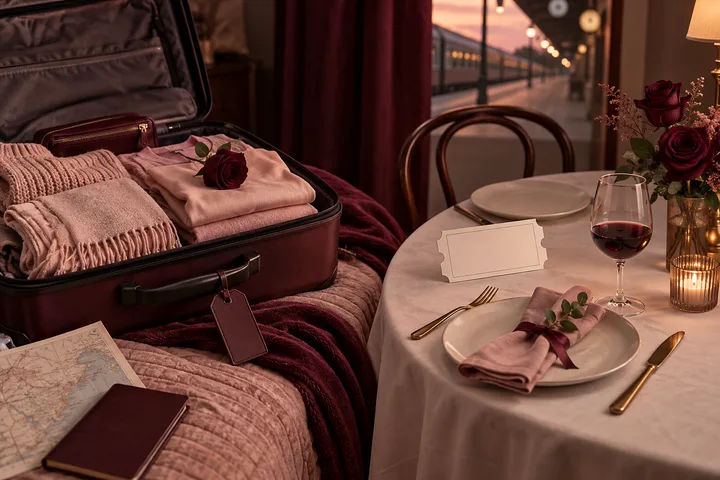
Sources: If He Likes Me, Why Doesn’t He Make an Effort?; Improve Your Relationship by Paying Attention to Bids
His response is the first compatibility reading
Before you interpret a single aspect, read the conversation. You’re watching how he receives a reasonable need, especially when the need asks him to give up convenience.
A receptive answer sounds like curiosity. He asks what feels unfair. He tells you what he can do. He admits what he hasn’t considered. He may disagree about the best schedule, but he stays in the conversation. That matters. A couple can have different preferences and still build a respectful agreement.
A dismissive answer changes the subject. He says you’re keeping score. He tells you that a woman who loved him would make the trip. He points to the beautiful weekend you had and uses it to cancel the ordinary costs you keep paying. Or he promises a visit, then waits for you to plan it. Each move protects his comfort while asking you to doubt your own perception.
Notice the difference between inability and unwillingness. “I can’t travel this month” is information. “You’re making romance transactional” is often a refusal to discuss the terms of a relationship he already expects you to fund. He can be sincere and still be unsuitable for the life you want. His feelings don’t erase the impact of his choices.
Protect your agency here. Don’t make a fourth trip to obtain evidence the first three already gave you. Say, “I’m not able to keep doing all the travel. I’m open to a plan we both carry.” Then give the relationship room to answer.
The Gottman Institute describes small exchanges as bids for connection. A question, request, or gesture asks the other person to turn toward you, turn away, or turn against you. Your travel concern is both a bid and a boundary. His first response tells you how he handles a need that interrupts his convenience.
Don’t confuse a beautiful visit with a good pattern. A romantic weekend can be genuine. So can an unequal arrangement. Hold both truths long enough to decide clearly.
The pattern matters early because roles harden quietly. The person who always travels becomes the person who always adjusts, while the other person starts to experience her arrival as the normal shape of the relationship. Interrupt it while it is still small. “I’ve loved seeing you, and I’m ready for us to share the movement now” is warm enough. The limit is still firm.
His response may also be mixed. He may agree, feel embarrassed, and need time to work out logistics. That isn’t the same as refusing you. Give a good-faith answer one clear chance to become a plan. What you’re watching for is not a polished speech but a movement from reaction to responsibility. If he asks useful questions, names a constraint, and returns with options, the conversation has somewhere to go. If he makes you comfort him until the request disappears, the relationship has shifted the work back onto you.
Sources: Improve Your Relationship by Paying Attention to Bids; Marriage Is Not a Big Thing, It’s a Million Little Things; If He Likes Me, Why Doesn’t He Make an Effort?
Gather the chart inputs before reading Venus
Now bring astrology into the room with the right material. For a personal synastry reading, gather each person’s birth date, birth place, and exact birth time if available. The dates establish the natal planets. The places set the local sky. The times allow houses, Ascendants, and angles to be compared, and they matter when the Moon is close to a sign change. The scope here is a tropical synastry comparison of natal signs, planetary aspects, and supported house overlays. Venus is a key symbol for attraction, pleasure, affection, and the way each person approaches love. It can show why one person experiences travel as a beautiful proof of devotion while the other experiences it as a normal requirement of seeing a partner.
Consider an example. Her Venus is treated in this illustrative reading as valuing ease, hospitality, and being welcomed. His romantic style is expressed through exciting destinations and dramatic reunions. He may think the long journey makes the relationship special. She may enjoy the destination but quietly ache for the feeling of being chosen in her own space. Neither preference is wrong. The conflict begins when his preferred form becomes the only form allowed.
Put the meanings side by side. Is romance the ticket, the surprise, the private time, the welcome at the station, the care after a hard week, or the feeling that he has entered your world too? You may not want less romance. You may want romance that includes your reality.
This is where a guided reading can stay concrete. If her Venus needs steadiness and his Venus prefers novelty, the question isn’t which style is more romantic. It’s whether the couple can create a menu large enough for both. One visit might be an adventurous weekend near him. The next might be a quiet stay near her, with him learning the place she lives. A symbolic difference becomes useful when it produces more than one possible ritual.
Venus also raises the question of value. What does each of you believe love should cost? One person may associate sacrifice with devotion. Another may believe devotion includes protecting each other from needless strain. These beliefs can attract each other at first. They can also become a quiet battle over who proves love and who gets to receive the proof.
The synastry symbol does not make his preference a command. It gives you language for the attraction and the mismatch. A strong Venus contact can make you feel cherished, fascinated, or unusually drawn to his style. That feeling deserves respect. It still needs a life that fits you.
The useful Venus question is whether the way you love can make room for both people’s definitions of care. If it can, negotiate the form. If it can’t, don’t turn chemistry into a debt.
Venus can show a difference in taste that is workable when neither person treats preference as law. He may find a surprise road trip thrilling. You may find a planned visit more loving because it protects your work and sleep. Ask which part of the gesture each of you is actually seeking: novelty, welcome, private time, or reassurance. That answer gives you something to negotiate.

Ask him plainly, “What would a fair version of visiting each other look like?” Then watch what he does with the question. A man who wants a relationship with you can discuss distance, money, time, work, and inconvenience without turning your need for balance into a complaint. He may not be able to travel every time. That isn’t the standard. The standard is shared intention and a pattern of movement toward each other. Ask who will plan the next visit, what he can pay for, how often you’ll meet, and what happens when travel stops being easy. If he offers a real plan and follows it, you have something to assess. If he praises your devotion while treating your travel as the price of admission, stop calling the arrangement romantic. For an actual synastry reading, you need both people’s birth dates, birth places, and, ideally, exact birth times. The time matters for houses and angles, and a date-only chart narrows what can be read. Venus, Mars, the Moon, and Saturn can explain the pull and the work, but they can’t turn a one-sided arrangement into a partnership. Let his answer, his effort, and the chart’s actual scope guide the decision.
Sources: Synastry: Love and Relationship Astrology; Synastry in More Detail
Mars reveals who turns desire into action
Venus describes much of the romantic atmosphere. Mars shows another question. Who acts? Who initiates? Who takes desire out of the realm of talk and gives it a body, a date, a route, and a plan?
In relationship astrology, Mars is linked with desire, assertion, physical energy, and action. A lively Mars connection can make the relationship feel hot, urgent, and hard to resist. It can also create friction when one person pushes and the other person absorbs the consequences. Attraction may get you onto the train. It cannot decide whether the trip serves both of you.
Consider an illustrative example. She keeps making the journey because their Mars connection feels immediate. He says, “I miss you,” and the desire rises fast. She arranges the dates. He chooses what they’ll do once she arrives. The relationship feels active because the visits are intense. Yet the action is not shared. His desire starts the cycle, but her labor completes it.
Put Mars into practical terms: who will plan the next visit, what part of the travel will he handle, and what will he do when the plan becomes inconvenient? Mars is not only pursuit in the bedroom. It is the willingness to enter the practical world of the relationship and move something forward.
This is also where power can hide. If he becomes warmer only after you agree to travel, he may be rewarding your compliance rather than meeting you in desire. If he treats your refusal as rejection, he is making you manage his feelings. If he says he wants a woman who is spontaneous but never offers spontaneity in your direction, his ideal has become a one-way demand.
Astrological attraction can explain why you keep hoping the next meeting will settle everything. It can’t excuse repeated inaction. Let Mars answer with behavior. Does he pursue you, or does he summon you? There is a difference.
Shared initiative can look quiet. He might arrange a simple overnight, learn the route, bring dinner, or take responsibility for the return journey. Mars does not need a spectacle to be real. It needs direction. Ask, “If this continues, how do you see us managing the distance?” A serious partner may not have a perfect answer, but he will think with you about the calendar instead of returning you to the last beautiful weekend.
Mars also shows how the two of you handle friction around action. You may move quickly once you decide. He may need more time, or he may speak boldly and act slowly. Neither style is automatically wrong. The useful question is whether the difference can be coordinated. Can he say what he will do by a date? Can you stop filling every gap before he has a chance to act? A better pattern gives both of you a job and a point at which you review what happened.
Sources: Synastry: Love and Relationship Astrology; Synastry in More Detail
The Moon asks where the relationship feels like home
The Moon brings the question home. It speaks to emotional safety, habits, belonging, and the conditions under which each person can soften. A relationship can contain glamorous travel and still leave one woman feeling like a guest who keeps proving she deserves a place.
Notice what happens before, during, and after the journey. Do you feel cared for while you prepare? Does he check that you arrived safely? Does he make space for your rest, food, work, and preferences? When you leave, does he remain connected, or does the intensity vanish until he wants another visit? These details show whether romance has a home base.
Imagine Maria has been traveling six hours each way to see a man she adores. He creates beautiful weekends. He also expects her to sleep badly, change her work schedule, and fit herself around his routines. When she asks for one visit in her city, he calls it less romantic. Maria doesn’t need to prove that her city is magical. She needs to notice that he feels comfortable receiving her care but resists entering hers.
This part of the reading asks about mutual shelter. Maybe he truly dislikes hotels and feels awkward in unfamiliar places. Fine. Can he stay for one night? Can he help create a plan that respects you? Can the couple build rituals in both places? Home is not a test of which location wins. It is the shared feeling that neither person must abandon herself to be loved.
In synastry, Moon contacts can describe emotional recognition, domestic ease, and the way one person touches another’s private life. Difficult Moon and Mars contacts can also bring volatility, especially when needs and actions collide. Use the symbolism as a prompt. Where does your nervous system relax with him? Where does it brace? Both answers belong in the reading.
After each visit, record three things before nostalgia edits the memory: how your body felt, how much of his ordinary life you were expected to absorb, and whether he made room for your ordinary life in return. The Moon reading lives in those details.
Name one condition that would help you feel at home, such as a slower first evening, a free morning, or a visit in your city. Then watch whether he treats your comfort as part of the relationship or as an obstacle to his preferred version of romance.
The Moon can also reveal the emotional price of being a visitor. Perhaps you’re cheerful during the date and tearful on the return journey. Perhaps you can sleep at his place but never fully unpack. Perhaps he is affectionate in private yet forgets the details that help you feel settled. These aren’t small complaints. They describe the nervous system’s memory of the bond. A home-making relationship doesn’t require constant comfort, but it should leave room for your comfort to matter.

Sources: Synastry: Love and Relationship Astrology; Synastry in More Detail; Improve Your Relationship by Paying Attention to Bids
Put the chart beside the real-world pattern
A synastry reading becomes useful when it helps you ask a better question about what you can see. It becomes harmful when it persuades you to overrule what you can see. Put the chart beside the pattern, not above it.
Make two columns. In the first, write what he says. In the second, write what he repeatedly does. “I want us to be equal” belongs in the first column. “She has made every trip for six months” belongs in the second. “I love spontaneous romance” may be true. “He becomes cold when she asks for a visit from him” is also true. Read both columns together.
Decide what would change the pattern. Don’t write an impossible demand such as “He must become a different man.” Choose a visible experiment: he plans the next visit, covers an agreed share, alternates cities, or meets you halfway. If he has a restriction, he explains it and gives a date for revisiting it. You’re giving the relationship a way to become more balanced.
A useful experiment has an end point. Choose a month, not an endless promise. Notice whether the change lasts after the emotional conversation fades. Consistency is the part that turns a good intention into a relationship you can trust. That is what shared effort looks like over time.
The chart can name the pull. Venus may speak to pleasure and longing, Mars to heat and pursuit, the Moon to belonging, and Saturn to limits, duty, delay, and durability. Cafe Astrology’s synastry guidance treats these as a layered comparison of contacts, not a verdict from one placement. Read the symbols beside money, time, consent, and respect.
For a personal tropical synastry reading, use both birth dates and birth places. Add exact birth times when you want houses, Ascendants, angles, and firmer Moon and house information. This article supplies no personal chart positions, so Maria’s example is illustrative. If a birth time is missing, keep the reading to placements and aspects that remain supportable. Don’t turn an uncertain house cusp into a fixed relationship story.
Now rank the evidence. First, what does the repeated behavior show? Second, what does the conversation reveal about his willingness to adjust? Third, what do Venus, Mars, the Moon, or Saturn help you name about the attraction and strain? That order keeps astrology useful. It lets the chart deepen your question without taking the decision away from you.
The meaningful exception is a temporary imbalance that is openly held by both people. He may be unable to travel for a real season and still participate through planning, contribution, reassurance, and a clear path toward change. Saturn can describe the season. His conduct shows whether he is carrying it with you.
You can make the comparison even clearer by writing one sentence for each layer. Venus: what makes affection feel romantic here? Mars: who moves the connection forward? Moon: where does each person soften? Saturn: what responsibility or limit must be respected? Then write a fifth sentence with no astrological language: what happened last month? That last sentence keeps the reading attached to lived reality. It also shows which symbolic promise has earned support and which one is only being imagined.
Sources: Synastry: Love and Relationship Astrology; Synastry in More Detail; If He Likes Me, Why Doesn’t He Make an Effort?
Have the conversation without doing all the emotional work
Choose a calm moment. Not while you’re standing on a platform with a suitcase. Not after he has just said he misses you. Tell him the pattern and the effect in plain language.
You can say, “I’ve been making nearly every trip, and it’s costing me time, money, and energy. I want to keep seeing you, but I don’t want a relationship where I’m the only one who travels. I need us to make a plan that includes your effort too.” Then stop. Let him answer.
If he asks what you want, be ready. “I want us to alternate when we can. If you can’t travel this month, I want you to plan the next visit and help with the cost. Let’s revisit the arrangement in four weeks.” A clear request gives a good-faith partner something to respond to. It also ends the need to prove that your needs are reasonable.
If he says you’re keeping score, answer once. “I’m not counting affection. I’m talking about a repeated practical burden.” If he says romance should feel effortless, answer, “Romance can feel joyful and still require shared work.” If he gets angry, mocks you, threatens to end things, or pressures you to travel after you’ve said no, take that seriously. You do not owe access to your time because he has strong feelings.
Watch the days after the conversation. A promise is a beginning, not the result. Does he follow up, remember the details, and make a plan without asking you to manage every step? In the language of relationship bids, turning toward does not require a perfect answer. It requires attention and engagement with what you asked.
Give his answer a fair chance, but give it a time frame too. “We’ll figure it out someday” is not a plan. A date to revisit the issue is. You’re allowed to protect your future from endless provisional romance.
And give yourself permission to stop persuading. If the conversation becomes another performance where you plead and he judges, the answer is already in the room.
Explain the need once, then answer only useful questions. If he keeps asking you to prove that the fare is expensive, the journey is tiring, or your life matters, stop litigating the facts. Keep the conversation about the arrangement, not his worth or his childhood. You can say, “I’m not calling you selfish. I’m telling you what I can and can’t keep doing.”
You’re allowed to choose a smaller relationship while you learn. Meet less often, keep your own weekend plans, and stop paying for dates that strain your budget. This isn’t punishment. It returns the decision to your hands and shows whether his interest survives when your availability has limits.
If the conversation goes well, put the agreement in a message afterward. Not because love needs a contract, but because memory becomes selective when the next reunion feels exciting. Write the next visit, the cost split, who books what, and when you’ll revisit the arrangement. If circumstances change, you can change the plan. A written detail gives care somewhere to land.

Sources: Improve Your Relationship by Paying Attention to Bids; Marriage Is Not a Big Thing, It’s a Million Little Things; If He Likes Me, Why Doesn’t He Make an Effort?
Choose the relationship that can meet you halfway
You don’t need him to travel every time. You need a relationship in which your travel is a choice, not an entrance fee. That difference will shape your answer.
Keep the connection open if he responds with care, names the imbalance, and takes a practical step. Give the new pattern enough time to become visible. You’re looking for consistency, not a single dramatic correction. One visit proves possibility. Repeated shared effort proves structure.
Slow down if he agrees in principle but keeps postponing action. Stop booking trips until the plan is mutual. Let the quiet reveal whether he wants your presence or only the benefits of your availability. This may feel uncomfortable. It is useful discomfort. It returns the decision to your hands.
Leave the arrangement if he insists that your sacrifice is the proof of your love, punishes you for asking for reciprocity, or treats your life as less important than his preferred version of romance. A beautiful synastry signature cannot make contempt tender. A soulmate feeling cannot create respect where he refuses to practice it.
Your Dating Clarity Report can help you examine the pattern through the questions that matter here: Is he consistent? Do his choices match his intentions? Is the pace protecting your needs? Which boundaries keep your life intact? Use that reflection to prepare one practical conversation, not to hand your decision away.
Before you book anything else, answer three questions. Has he moved toward me without being chased? Can I name the cost of this relationship without being shamed? Does this love make my life larger, or does it keep asking me to leave my life behind?
Then choose the next step. Ask for the plan. Watch the follow-through. Keep your money, time, friendships, work, and home in the picture. Romance should invite you into a shared life. It shouldn’t require you to disappear from your own.
If you want a final sentence for the conversation, use this one: “I’m willing to make an effort, but I’m not willing to be the effort.” It holds warmth and self-respect together. You can love the man, value the connection, and still refuse the role of permanent traveler. You can believe the synastry is meaningful and still require the relationship to behave meaningfully in ordinary life. Give him a chance to meet you. Then believe what he shows you.
The decision doesn’t need a dramatic ending. You can pause new bookings, take the next week to think, and return to the three facts that matter: what you asked for, what he offered, and what he did. That is enough material for a clear choice. A relationship that can meet you will not be harmed by your need to see the road from both sides. You’re allowed to choose peace before you have every answer.
Sources: Synastry: Love and Relationship Astrology; If He Likes Me, Why Doesn’t He Make an Effort?; Improve Your Relationship by Paying Attention to Bids
A little more clarity
Is it unfair to want him to travel to me too?
No. Wanting shared effort is different from demanding identical effort every time. Work schedules, money, distance, health, and family duties can make the split uneven for a while. The fair question is whether both of you recognize the cost and keep looking for a plan that includes both lives. If he cannot travel now, he can still help plan, contribute, communicate, and name when the arrangement may change.
What does synastry say about a relationship where one person always travels?
Synastry can help you explore the symbols behind attraction, pursuit, comfort, and commitment. Venus may describe romantic preferences and pleasure. Mars may show desire and initiative. The Moon may show where emotional safety and home are felt. These layers can clarify why the pattern feels compelling or painful, but they don’t prove that one person should carry the relationship. Read the chart beside his repeated actions.
What should I do if he says travel is my choice?
Tell him the truth about the choice. You can choose to travel, and he can choose whether to build a relationship that makes room for your limits. Say, “I’m choosing not to make every trip anymore. I’m open to a plan we both carry.” Then stop rescuing the arrangement. His response will show whether he wants partnership or continued convenience.
Sources & further reading
- Improve Your Relationship by Paying Attention to Bids
Supports the idea that small bids for connection and a partner’s attentive response build trust and emotional connection.
- Marriage Is Not a Big Thing, It’s a Million Little Things
Supports the distinction between isolated grand gestures and the repeated small acts that maintain closeness.
- Synastry: Love and Relationship Astrology
Supports the interpretive roles of Venus, Mars, Moon contacts, aspects, and Saturn themes in relationship astrology.
- Synastry in More Detail
Supports reading synastry as a layered comparison of planetary contacts rather than relying on one isolated placement.
- If He Likes Me, Why Doesn’t He Make an Effort?
Supports evaluating repeated investment of time, effort, money, and attention instead of relying on romantic declarations alone.
Dating Clarity Report
Six observations about the man you are dating. A clear view of the patterns, plus a conversation for your next decision.
Get my dating clarity report