
Start with the decision he is already asking you to make
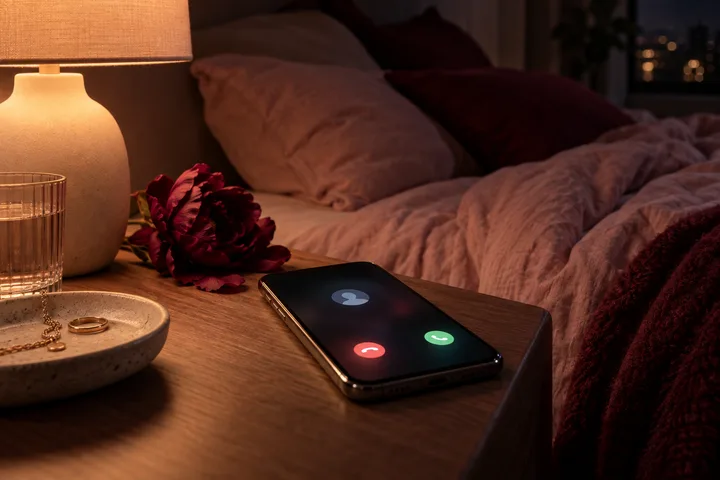
The first question isn’t why he likes the night. It’s whether the relationship he’s offering has room for your life. That answer lives in his pattern. One late dinner after a long shift is one thing. Every invitation arriving at 10:30 p.m., every plan ending at his door, and every weekend disappearing into a vague “we’ll see” is another. Don’t flatten those two situations into the same story.
A late-night date can be warm, erotic, and genuine. Night has its own language. People loosen their guard. A quiet bar or a walk beneath streetlights can open a door that a rushed coffee never touches. You don’t have to reject that kind of connection. You do have to notice whether it’s the only door he’ll open. The setting can also hide missing information. In the dark, with no errands, friends, or shared plans around you, a short encounter can feel like a complete relationship. Ask what you know about him when the atmosphere isn’t doing the talking. Ask whether he is curious about you beyond the mood he creates.
If he wants you only when the day is over, he may be asking for convenience, sex, privacy, emotional escape, or a relationship he doesn’t intend to name. He may also have a real constraint: night work, children, caregiving, health needs, or a difficult living arrangement. You can’t know which one from chemistry. You learn it through a direct question and his response over time.
Try this: “I enjoy our nights together, and I also want to see what we’re like in ordinary time. Can you plan a daytime or early-evening date?” Keep the request simple. Don’t build a courtroom case. Don’t list every disappointing text. Give him one clear chance to show you whether he can participate in the relationship you want.
His first answer matters. His next action matters more. A man who cares but has a tight schedule will usually offer a real alternative, explain the limit without making you feel needy, and follow through. A man who wants the benefits of access without the work of dating may mock the request, call you demanding, become vague, or offer another last-minute invitation that changes nothing.
This is where your own standard has to become concrete. Do you want to be seen in daylight? Do you want plans made ahead? Do you want to meet friends, share meals, attend events, or be known outside a private room? You’re allowed to want those things. You don’t need a chart, a label, or his permission to call them requirements.
Make the decision in proportion to the evidence. If the pattern is new, ask and observe. If you’ve asked more than once and nothing changes, believe the repetition. The kindest reading of his behavior still has to include the effect on you. If his availability leaves you anxious, hidden, rushed, or perpetually waiting, the connection is already costing more than the night is giving back.
Notice the difference between being invited and being summoned. An invitation gives you information and choice. It says where, when, and what kind of time he hopes to share. A summons arrives when he is bored, lonely, finished with someone else, or suddenly free, and it expects you to rearrange yourself without asking what you need. You can decline a summons without rejecting the person. You’re declining the terms.
Also check whether the night is reciprocal. Does he ever stay for breakfast, help you get home, or ask how the timing works for you? Does he accept your no without sulking? A late date becomes more trustworthy when both people shape it. It becomes less trustworthy when his preferred hour is treated as the only hour that matters. Your answer should include not just how often you see him, but who gets to decide how seeing each other happens.
Write down the pattern before you talk. Not a dossier. Three or four facts: the number of late invitations, the plans he has declined, the alternatives he has offered, and how you felt afterward. This keeps you close to reality when he is charming. It also helps you avoid a different trap, where one disappointing night makes you rewrite an otherwise generous pattern. Clear evidence is kinder than either fantasy or panic. Include what happens after you say no. Respect there is one of the clearest signs that attraction has not outrun character. A man who wants a real connection may feel disappointed, but he won’t make you pay for having a preference. He’ll ask what would feel better, offer another plan, or accept that your needs differ. That small moment can reveal the whole emotional climate ahead.
Separate a difficult schedule from a relationship kept in the shadows
A schedule explains a time. It doesn’t explain a whole style of relating. That distinction will save you from two common mistakes: excusing a man who keeps you hidden, or punishing a man whose life genuinely runs late. Look for the full pattern around the invitation.
A constrained but sincere man can usually name the constraint. He might say, “I work from four until midnight, but I’m free Tuesday morning,” or, “My daughter is with me most weekends, so I can do Wednesday lunch.” The details don’t have to be perfect. They have to be real enough to plan around. He makes his limits visible instead of asking you to live inside a fog.
A hidden arrangement has a different feel. He may refuse to choose a place where someone could see you. He may never introduce you to anyone. He may keep the relationship off his calendar, avoid your calls during the day, or become affectionate only when he wants something. None of these signs proves a single secret. Together, they tell you that you’re receiving fragments rather than a shared life.
Ask three practical questions. When can we see each other next? Where can we go that feels good to both of us? What kind of connection are you available for right now? A clear man may not give the answer you want, but he will give you an answer you can use. An evasive man makes you work harder to interpret the silence than he works to create a date.
You also need to distinguish privacy from secrecy. Privacy protects a relationship while it grows. Secrecy protects one person from accountability. Privacy might mean you don’t post each other online after two dates. Secrecy means you can’t tell a friend where you’re going, can’t reach him during the day, and can’t ask what he wants without being punished for asking.
If you met online, keep your own safety in the picture. Love Is Respect recommends stating your boundaries, meeting in public, telling someone you trust where you’ll be, and arranging your own ride. Those are not signs that you’re cold. They are ordinary ways to keep control while someone is still becoming known to you.
The strongest exception is real and important: some couples choose late-night meetings because both people prefer casual intimacy, shift work, or a private rhythm. If you genuinely want that too, there’s no problem to solve. The issue begins when your desire has changed and his offer hasn’t. Compatibility isn’t measured by whether his arrangement is objectively acceptable. It’s measured by whether it works for both of you.
Ask yourself what the arrangement teaches you about your place in his life. Are you part of the life he is living, or a relief from it? Does he make space before the last task of the day, or reach for you only after everything else has been handled? You don’t need to demand priority over his work, children, or friends. You do need enough room to know that you are a person he is choosing, not a private service he collects when the rest of his life goes quiet.
There’s another honest possibility: he may like you and still be unable or unwilling to date in the way you want. That isn’t a puzzle you can solve with more patience. Feelings don’t create capacity. If he says, “This is all I can offer,” take him seriously. You can care about him, understand his reasons, and decline the offer in the same breath. A clean no protects the affection that a long, resentful compromise would eventually damage.
A real constraint should still leave traces of effort. If he works nights, perhaps he offers a breakfast date, a walk before work, or a protected afternoon once a month. If he has children, perhaps he explains his custody rhythm and plans around it. If he is caring for a parent, he may not have much flexibility, but he can still tell you what he can and cannot give. The point isn’t to demand an easier life from him. It’s to see whether he takes responsibility for making his life legible to you. Look for three things: a plain explanation, a workable alternative, and follow-through. You don’t need perfect access to his life. You need enough honest information to decide whether the life he has can meet the relationship you want.
Be careful with the phrase “he’s just busy.” Busy describes a full life. It doesn’t describe a refusal to communicate. A busy man can say, “I can’t do this weekend, but I can do Thursday.” He can send a message that isn’t sexual. He can remember an important day. He can tell you when he’ll be out of reach. When busyness becomes a blanket over every question, it stops being context and starts doing the work of concealment.
You don’t need to investigate his private life to earn the right to leave. You’re not required to prove that he has another woman, a bad motive, or a hidden problem. A relationship can be wrong for you because it makes you feel peripheral. The decision isn’t a criminal finding. It’s a fit judgment. Ask whether the available evidence supports the life you want to enter, then act on that answer. You are choosing the terms under which your heart gets access, and those terms can be calm, visible, mutual, and ordinary. Ordinary is not lesser. It’s where trust proves it can live. You can change your mind.

Read the first chart layer: attraction can make the night feel bigger
Now bring astrology into the question. Not as a verdict. As a way to name the pull. In a synastry reading, we compare one person’s planets and points with the other person’s chart. The birth date, exact birth time, and birthplace matter when we’re reading houses. Without those details, you can still discuss broad planet-to-planet themes, but you shouldn’t pretend to know whose 5th, 7th, 8th, or 12th house is being activated.
The first layer is the 5th house, the place of romance, pleasure, play, and courtship. When a person’s Venus, Mars, Sun, or Jupiter strongly touches the other person’s 5th-house territory, the connection can feel easy to enter. You laugh. You flirt. You want one more drink, one more hour, one more night. That warmth is real in the language of astrology. It’s also not the same as a promise.
Venus describes affection, attraction, taste, and the pleasure of being together. Mars brings desire, pursuit, heat, and the urge to act. Cafe Astrology’s synastry guide makes a useful distinction here: strong Mars contacts can support sexual chemistry, but they don’t by themselves say that two people need to stay together forever. That is exactly the distinction this situation needs. Desire can explain why you keep accepting the invitation. It cannot answer whether he will build a relationship in daylight.
Imagine Maria has been seeing Daniel for six weeks. Their late-night conversations are tender. He remembers small details. He touches her with care. In their illustrative synastry, her Venus falls in his 5th house and his Mars makes a close contact to her Moon. The symbolism fits the experience: romance, body-level pull, and emotional charge. But Maria still needs to ask for a Saturday afternoon date. The chart describes the magnet. It doesn’t supply the calendar.
This is where a chart reading becomes useful instead of decorative. It can show why a connection enters through pleasure, fantasy, or desire before it enters through routine. It can help you stop calling intensity “proof” when what you’re actually feeling is a powerful 5th-house or Venus-Mars response. That recognition gives you choice. You can enjoy the chemistry and still require evidence of care.
Read the first layer in the right order. What do you feel? What does he consistently do? What does the synastry symbolically illuminate? If you reverse those questions, you may use astrology to defend the relationship before you have looked at the relationship. The chart belongs after observation, not before it.
And don’t dismiss a beautiful connection because it began at night. A 5th-house bond can grow into something substantial when both people make room for ordinary life. Look for the next layer. Does the relationship move from pleasure into partnership? Does he meet your needs with the same warmth he brings to desire? That is where the reading has to go next.
The Moon deserves a place in this first pass because late-night meetings often stir emotional memory. Moon contacts can make you feel received before you know whether you are understood. They can create a familiar domestic mood in a taxi, a kitchen, or a dark bedroom. That feeling may be tender and true. Still, ask whether he can offer care when the mood changes, when you are stressed, or when the relationship needs a practical answer instead of a soothing moment.
Mercury matters, too. A man may be physically present at midnight and emotionally absent at noon. In synastry, Mercury contacts can describe the ease or friction of talking, but the lived question is simple: can you discuss the arrangement without losing the connection? If he can talk openly about timing, sex, exclusivity, and expectations, the chart’s attraction has a channel. If every serious question ends the conversation, the chemistry has nowhere safe to go.
A reading can also expose the temptation to make a private story more meaningful than a public fact. You may tell yourself that the night belongs only to the two of you, that ordinary dating would cheapen it, or that he hides because the bond is too deep for other people to understand. Sometimes that story is true. Sometimes it is a beautiful cover for a man who prefers access without accountability. Let his conduct decide which story survives.

Sources: The Astrological Houses; Synastry
Compare the partnership layer with the private, consuming layers
The 7th house changes the question from “Do we want each other?” to “Can we meet each other as partners?” In the house tradition, it describes one-to-one partnership, cooperation, and the qualities we seek in another person. In a synastry reading, 7th-house emphasis can make someone feel like a natural counterpart. You notice him as a person you could face the world with, not only a person you desire behind a closed door.
That symbolism matters here because daytime access is often a small test of partnership. Can he make a plan that includes your schedule? Can he let the relationship exist where life is visible? Can he show up when sex isn’t the obvious activity? A chart with compelling 7th-house links may describe a genuine partnership instinct, but the instinct still has to become behavior.
The 8th house brings intimacy, vulnerability, shared resources, erotic depth, and transformation. It can make a connection feel consuming. You may reveal things quickly. You may feel that he reaches places in you no one else can touch. That can be sacred. It can also make you overvalue the bond because it feels rare. The 8th house asks for honesty about power, trust, money, sex, and emotional risk. It does not reward pretending that all intensity is safe.
The 12th house adds the language of what is hidden, private, unconscious, sacrificed, or difficult to name. A strong 12th-house synastry contact can feel spiritual and strangely familiar. It can also leave one person guessing about what the other knows, wants, or is willing to reveal. If late-night dating already makes you feel tucked away, 12th-house symbolism may describe why the arrangement feels tender and confusing at once.
Consider this example: Maria’s Venus falls in Daniel’s 12th house, while Daniel’s Saturn falls in Maria’s 7th. She feels the private sweetness and senses a bond beneath words. He may experience her as someone who touches his hidden emotional world. But Saturn in the partnership layer asks for structure, time, and accountability. The reading doesn’t say “secret soulmate.” It asks whether the connection can give form to what it feels.
This comparison prevents a common astrological error. You don’t rank the 12th house as bad and the 7th as good. You read the whole pattern. A 12th-house relationship can be compassionate, healing, and deeply meaningful when both people bring what is hidden into honest conversation. A 7th-house connection can still be unequal when one person wants a partner and the other wants an arrangement. The house doesn’t overrule consent, clarity, or choice.
So compare the layers against his actions. If the 5th and 8th are loud but the 7th never appears in lived experience, you may be carrying the partnership idea alone. If the private bond is strong and he is steadily expanding your shared world, the night may simply be your beginning. Ask the chart to deepen your discernment. Never ask it to silence your discernment.
There is a useful timing question here, but it isn’t a prediction. Ask how long the relationship has had to become more visible. After one week, you may still be learning each other’s routines. After three months of the same late-night arrangement, the pattern carries more weight. Duration doesn’t create a magic deadline. It gives repeated behavior enough room to speak. A man who wants change usually has some movement to show you by then.
Look for integration across more than one part of life. Does he know the shape of your week? Does he ask about your work, your friends, your rest, and the plans you already made? Does he let you know his world, even in small ways? Partnership symbolism becomes convincing when your lives begin to touch outside the charged setting where you first met. A private bond that never crosses that threshold may remain a compartment, however profound it feels inside the compartment.
This is why the chart layers should be read as a conversation among meanings. Venus may say pleasure. Mars may say pursuit. The Moon may say emotional recognition. Saturn may ask for time and responsibility. Neptune may soften the edges between hope and fact. None of those symbols speaks alone. Your job is to hear the whole sentence, then compare it with the man standing in front of you.

Decide from the pattern, not the excuse. A man who sometimes works late, explains the limit clearly, and makes room for a real daytime date may have a scheduling problem. A man who repeatedly appears after dark, avoids public plans, wants access to your home, or turns your request for more into pressure is showing you the shape of the relationship he can offer. Ask once, plainly: “I like seeing you, but I’m looking for dates that include ordinary time together. Can you plan one this week?” Then watch what he does. Astrology can help you understand why the pull feels private, intense, or hard to resist. It can’t turn secrecy into commitment. Keep your pace. Meet in public. Tell a friend. If he won’t meet your clear, reasonable standard, stop investing and let the answer be no.
Sources: The Astrological Houses; Synastry
Integrate the reading: chemistry is not the same as availability
Put the practical evidence and the astrological evidence on the same table. The practical evidence tells you what he is offering. The chart helps you understand how the connection feels, where it may gather force, and which part of your emotional life it touches. Neither layer should impersonate the other.
Here’s a clean way to read the situation. Make three notes: what he says he wants, what he repeatedly does, and what the arrangement asks you to tolerate. Then compare those notes with your standard. Synastry can add a fourth layer by showing why the bond feels romantic, consuming, or elusive. It belongs beside the evidence, not above it. This keeps an evocative chart from becoming an excuse for an inconvenient man and turns the reading into a decision aid you can use after the conversation.
Imagine the chart shows a striking Venus-Mars conjunction, a warm 5th-house overlay, and a misty 12th-house contact. You might feel wanted, enchanted, and unable to stop thinking about him. But he still cancels daytime plans, won’t let you meet anyone in his life, and calls only when he wants to come over. The integrated reading is not “the planets are powerful, so wait.” It is “the planets explain the pull, while his choices show limited availability.” That is a clear answer.
Now change the facts. He works nights at a hospital. He tells you exactly when he’s free. He plans brunch on his days off, introduces you to a close friend, and respects your decision to go home after a date. The same night-based beginning carries a different meaning. The relationship has a visible path into ordinary life. Astrology may still show a private or sensual bond, but his conduct gives that bond a trustworthy container.
This is also where your own chart matters. A natal Venus in the 12th, a strong Neptune pattern, or a sensitive Moon may describe how easily you feel what goes unsaid. That sensitivity is a gift. It can become a trap when you treat potential as evidence. Your chart can show a tendency to empathize with a man’s limits, wait for him to emerge, or keep a secret connection alive through imagination. The remedy isn’t to distrust your intuition. It’s to pair intuition with a standard you can observe.
The strongest exception remains mutual choice. Two people can choose a private, night-centered connection and feel nourished by it. Neither person is pretending it will become more. Neither person is being punished for wanting a different pace. If you want a committed relationship with visible time together, though, don’t negotiate yourself down just because the synastry feels rare. Rare isn’t the same as right.
A good reading leaves you more capable of deciding. It should sharpen the question, not keep you circling it. Ask: What does he make possible? What does he repeatedly avoid? What would need to change for me to feel chosen rather than accessed? The answer may include a chart layer. It must include his next date.
Try a two-column check after your conversation. In one column, write his stated intention. In the other, write the action that would make it visible. “I want to know you” becomes a plan that lets you spend unhurried time together. “I’m not ready for a label” becomes an honest discussion of whether you are both dating other people. “I’m busy” becomes the next time he can actually meet. This isn’t about forcing a promise. It’s about giving words a body.
Give yourself permission to feel disappointed without turning disappointment into negotiation. You may understand his reasons perfectly and still decide they don’t work for you. Compassion answers the question of whether his limit is human. Compatibility answers the question of whether you can live with it. Those are different questions, and you don’t have to sacrifice your answer to prove that you are understanding.
If you stay for a while, set a review point for yourself. Not an ultimatum you announce to him. A private date when you’ll ask whether the relationship has expanded, stayed still, or shrunk. This keeps you from waking up months later inside a pattern you never consciously chose. Your boundary is not a threat. It is a promise that you’ll keep listening to your own life.

Sources: Things to Think About When Online Dating; The Astrological Houses
Take the reading back to your life and choose your next move
You don’t need a dramatic confrontation. You need a clean experiment. Tell him what you want in one sentence, offer a reasonable opening, and let the response give you information. “I like seeing you. I’m not looking for a relationship that only happens late at night. Please plan a daytime or early-evening date if you want to keep getting to know me.” That is enough.
Give the request a real chance, but don’t turn one more chance into an endless probation period. If he proposes a date, notice whether it has a time and place. If he agrees and cancels, notice whether he repairs it with a concrete alternative. If he says he can’t offer more, don’t argue with the honesty. You can thank him and leave. A disappointing truth still protects you better than a beautiful maybe.
Keep your safety practices firm, especially if you met online or haven’t built trust. Choose a public place. Use your own transportation. Tell a friend where you are and when you expect to return. Don’t give him your home address because he prefers a private meeting. Love Is Respect’s dating guidance supports these choices, and your comfort is a valid reason to end a date early. You owe no one access because he sent a flattering message or created a strong astrological feeling.
Watch for pressure disguised as romance. “If you liked me, you’d come over.” “Why are you making this complicated?” “You’re acting like I’m dangerous.” These lines move the discussion away from his behavior and onto your character. You asked for a normal date. He responded by making your boundary the problem. That tells you more than any late-night explanation.
If he asks for money, financial information, gift cards, investment help, or an account in your name, stop the relationship and protect your finances. The Federal Trade Commission says never to send money or gifts to a sweetheart you haven’t met in person, and it lists urgent requests, excuses for not meeting, and pressure to use hard-to-reverse payment methods among romance-scam patterns. Late-night availability alone isn’t proof of a scam. Money pressure is a separate red line.
If he meets you with respect, let the relationship develop at a pace you can feel in your body. You can enjoy the night and ask for the day. You can honor the chart and still read the calendar. You can stay open without making yourself available for a connection that never becomes mutual.
After the conversation, judge four facts: Did he answer plainly? Did he suggest a specific alternative? Did he keep the plan? Did he respect your no? Three or four yeses give the connection room to continue slowly. A warm answer with no changed behavior means pause. Pressure, hiding, repeated cancellation, or demands that you accept less than you want means leave. Stop searching for a more flattering interpretation. The right man may have a complicated schedule. He won’t require you to abandon your own life to fit inside it.
If you choose to end it, keep the message short. “This arrangement doesn’t work for me, so I’m stepping away. I wish you well.” You don’t need to explain every hurt in the hope that he will finally understand. You’re giving notice about your choice, not opening a committee meeting about your worth. If he argues, repeat the decision once and stop engaging.
If he responds well and makes a real plan, let consistency build trust slowly. Don’t reward one dramatic gesture with unlimited access. See whether he can repeat the ordinary things: advance notice, honest communication, respect for your no, and time that isn’t organized only around sex. A relationship becomes credible through small repetitions. So does an excuse.
Judge the alternative by its shape, not by its promise. “We should do lunch sometime” is still fog. A day, a place, and a plan you can accept are different. If he offers a real option but you can’t make that date, suggest another one yourself. Mutual planning gives both of you a fair test and keeps the decision tied to capacity rather than wishful reading.
Before the next date, ask yourself one last question: if the chemistry disappeared for a week, would his treatment of me still look like the beginning of a relationship? If the answer is yes, you have something worth exploring. If the answer is no, you may be attached to the feeling of being wanted at night rather than to the way this man is willing to love you. Choose the evidence you can live with. You’re not deciding whether he is a good man in every part of his life. You’re deciding whether this connection, as he is actually offering it, deserves more of your time. That decision belongs to you.
Sources: Things to Think About When Online Dating; What To Know About Romance Scams
A little more clarity
Does a man only wanting late-night dates mean he only wants sex?
It can mean that, but the time alone doesn’t prove his motive. Look at the wider pattern: does he plan ahead, see you in public, talk during the day, answer direct questions, and make room for your needs? Ask for a daytime or early-evening date. His response and follow-through will tell you more than guessing at his intention.
Can astrology explain why a late-night connection feels so intense?
Yes. In an illustrative synastry reading, 5th-house and Venus-Mars themes can describe romance, pleasure, desire, and strong physical pull. 8th-house contacts can deepen vulnerability and erotic intensity, while 12th-house symbolism can make a bond feel private, spiritual, or hard to name. These layers explain the experience. They don’t guarantee commitment or excuse secrecy.
What should I say if he refuses to plan a normal date?
Say it once and keep it plain: “I’m looking for dates that include ordinary time together. If that isn’t available to you, this isn’t the relationship I want.” You don’t need to persuade him. If he becomes dismissive, pressures you, repeatedly avoids the request, or offers only another last-minute visit, take the pattern as your answer and step back.
Sources & further reading
- Things to Think About When Online Dating
Supports guidance on naming boundaries, choosing public dates, sharing plans, transportation, and protecting your comfort.
- What To Know About Romance Scams
Supports the warning about money requests, urgent stories, payment methods, and never sending money to an online sweetheart.
- The Astrological Houses
Supports the traditional house framework used to distinguish pleasure, relating, shared resources, and hidden or transcendent experience.
- Synastry
Supports the interpretive distinction between Venus attraction, Mars desire and sexual expression, and the limits of reading Mars as permanence.
Dating Clarity Report
Six observations about the man you are dating. A clear view of the patterns, plus a conversation for your next decision.
Get my dating clarity report